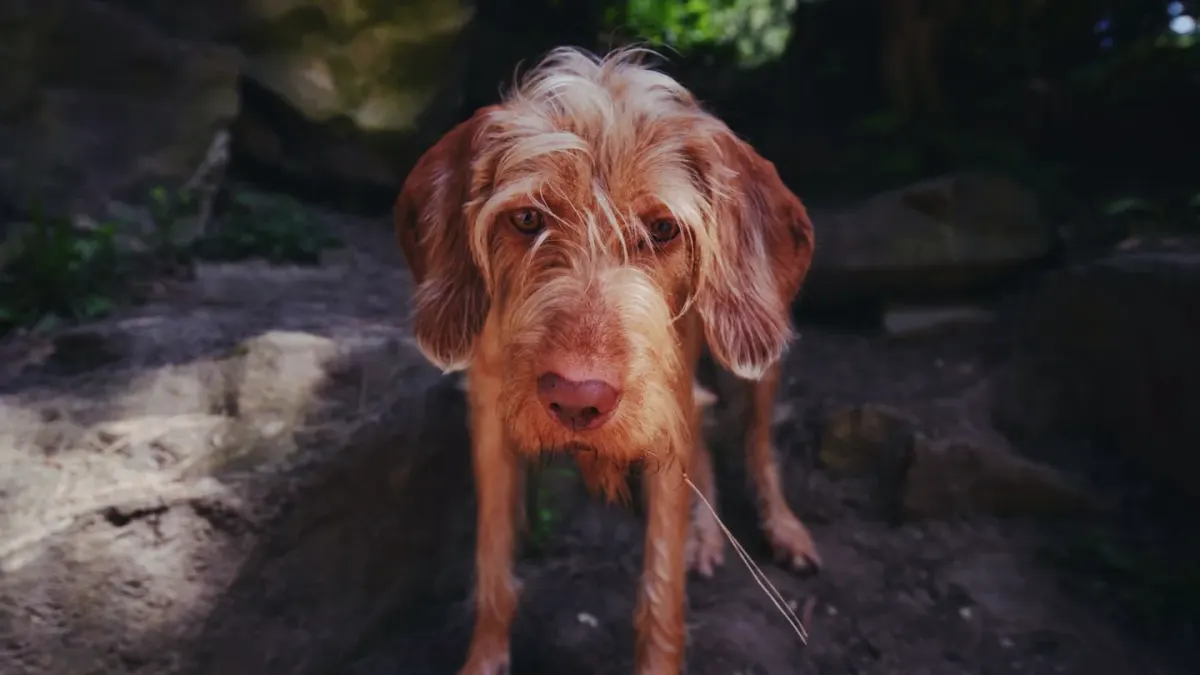
An arthritic dog does not stop needing novelty when the hips stiffen. Pain narrows movement, and then the world narrows with it, which is why low-impact mental work matters so much in the senior years.
In neurology I think first about load and signaling. Osteoarthritis creates peripheral nociceptive input from degraded cartilage and inflamed joint capsules, and that input is amplified by reduced muscle support and stiffer periarticular tissue. The dog moves less to avoid discomfort, proprioceptive feedback drops, sleep fragments, and frustration behaviors rise. Enrichment that asks for sniffing, licking, problem-solving, and gentle weight-shifting can help support normal nervous system engagement without the concussive load of fetch or long walks. Individual dogs vary widely, so every plan here should be checked with your own veterinarian.
A 12-year-old 72-pound Labrador mix I followed as a composite case shows the decision clearly. He would rise slowly in the morning, hesitate at the three porch steps, then lie back down while his family left for work. By day 10 on a revised routine his owner reported he trotted to his mat when she picked up a rolled towel with kibble folded inside, because that game paid him in scent rather than sprinting. The choice she weighed was not whether to enrich him, but how to trade five minutes of ball-chasing for fifteen minutes of nose-led foraging on a non-slip rug. That trade protected his elbows and shoulders while giving his day a predictable, rewarding anchor.
Mornings start with the nose, not the legs
Scent is the lowest joint-cost enrichment most arthritic dogs have. Olfactory processing recruits large cortical networks and does not require standing, jumping, or turning tightly. Scatter a portion of breakfast on a washable bathmat, roll kibble in a towel, or place treats in a muffin tin covered loosely with tennis balls so the dog can nudge rather than chase.
Keep the station stable. Feed on rubber-backed mats, keep the dog lying in sternal recumbency or standing squarely, and raise bowls or boxes to elbow height so the neck does not crane down for long periods. Short sessions of five to ten minutes beat one long session, especially before pain medication has taken effect. If you want more ideas for dogs on restricted exercise, this guide to how to mentally tire a dog that can’t exercise pairs well with the joint-sparing approach here.
Midday feeding puzzles that do not punish stiff joints
The wrong puzzle can undo good intentions. A 9-year-old 48-pound border collie type, seen as a composite example, loved a wobbling treat ball and would slam into furniture to chase it. Three weeks in, her owner noticed increased evening stiffness and licking at the right carpus, and the ball went into the closet. The tradeoff was instructive. Movement-based dispensers ask for pawing, pouncing, and quick direction changes, all high torque through arthritic wrists, elbows, and lumbar spine. Stationary puzzles ask for tongue, lips, and nose, which keeps the spine neutral.
Reach for lick mats with wet food, snuffle mats staked so they do not slide, and slow-feeder inserts rather than rolling toys. Freeze a thin layer to extend time without extending effort. Watch for frustration signals like whining, biting the mat, or walking away, which often mean pain or fatigue rather than disobedience. For help matching the tool to the dog, compare puzzle feeders vs. slow feeder bowls and food-dispensing toys vs. treat balls.
Pain changes how a dog learns, which is why the American Animal Hospital Association pain guidelines emphasize regular pain assessment alongside environmental modification for dogs with chronic musculoskeletal disease. Less pain means more willingness to explore, and willingness is the engine of enrichment.
Evenings ask for calm senses and gentle thinking
By evening many arthritic seniors are sore and restless at once. This is not the time for new tricks that require sit-to-stand repetitions. It is the time for sensory enrichment that supports normal settling behavior. Try a warm towel fresh from the dryer to lie on, quiet classical music or white noise, gentle grooming with a soft brush, and two-minute training games done entirely in down-stay, such as chin rest, eye contact, or targeting your palm an inch from the nose.
That distinction matters because I reach for both the imaging study and the acupuncture needle in my own practice. Imaging tells me where cartilage loss and spondylosis limit range of motion. Traditional assessment tells me how stagnation and sensitivity show up as restlessness, panting at night, or withdrawal. Both point to the same mechanism-aware conclusion. Calm, predictable input in the evening may help support normal nervous system balance better than another round of excitation. For dogs that pace after dark, the discussion of why dogs struggle to settle at night is a useful companion.
The strongest counterargument I hear is that arthritic dogs should simply rest and avoid all stimulation to prevent flare-ups. Rest absolutely has a place during acute flares. Complete withdrawal, however, accelerates muscle loss, weight gain, and cognitive dulling, which in turn increase joint load. The evidence-bounded path is graded activity plus daily mental work, adjusted to the dog in front of you.
A final edge case reshapes the plan for some families. An 11-year-old 22-pound beagle mix with both elbow arthritis and early vision loss could not work standard snuffle mats, and by week four his owner worried he was losing interest entirely. What changed the picture was switching modalities. Scent pots with dabbed vanilla, low chimes, and textured lick surfaces let him succeed by nose and tongue when eyes and legs could not lead. The lesson was to stop grading enrichment by difficulty and start grading it by accessible sense. The Merck Veterinary Manual overview of osteoarthritis in dogs makes the same broader point that management must stay multimodal and individualized as disease progresses.
Keep sessions brief, surfaces grippy, and rewards soft enough to chew comfortably. Track what you see for a week. More tail wags at setup, easier rises after rest, and quieter evenings suggest the mix is right.
Sources
- Pain Management Guidelines for Dogs and Cats — American Animal Hospital Association
- Osteoarthritis in Dogs — Merck Veterinary Manual