
On this page
Marisol’s ten-year-old Beagle mix, Waffle, tore a cruciate ligament last spring, and her orthopedic surgeon put him on eight weeks of strict crate-and-leash rest — no running, no stairs, no more than a five-minute potty walk. By week two, Waffle was pacing the hallway at 2 a.m. and shredding the corner of a bath mat out of sheer boredom. Marisol’s vet suggested something she hadn’t considered: instead of trying to wear Waffle out physically, she could wear him out mentally.
That swap — mental fatigue standing in for physical fatigue — is the backbone of exercise-restricted enrichment, and it works for dogs recovering from surgery, managing arthritis, living with a neurologic condition, or simply aging out of long walks. A dog’s brain is metabolically expensive to run. Asking it to process new scents, make decisions, or work toward a reward can leave a dog genuinely tired in a way that doesn’t require a single extra step.
Why a Tired Brain Can Substitute for Tired Legs
Dogs experience the world nose-first, and processing scent information draws on real cognitive resources — working memory, decision-making, and sustained attention all get engaged during a search task. A PMC pilot study on environmental enrichment found that structured enrichment activities measurably changed dog behavior compared to an unenriched control period, supporting the idea that enrichment isn’t just a distraction but an actual behavioral intervention. The practical upshot for an owner like Marisol is straightforward: a dog doesn’t need tired legs to settle down for a nap. It needs a tired brain.
Scent Work Is the Highest-Yield Option
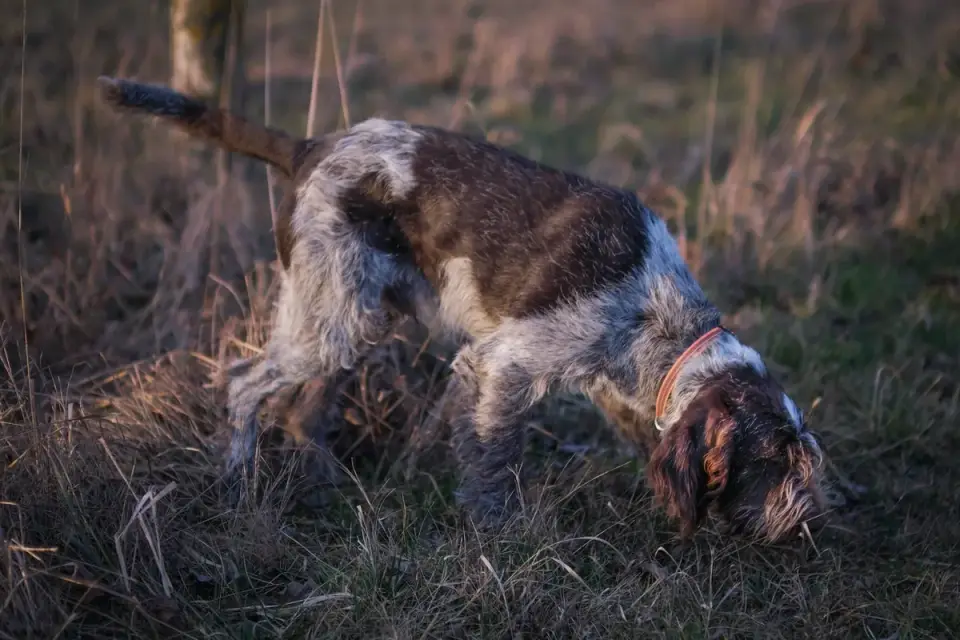
Of every low-impact activity available, scent work tends to produce the most fatigue for the least physical exertion. A Canine Arthritis Resources and Education piece on nose work notes that scent-based games are accessible even to dogs with significant mobility limitations, since a search can be scaled down to a seated or standing task with treats hidden in nearby containers rather than scattered across a room. A broader scoping review published in ScienceDirect similarly catalogued scent activities as a low-cost, adaptable enrichment category with wide applicability across dog populations, including those with physical constraints. Start small: three or four boxes, one holding a treat, and let your dog work it out while sitting beside you.
Puzzle Feeders and Scatter Feeding
The easiest entry point for most households is turning an existing meal into a puzzle. A snuffle mat, a slow-feeder bowl, or even treats scattered across a towel forces a dog to hunt for food using scent rather than simply eating from a bowl, and none of it requires more than standing or lying in place. This is also one of the few enrichment strategies that adds zero calories, since it repurposes food the dog was already going to eat. For a dog on crate rest, scatter feeding directly on the crate bedding can turn a routine meal into ten minutes of quiet, focused work.
Short Training Sessions and Trick Work
Five-minute training bursts — a new hand target, a chin rest, a stay with distractions — ask a dog to think, not run. Training sessions are naturally self-limiting, too. Dogs tend to disengage on their own once they’ve had enough, which makes it easy to avoid overdoing it. Rotating between two or three simple behaviors keeps a session interesting without requiring new equipment.
Sensory and Environmental Enrichment
Beyond food and training, simple sensory changes can add variety without any physical demand at all. Rotating toys, offering a cardboard box with treats tucked inside, or letting a dog sniff a used towel from another animal in the house all count as enrichment. According to AAHA senior care guidelines, sniff walks, snuffle mats, and scatter feeding are recommended tools for supporting quality of life in dogs whose mobility is restricted by age or joint disease, alongside environmental supports like ramps, traction mats, and supportive harnesses.
Safety Notes for Dogs With Mobility Limitations
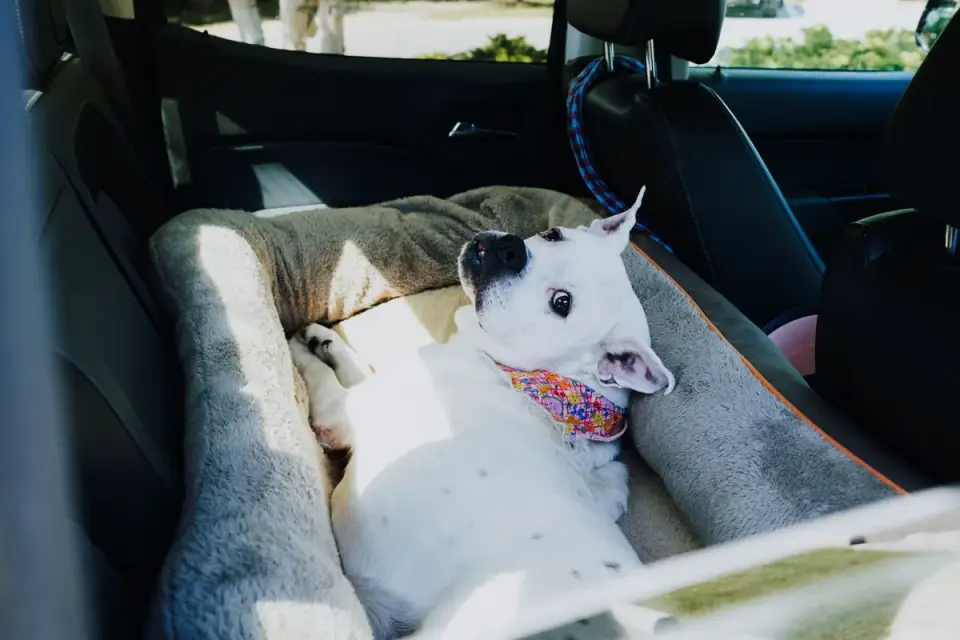
Not every enrichment activity is automatically safe just because it’s low-impact. Avoid anything that involves jumping, twisting, or scrambling — a treat rolled across a hard floor can send an arthritic or post-surgical dog lunging in a way that undoes weeks of careful rest. Keep dogs on non-slip surfaces during any activity, and if your dog has a diagnosed neurologic or orthopedic condition, run new games past your veterinarian before adding them to the routine. What looks calm to a person can still ask more of a joint or a spine than it should.
Waffle’s crate rest ended without a setback, and Marisol kept the scatter-feeding habit long after his cast came off, because it turned out he liked the puzzle as much as the walk. That’s often how it goes: once a dog learns that sniffing and searching earn the same satisfaction a walk used to, the walk stops being the only tool in the box.
Frequently asked questions
Can mental enrichment really replace a walk for a dog that can't exercise?
It can't replace the cardiovascular or muscular benefit of movement, but a dog's brain uses a meaningful amount of energy to process novel scents and solve problems, and many dogs settle into a deeper rest after a session of nose work or puzzle-solving than after a short leashed walk. Think of it as a different currency of tired, not a lesser one.
How long should a scent work or puzzle session last for a dog with limited mobility?
Five to fifteen minutes is usually plenty to start, especially for a dog recovering from surgery, managing arthritis, or working around a neurologic issue. Watch for early fatigue signals such as slower sniffing, lying down mid-task, or disengaging, and end the session before your dog reaches that point rather than after.
Is it safe to do scent work with a dog who has a spinal or neurologic condition?
Most seated or standing nose-work games are low-impact enough for dogs with stable neurologic conditions, but any activity that involves twisting, jumping, or scrambling for a treat should be cleared with your veterinarian first. When in doubt, keep the dog's body still and let the search happen with the head and neck only.
What's the single best enrichment activity for a dog on strict exercise restriction?
Scatter feeding a portion of the daily meal across a snuffle mat or muffin tin tends to deliver the most mental fatigue per minute of any low-impact activity, because it recruits the dog's primary information-gathering sense while requiring almost no joint movement.
Sources
- 2023 AAHA Senior Care Guidelines for Dogs and Cats — AAHA
- Scent Work: Enriching Your Dog's Life Through Nose Work — Canine Arthritis Resources and Education
- Effects of Environmental Enrichment on Dog Behaviour: Pilot Study — PMC
- The value of sniffing: A scoping review of scent activities for canines — ScienceDirect