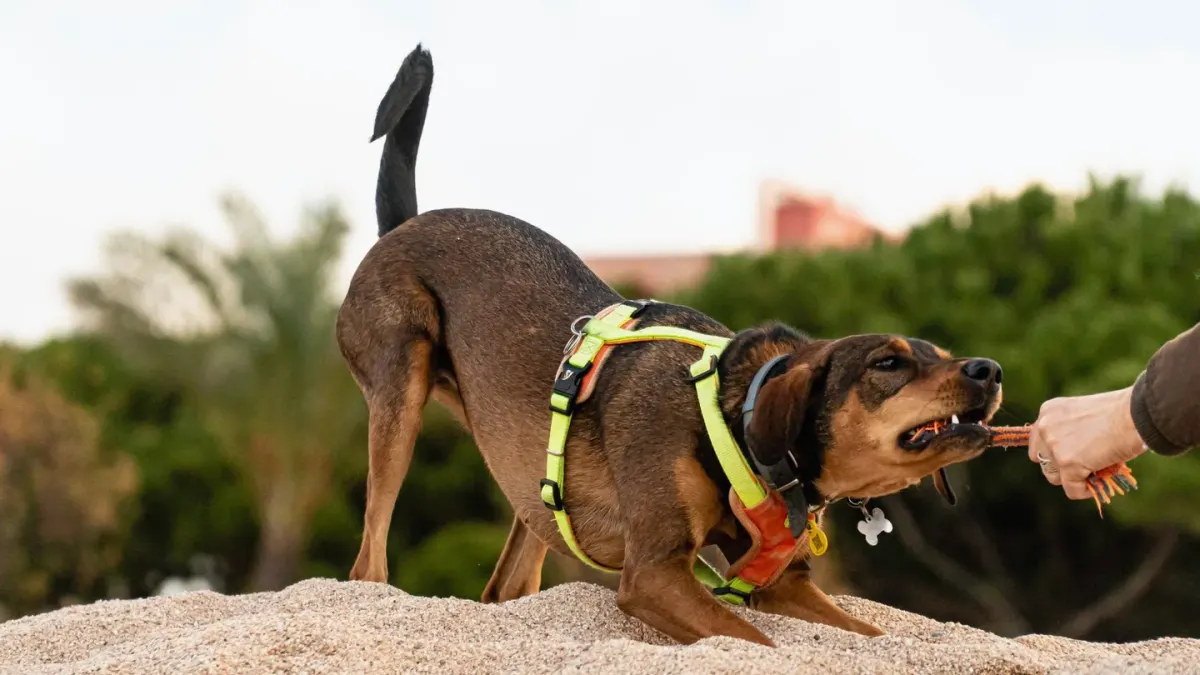
A calm garden, a handful of treats, and ten minutes are enough to set a scent trail that truly tires a dog out.
The setup stays simple on purpose. Pick a familiar stretch of lawn about 15 to 20 feet long, place a high-value treat every two to three steps, and let the dog walk the line on a loose leash or long line. Sniffing is neurologically expensive work. Olfaction and attention networks have to filter odor, track direction, and update movement at the same time, which is why many dogs finish a nose session more settled than after a fast walk around the block. A common question is whether this needs special scents or training credentials, and it does not. Plain food odor is a clear starting point.
For a household weighing what to try first, consider a three-year-old 38-pound beagle mix living in a fenced suburban yard. Her owners worried that extra fetch was winding her up instead of wearing her out, and evening barking had climbed to four or five bursts per night after dinner. They mapped a straight treat line from the patio door to the far fence, a distance of about 24 feet, and walked it twice per evening for six straight days. By night four, search time stretched from under a minute to nearly three minutes as she stopped rushing and started checking each spot. The owners kept fetch shorter, kept the trail the same shape for the full week, and only then added one right-angle turn. That slow start is the decision to copy.
Lay a trail the nose can actually follow
Start downwind so odor drifts toward the dog. Mow or clear the path, remove chicken bones, sharp sticks, slug bait, cocoa mulch, and other garden hazards, and check gates and fences. Lay the trail when the grass is cool and slightly damp if possible, because morning or evening air often holds scent better than hot midday air.
Walk the line yourself first and press a small treat into the grass every few feet. Touch a fence post or stone at the end and leave a small jackpot of three to four treats there. Bring the dog to the start, cue once with language like find it, and follow the leash. Keep steps slow, keep talking low, and avoid pulling the dog forward. If the dog overshoots a treat, pause and let the nose circle back without help.
The American Kennel Club notes that beginner scent work should stay short, positive, and game-like before adding difficulty or formal odors. That matches garden practice well. Short wins may help support focus and confidence, and individual dogs vary in how quickly they progress.
Add one twist at a time
Once the dog walks a straight line with confidence, change only one variable per session. Add a gentle curve, lengthen the trail by another 10 feet, age the trail for five minutes before searching, or space treats farther apart. Keep sessions under ten minutes and end while the dog still wants more.
A failed approach often looks like too much challenge too fast. Take a ten-month-old 52-pound Lab mix whose owner tried a zigzag trail around planters, toys, and a compost bin on day one. The puppy skipped half the treats, grabbed a fallen tomato, jumped the border twice in eight minutes, and finished more aroused than at the start. The tradeoff was clear. Complexity stole the sniffing and turned the game into racing. The fix was to return to a straight lawn line for a week, pick up loose objects before laying scent, and reward check-ins at each treat spot. Better to run an easy trail twice than a hard trail once.
For ideas on keeping indoor days calm between garden sessions, see How to Mentally Tire a Dog That Can’t Exercise and Food-Dispensing Toys vs. Treat Balls: Which One Actually Fits Your Dog.
When to keep the garden game smaller
Reach for the simple ground trail first, and pair it with attention to the whole dog. Western neurology explains why sustained sniffing may help support calmer behavior through focused sensory work, while integrative care reminds owners to watch breathing, heat, joint comfort, and stress signals during the search. The mechanism matters more than any promise. Look for a loose body, deep sniffs, tail movement, and a dog that can disengage for water and rest.
There are days to bend the plan. Picture a 12-year-old 19-pound senior terrier with stiff hips and fading hearing, introduced on a humid 84-degree afternoon. The usual advice of a longer trail across the yard would be the wrong call. The owner instead laid a 12-foot shaded trail along the patio edge, used soft pea-sized treats, and let the dog search for four minutes before a water break in the shade. Total search time stayed under six minutes, and the owner skipped curves and steps entirely. Older dogs, flat-faced breeds, puppies, and dogs with heart or breathing issues often do better with shade, short distances, and softer footing.
Skip food trails during active resource guarding around scattered food, during vomiting or diarrhea flare-ups, or when pesticides or fertilizers were recently applied. Use a toy or praise search instead if food guarding is an issue, and ask a veterinarian about scent games when the dog has nasal discharge, severe anxiety, or mobility pain. AVMA reminds owners that enrichment should match age, health, and temperament, and garden plans work best when adjusted to the individual dog.
Finish each session the same way. Jackpot at the end marker, a short drink, and a potty walk. If the dog paces, pants hard, sneezes repeatedly, or quits early two days in a row, shorten the next trail and make it easier. For nighttime restlessness after active days, see Why Won’t My Dog Calm Down at Night? A Vet Explains the Real Triggers.
Sources
- AKC Scent Work — American Kennel Club
- Pet Enrichment — AVMA