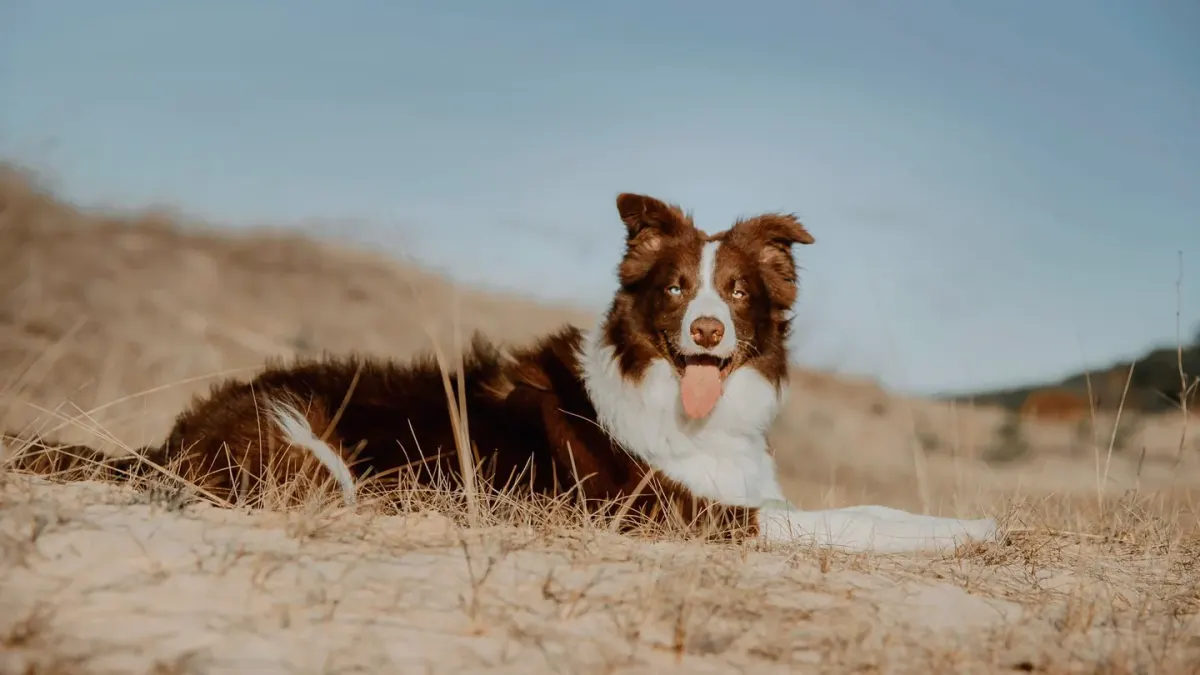
Two spaniel mixes stood shoulder to shoulder over one snuffle mat in a narrow kitchen, and the morning routine stalled before it started. The older dog, a 5-year-old 38-pound female, pinned the mat with both front paws while the younger dog circled and whined. Their owner wanted togetherness, but what she saw was stiffness, hard staring, and food eaten too fast. The decision that mattered was not which puzzle to buy. It was whether each dog could search, chew, and sniff without defending the resource. Once she split them across two rooms with a baby gate, both dogs settled into the task within minutes.
That split reflects how arousal works in a social pair. Novel food tasks raise sympathetic drive, heart rate, and motor activity. That is useful for learning, but it also lowers frustration tolerance when another dog approaches. I reach for both the imaging study and the acupuncture needle in my neurology work, and the same whole-patient logic applies here. Support the seeking system while you protect rest and recovery. Enrichment may help support calm problem solving when the autonomic load stays manageable for each dog.
Separation is not punishment.
Why two dogs need two lanes first
Dogs vary widely in food motivation, chewing style, guarding history, and noise sensitivity, so a shared setup often fits neither dog. One dog may need easy wins to stay engaged while the other needs a harder snuffle to slow down. Individual dogs vary, and that is why parallel enrichment works better than shared enrichment for most pairs.
Start with distance and barriers. Feed puzzle feeders in separate corners, crates, or rooms with doors or gates closed enough that neither dog can loom over the other. The Merck Veterinary Manual describes resource-related tension as a normal social behavior that escalates with proximity and competition, which is why space is the first intervention. The AVMA frames enrichment as meeting species-typical needs for foraging, play, and sensory exploration rather than simply adding more toys to one room.
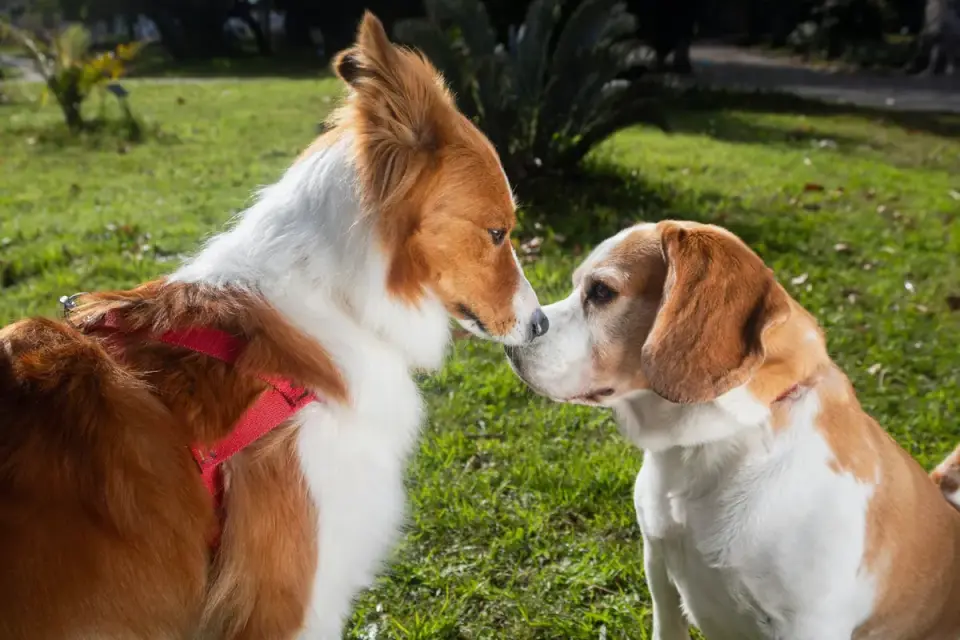
A practical rotation is two to three short stations per dog, five to ten minutes each, with water and a chew break between turns. That structure keeps total calories sane and lets you watch who finishes fast, who quits, and who paces afterward. If you are choosing between feeder styles, this comparison of Food-Dispensing Toys vs. Treat Balls: Which One Actually Fits Your Dog can help you match difficulty to each mouth and temperament.
Last spring I worked through a composite case that shows the tradeoff clearly. A household had a 2-year-old 55-pound retriever mix who inhaled every puzzle and a 9-year-old 24-pound terrier mix with worn teeth who walked away from hard rubber toys. The owner bought two identical wobble toys to be fair. By day 10 the young dog was barking for more while the senior dog stopped entering the kitchen at enrichment time. Fair did not mean identical. The fix was a lick mat with soaked kibble for the senior dog behind a pen, and a rolled towel snuffle with scattered kibble for the retriever across the room. Three weeks in, the owner reported the senior dog stayed in his station and licked calmly instead of leaving, while the young dog sniffed longer instead of slamming the toy.
Build the week around sniff, chew, and settle
Think in categories, not products. Sniffing lowers locomotor arousal for many dogs because sustained nose work recruits parasympathetic recovery between bursts of effort. Chewing provides rhythmic jaw input that may help support self-soothing before rest. Training games add cognitive load but also raise arousal, so place them before sniffing or chewing rather than before bedtime.
A simple weekly template helps. Give each dog daily foraging in their own lane, two chew sessions per week on appropriate size-matched chews with supervision, and two short training sessions focused on one skill. Add one decompression walk where each dog can sniff on a long line separately if they pull toward each other. The Ohio State Indoor Pet Initiative outlines this kind of rotation across feeding, sensory, and social enrichment, which keeps novelty high without stacking excitement. For dogs on restricted exercise, these ideas for How to Mentally Tire a Dog That Can’t Exercise adapt well to separate stations.
Watch recovery as closely as play. Panting that persists past ten minutes, inability to settle, or renewed pacing suggests the session was too hard, too long, or too close together.
When together time actually helps
Joint enrichment belongs last, not first. Keep it short, low value, and movement based. Parallel scatter feeding across a yard, side-by-side sniff walks with enough lateral distance, or taking turns on a simple cue while the other dog rests on a mat can build positive associations without direct competition.
I am decisive on this point because neurologic and behavioral recovery both depend on down time. Together games should end while both dogs are still loose and happy, then each dog should rest separately. If either dog stiffens, blocks, or shadows the other, go back to separate lanes without scolding either dog.
The strongest counterargument is that littermates or bonded pairs seem sad apart. Separation can briefly raise vocalization, especially in young dogs accustomed to doing everything together. I still land on separate first because learned guarding is harder to undo than brief frustration is to manage. Brief alone time with a safe food task teaches each nervous system how to shift from effort to rest, which is the mechanism that carries into the evening. That evening settle is often the real goal, as discussed in Why Won’t My Dog Calm Down at Night? A Vet Explains the Real Triggers.
An edge case changed how I counsel owners of mismatched pairs. A family had a 7-year-old 71-pound senior dog with early stiffness and a 1-year-old 33-pound adolescent herding mix who play-bowed relentlessly. The senior dog did not guard, but he stopped chewing when the young dog stared from across the room. The observable shift came at week two when the owner added a visual barrier, not just distance. A sheet over the baby gate broke the staring loop. The senior dog then chewed for a full eight minutes and napped afterward, while the adolescent dog learned that staring ended the game. For sensitive dogs, line of sight matters as much as feet of space.
Talk with your own veterinarian about chew safety, calorie balance, and any anxiety, aggression, or cognitive changes you notice. Structure and function framing can guide enrichment, but it does not replace an exam for the individual dog in front of you.
Frequently asked questions
Should two dogs share one puzzle toy?
Most pairs do better with their own station separated by distance or a gate. Sharing raises competition and guarding risk, and it makes it hard to match difficulty to each dog.
How long should an enrichment session last with two dogs?
Aim for five to ten minutes per station, then a calm break. End while both dogs are still relaxed and able to settle within a few minutes.
What if one dog finishes first and bothers the other?
Give the faster dog a longer sniff task or a settle on a mat with a chew, and keep a barrier between stations until both dogs are resting. Do not let the faster dog rehearse stealing.
Sources
- Social Behavior of Dogs — Merck Veterinary Manual
- Pet Enrichment — AVMA