On this page
Two dogs circling the same puzzle toy can look like fun until one freezes, hard-stares, and walks away with her tail low. That worry that play will tip into guarding or a scuffle is common in multi-dog homes, and comfort has to come before cooperation. Set each dog up to succeed alone first, then bring them together in short, structured turns.
In my experience, families do best when they stop asking which game tires dogs out fastest and start asking which setup lets both dogs stay soft-bodied and willing to disengage. Individual dogs vary widely, so watch posture, mouth, and breathing rather than expecting a breed pattern to predict the outcome.
A household I followed had a 4-year-old, 62-pound Lab mix who bulldozed every food puzzle and a 9-year-old, 18-pound terrier blend with stiff hips who would hover at the edge and then leave the room. The owner worried the older dog was shutting down. For three weeks we split all enrichment with a baby gate between kitchen and hallway, gave the senior a snuffle mat at nose height, and gave the younger dog a lidded puzzle behind the gate. By day 14 the little dog began lying down to forage instead of pacing, and the owner could finally read what settled looked like for her.
Let separate comfort set the rules
Teach the skill alone. Place mats 10 to 15 feet apart or on opposite sides of a gate. Feed half of dinner through scatter or a simple puzzle in those spots for five minutes.
Reward disengagement. Call one dog away mid-game, treat, then release back. Keep leashes dragging for safety if needed, never tied.
Match challenge to the body in front of you. Arthritic seniors, flat-faced dogs, and puppies fatigue faster. Keep sessions to 5 to 10 minutes and end while both dogs still want more.
Short rest breaks keep arousal low.
Games that share well with two noses in the room
Choose parallel play before interactive play. Give each dog the same type of feeder at the same time so neither rehearses stealing. Guidance on choosing food puzzles from the American Kennel Club can help you match difficulty to mouth size and persistence, and general ideas for safe toys and rotation from ASPCA are useful when you build a small library for different energy levels.
Try these in order:
- Scatter and find. Toss kibble in separate patches of grass or rugs. Point each dog to a patch. Pick up leftovers before releasing dogs together.
- Take turns with a handler. One dog waits on a mat for a treat while the other searches two boxes. Swap roles. Keep waits under 30 seconds at first.
- Scent trails. Drag a treat bag along the floor to make two short trails in different directions. Start each dog at a separate start line.
- Training rounds. Ask for sit, touch, or spin in alternating reps. Treat calm watching as generously as working.
For more solo foundations, read Food-Dispensing Toys vs. Treat Balls: Which One Actually Fits Your Dog and How to Mentally Tire a Dog That Can’t Exercise.
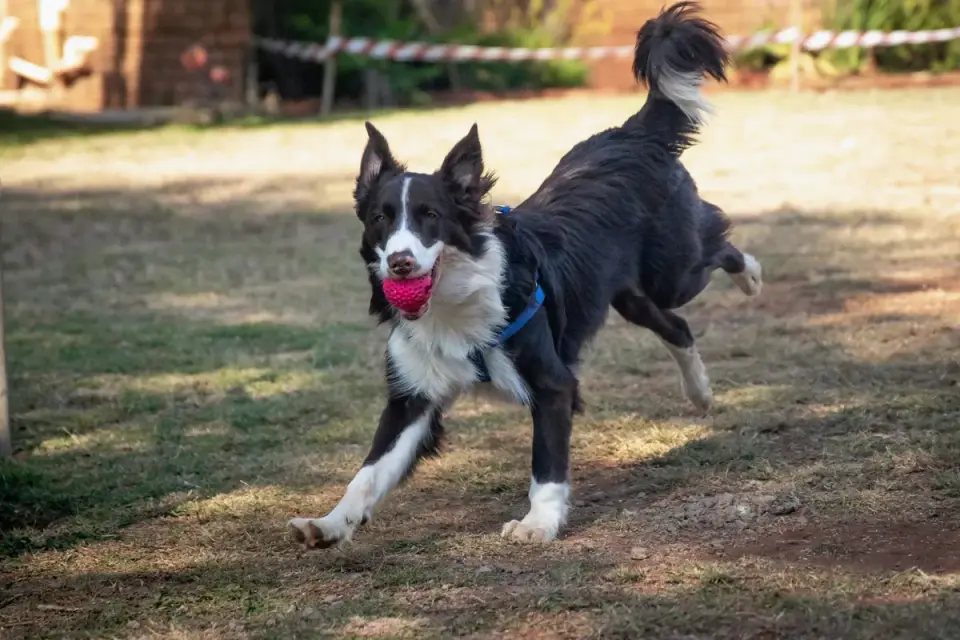
The tradeoff shows up fast when owners try to rush togetherness. One family with 6-year-old, 48-pound herding mixes tried a single flirt pole in the backyard to tire both dogs before dinner, thinking shared chase would bond them. Within four minutes the faster dog began cutting off the slower one, bodies stiffened, and the slower dog started lip-licking and shaking off between reps by day 3 of trying it nightly. The owners felt guilty for creating competition. We shelved the shared chase, moved to one-dog-at-a-time flirt pole with the other practicing mat settling for treats, and only later added brief parallel tug with two identical ropes at distance.
Read the room before you add competition
Look for soft signs. Loose wag, play bows, sneezy pauses, and easy turn-aways mean continue. Hard staring, hovering over toys, gulping, or following to steal mean increase distance or end the round.
Skip these pairings. One high-value chew per dog in close quarters. Tug with one rope for two dogs that already trade stiff looks. Fetch with one ball when one dog resources retrieves.
Teach a shared settle. After play, lead each dog to a mat. Deliver three to five small treats for lying down. Release for water, then crate or separate rest.
If evenings stay restless, your routine may need adjusting around sleep pressure and daytime naps as much as play, as outlined in Why Won’t My Dog Calm Down at Night? A Vet Explains the Real Triggers.
The edge case that surprises owners involves grief and age gaps. A home with a 12-year-old, 34-pound spaniel and a 2-year-old, 55-pound mixed-breed dog called because the younger dog began nudging puzzle toys toward the senior, then barking when she walked away. The owner worried the young dog was being rude. Over two weeks of video notes we saw the senior sniff for 20 seconds, lie down, and sigh, while bloodwork and mobility were already being monitored with their vet. The younger dog was not inviting play so much as protesting the loss of a play partner. We lowered the social pressure, gave the senior permission to opt out on an orthopedic bed with a lick mat, and gave the younger dog separate box-shredding games in another room for 10 minutes twice daily.
Put togetherness last, and keep it short
Run joint games for three to five minutes. Then separate for calm chewing or rest. Repeat only if both dogs re-engage softly.
Rotate, do not multiply. Keep two to three familiar games in circulation. Wash food toys. Store shared toys out of reach between sessions.
Track what helps. Note which game, distance, time of day, and how each dog settled afterward. Adjust toward more space and simpler tasks whenever tension rises.
Which small separation could you add tomorrow so both of your dogs get to finish a game feeling safe?
Frequently asked questions
Should two dogs share one puzzle feeder?
Start with two separate feeders at distance or behind a barrier. Shared puzzles often create hovering and guarding. Move closer only if both dogs stay loose and disengage easily.
How long should a joint enrichment game last?
Keep early joint sessions to 3 to 5 minutes, then separate for rest. Extend only when both dogs show soft bodies, easy turn-aways, and calm settling afterward.
What if one dog always steals from the other?
Increase distance, use gates, and give the faster dog a harder puzzle while the slower dog gets an easier one. Practice call-aways and reward the thief for leaving food alone. Talk to your vet or a qualified trainer if stiffness or snapping continues.
Sources
- Dog Enrichment Ideas — American Kennel Club
- Dog Care and Enrichment — ASPCA