
On this page
Start with the decision that actually shapes your whole trip: can your dog ride in the cabin with you, or does travel mean cargo, car, or staying home. That single question splits almost entirely along size lines, and it’s worth settling before you book anything else.
I’ve counseled a lot of clients through this exact fork in the road. One that sticks with me: a 9-pound Chihuahua mix named Biscuit and a 68-pound Labrador named Diesel, both owned by the same family, both flying to a wedding the same month. Biscuit’s owner spent maybe twenty minutes picking a soft-sided carrier that fit under an economy seat. Diesel’s owner spent three weeks calling airlines, getting quoted cargo fees north of what the flight itself cost, and eventually decided to drive fourteen hours instead. Same family, same trip purpose, completely different logistics — because one dog was under the cabin weight threshold and one wasn’t.
The size line that decides your carrier and your cabin option
Most US airlines cap in-cabin pets at around 20 pounds including the carrier, though the exact number and carrier dimensions vary by airline, so check before you book. If your dog clears that line, you’re shopping for a soft-sided carrier that fits under the seat in front of you — length, width, and height all matter, and airlines measure. If your dog doesn’t clear it, you’re choosing between cargo (which many airlines have restricted or stopped offering for pets), a ground trip, or leaving the dog with a sitter. There’s no workaround for a 60-pound dog and a 20-pound cabin limit. Our guide on how to measure your dog for an airline-approved carrier walks through getting exact numbers before you shop, and the full flying with a dog guide covers the booking and paperwork timeline in more depth.
Small dogs also clear airport security differently. Under Transportation Security Administration: TSA’s screening process, pets travel to the checkpoint in a hand-held carrier, then get removed just before screening while the empty carrier goes through the X-ray machine — the pet itself is walked or carried through the metal detector, never through the X-ray unit. That’s a manageable moment with a 9-pound dog. It’s a genuinely different logistical event with a 70-pound dog who has to be held or leashed through a crowded checkpoint. If your dog tends to bolt or panic when handled by strangers, TSA notes travelers can request a private screening room instead.
Car travel: the restraint problem looks different at each end of the scale
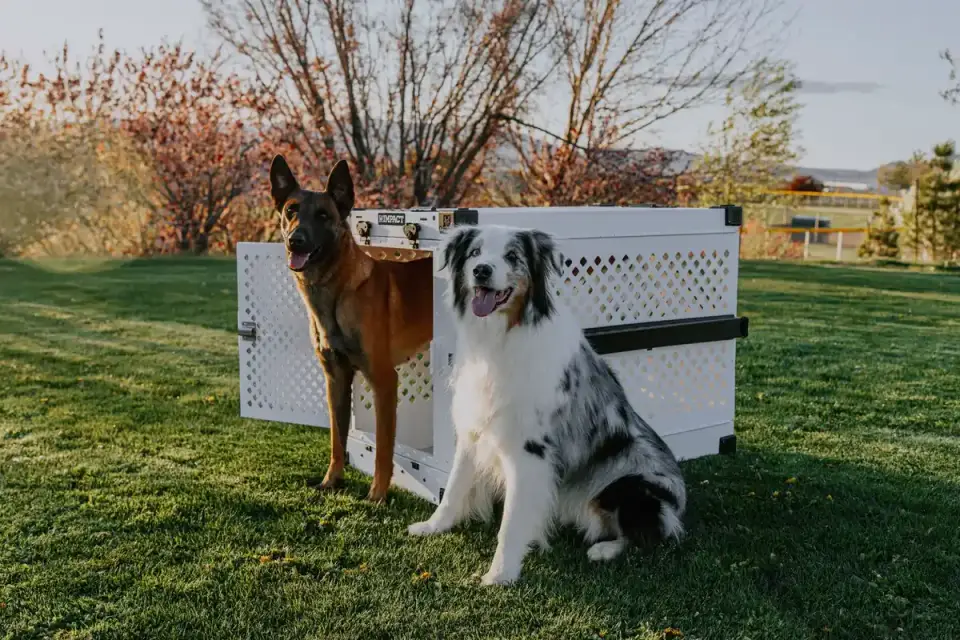
Road trips remove the airline weight math, but they introduce a different one: what actually restrains a dog safely in a moving vehicle. The American Veterinary Medical Association advises that pets shouldn’t ride loose in a car, and that the back seat — not the front — is the safer position, since airbag deployment force can seriously injure a pet in the passenger seat even if it’s harnessed. For a small dog, a secured carrier or crate placed toward the center of the back seat is usually straightforward; it fits, it’s easy to buckle in, and it doesn’t crowd the cabin. For a large dog, you’re either running a crash-tested harness sized correctly for a 70- or 90-pound frame, or you’re fitting a crate large enough for the dog to stand and turn around in, which often means an SUV or a dedicated cargo area rather than a sedan back seat.
Stop frequency tends to differ too, though this is more about individual dogs than pure size. Larger, deeper-chested breeds are commonly advised to take slower, calmer stops rather than sprinting straight to water after riding, and any dog doing a multi-hour drive benefits from a stretch break roughly every two to three hours. A small dog can usually be walked on-leash from the car in under a minute; getting a large, tired dog out of a crowded rest stop and back in safely just takes more room and more time.
Crossing state lines: paperwork doesn’t scale with size, but planning does
Here’s where small and large dogs are actually treated the same on paper: interstate travel requirements come from the destination state, not from a dog’s weight class. According to Animal and Plant Health Inspection Service: USDA APHIS, most states have their own animal-entry requirements — things like a current health certificate or proof of vaccination — and there’s no single federal certificate that covers interstate travel the way there is for international trips. That paperwork burden is identical whether you’re driving a Chihuahua or a Great Dane across a state line. What changes with size is how much slack you have if something goes wrong at check-in: a small dog can often ride out an unexpected gate change or a longer security line tucked in a carrier under a seat, while a large dog waiting in an airport concourse or a packed rest stop needs more physical space and more of the owner’s attention to stay calm and safe.
I think about Diesel’s family again here. Their fourteen-hour drive wasn’t really a downgrade from flying — once they’d budgeted the extra day, it turned out to be less stressful for a big, anxious dog than a cargo hold would have been, and it sidestepped the interstate paperwork question almost entirely since car travel doesn’t route through the same checkpoints. That’s not a universal answer. It’s just one family’s tradeoff, made with clear eyes about what a 68-pound dog actually needed that trip.
Matching the trip to the dog you actually have
By the time you’re picking a travel method, you’ve usually already answered the harder question: does this dog do well confined for hours, in a carrier or a crate, around noise and strangers? A dog who’s never spent real time in a crate is a poor candidate for a first-time cargo flight or even a long stretch in an airline-approved carrier, regardless of size. Acclimating a dog to its carrier or crate well before the trip — short sessions at home, treats, short car rides first — matters more for a smooth trip than almost any gear choice.
If you’re weighing whether your home setup even suits a large travel-heavy dog day to day, it’s worth reading our piece on apartment living with dogs for a sense of how space and lifestyle fit together before your next trip comes up. And if dental care is part of your pre-trip routine for a small dog, our step-by-step brushing checklist is worth a look — travel schedules are an easy excuse to skip it.
So which is actually easier to travel with, a small dog or a large one? On paper, small dogs win on convenience — cabin seating, easier carriers, simpler airport logistics. But easier isn’t the same as better suited to your dog. What does your dog’s temperament, not just its weight, actually call for on this particular trip?
Frequently asked questions
Do small dogs need less documentation to travel than large dogs?
No. Interstate health certificate and vaccination requirements are set by the destination state and generally apply regardless of a dog's size.
Can a large dog ever travel in an airline cabin?
Almost never. Most airlines cap in-cabin pets around 20 pounds including the carrier, so larger dogs typically need ground transport or, where still offered, cargo.
Sources
- Safe non-commercial transport of pets in motor vehicles — American Veterinary Medical Association
- TSA tips on traveling with pets through a security checkpoint at Washington Dulles International Airport — Transportation Security Administration
- Take a Pet From One U.S. State or Territory to Another (Interstate) — Animal and Plant Health Inspection Service