
On this page
The criteria that actually matter
Every week in my practice, I see owners who chose a breed because of its size, then struggled because that breed’s temperament or energy didn’t fit apartment reality. A Shih Tzu and a Labrador Retriever are worlds apart, but I’ve met both thriving in the same 600-square-foot studio and both miserable in a three-bedroom house. The mismatch isn’t about square footage; it’s about whether the dog’s baseline needs align with the owner’s actual day.
When you’re apartment hunting with a dog, three decision anchors matter far more than the breed’s typical weight. Start with energy level: does this dog need a job or a run, or can it genuinely settle on the couch between walks? Next, consider barking tendency—this isn’t about being a “quiet” breed in general, but whether the dog barks when left alone, triggered by hallway noise, or simply to communicate its feelings to the whole building. Finally, ask whether the breed needs consistent training and handling or whether it naturally leans toward adaptability. Many breeds marketed as “apartment dogs” fail on the third point because they need more structure than a busy owner can provide.

The owners I see most often in apartment buildings are those who’ve skipped the energy question. They brought home a young Bichon Frisé because the breed is “small and friendly”—and got a 90-minute velcro dog who barks at passing footsteps because no one explained that Bichons have moderate to high drive and need real mental work. Meanwhile, they watched a retired Greyhound sleep 18 hours a day in the unit next door, and suddenly a larger dog made sense. Individual dogs vary, absolutely; but breed baseline matters, and the baseline for many apartment breeds is nothing like the marketing suggests.
Small breeds that actually work in apartments
The Cavalier King Charles Spaniel and Shih Tzu are reliable apartment picks because they combine small size with genuine contentment in close spaces. A Cavalier’s defining trait is its willingness to be wherever you are—it doesn’t need an independent job, just proximity to family. Shih Tzus share that trait, with the added virtue of being “indoorsy” by nature; they don’t experience apartment walls as a cage but as a cozy territory. Both breeds settle naturally.
French Bulldogs are quiet by design—their breeding emphasizes calm, compact companionship. They need only moderate exercise (a 30-minute daily walk is often sufficient) and are low barkers. What matters here is that “calm” is structural to the breed, not something that emerges only with exhaustive training. Miniature Poodles bring intelligence and trainability, which means they can be asked to settle reliably; their hypoallergenic coat is a bonus for multi-unit living.
The Maltese is truly small (under 7 pounds) and adaptable, though some can be prone to separation anxiety if left alone for long stretches. Cavaliers and Shih Tzus handle isolation better.
Breed size matters most when space is extremely tight—a studio apartment with one small bathroom and a galley kitchen genuinely cannot accommodate a 50-pound dog’s day-to-day movement. But within the small-breed category, you’re not choosing for space; you’re choosing for temperament.
The larger breeds people overlook
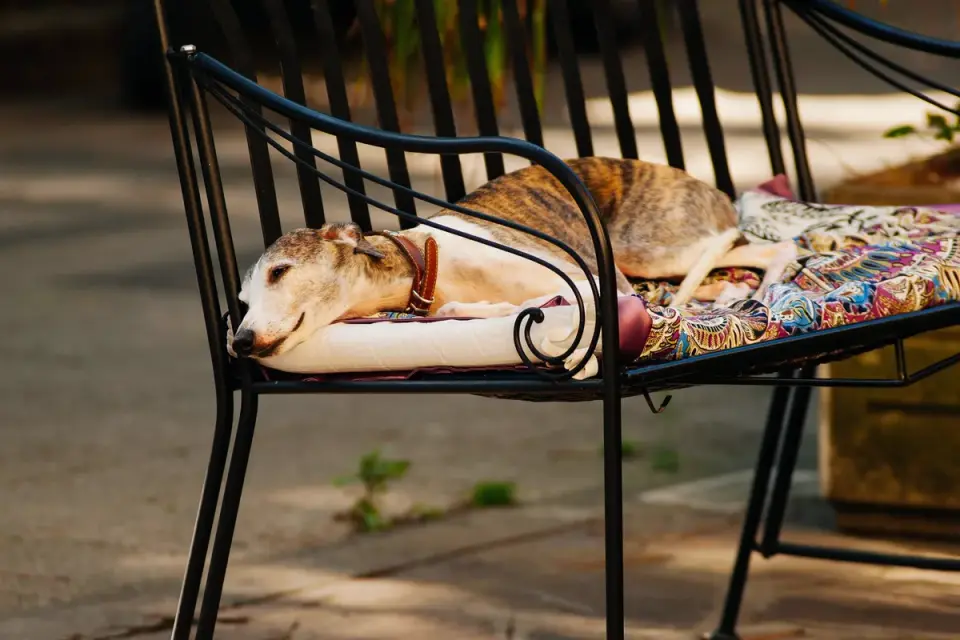
This is where expectation shifts most. A Greyhound in an apartment building surprises people. Greyhounds are couch potatoes by nature; they sleep 18–20 hours daily and need only short, gentle walks. They’re quiet (barking is nearly absent), they don’t require a yard, and they’re genuinely satisfied with indoor life. The only catch: they’re sensitive to cold, so you may need extra bedding in winter. They’re one of the least destructive breeds despite their size.
Whippets operate on similar principles—calm indoors, low exercise needs in daily life, quiet and adaptable. Some owners assume any dog under the heading “sighthound” must be high-energy; Whippets and Greyhounds are the exceptions. They’re sprinters, not marathon dogs, and they settle immediately after a brief run.
When you compare Labrador vs Golden Retriever, both breeds are often ruled out by apartment size alone, but this is where your actual lifestyle becomes critical. If you’re not providing structured activity—walks, training, play—these breeds will create their own activity and potentially become destructive. For an owner who genuinely commits to a daily walk, off-leash runs at a park, and structured training, a young Lab can work. But if apartment living means your dog will spend 8 hours alone while you work, your apartment isn’t the problem; the breed’s need for engagement is.
Temperament and adaptability outweigh breed stereotypes
One dog I worked with stands out. She was a Bichon Frisé, two years old, living in a busy downtown building with a single owner who traveled frequently for work. The owner had chosen the breed on size and “friendly” reputation, expecting an easygoing apartment companion. Instead, she had a dog that barked when left alone, barked at neighbors in the hallway, and needed an hour of active play daily to wind down. The dog wasn’t broken—she was exactly what Bichons often are: smart, social, and moderately to highly driven.
What solved the problem wasn’t changing the dog; it was changing the setup. The owner hired a dog walker for midday breaks, installed a white-noise machine, and began teaching the dog to settle on a mat with a puzzle toy—not to suppress the breed’s nature, but to redirect it into a structure the apartment could accommodate. Individual Bichons vary, of course. But many owners choose the breed without understanding that “small and friendly” is not the same as “calm and low-maintenance.”
The point: if you’re in an apartment and you want a dog, match the breed’s actual baseline to your actual schedule and attention. If you’re away 10 hours daily and live alone, a dog that thrives on solitude (Greyhound, older dog) works better than one that needs active engagement (working-line retriever, energetic terrier). If you work from home or have flexible hours, nearly any breed can adapt to apartment size if you’re providing what that breed’s nature demands.
Making the choice: the real questions to ask
Start with this: what is the breed’s actual energy level, not its size? Check PetMD’s breed profiles or breed club descriptions. Is the breed content with three 20-minute walks daily, or does it need four runs to the park plus mental work?
Second: how does this breed handle alone time? Clingy breeds and high-strung breeds often bark or become destructive when left. Independent breeds (many hounds, some working breeds) settle more easily.
Third: does the breed shed heavily or need frequent grooming? In close quarters, fur and dander matter—for your own allergies and because vacuuming becomes a weekly or daily task in a small space. Poodle mixes and truly low-shedding breeds reduce this friction.
Fourth: are you willing to provide the structure and exercise this breed actually needs, or are you hoping apartment living will be an excuse to have a lower-maintenance dog? If you’re imagining a large Labrador that’s content with apartment size alone, you’re setting up both of you for failure. Read our guide on high-energy breeds that need work if you’re drawn to a breed that carries a reputation for drive.
Smaller spaces reward honest matching. A Shih Tzu in an apartment where an owner is home most days, with a solid daily walk and some training structure, will thrive. The same breed in a busy, absent household may become reactive and stressed. That’s not the apartment’s fault; that’s a mismatch between breed baseline and lifestyle.
For many owners, apartment living actually clarifies what they need in a dog. You can’t fool yourself into thinking you have more time or energy than you do when you’re sharing 600 square feet. That clarity, respected, leads to better matches.
Specific breeds worth your consideration
According to World Animal Foundation’s research on quiet apartment breeds, French Bulldogs, Boston Terriers, Shih Tzus, Whippets, and Cavalier King Charles Spaniels consistently score well on the combination of low barking and high adaptability. Bichon Frisés appear frequently in apartment guides, but understand that individual Bichons vary; many have significant energy or vocal traits that require active management.
If you’re considering larger breeds, Greyhounds, Whippets, and some retired working dogs actually thrive in apartments because their calm baseline and low exercise needs align well with space constraints. The key difference between a three-bedroom house dog and an apartment dog is rarely the dog’s size and almost always its settled temperament.
The real verdict: size is the myth
Stop thinking of apartment living as a constraint that forces you into a small breed. Instead, think of it as a filter that makes mismatches obvious. An energetic, anxious, or vocal breed will show you within weeks that it’s not working; a settled breed will settle further into your routine.
The apartments I see where dogs are happiest are the ones where the owner chose the breed on temperament and energy level, not size, and then showed up with real daily structure—walks, play, training, or just consistent presence. A small breed in the wrong hands creates noise complaints and owner frustration. A large, calm breed in the right hands creates a quiet neighbor and a settled household.
Your apartment isn’t too small for the right breed. It’s perfectly sized once you stop choosing by looks and start choosing by what your dog actually needs and what you can genuinely provide.
Frequently asked questions
Will a large dog necessarily struggle in an apartment?
No. A calm, low-energy large breed like a Greyhound or retired working dog often thrives in an apartment because it needs minimal exercise and settles easily. A high-energy small breed may struggle more. Temperament and energy level matter far more than size alone.
How much exercise does an apartment dog actually need?
Most apartment-suitable breeds do well with one to two 30-minute walks daily, plus some mental engagement (training, puzzle toys). Very high-energy breeds need more; calm breeds need less. The breed's individual baseline is the measure.
Do I need a yard to have a dog in an apartment?
No. Many apartment dogs have never had a yard and thrive without one. What matters is daily walks, access to outdoor potty breaks, and appropriate indoor time. Some breeds actually prefer indoor life.
Are apartment dogs more prone to barking at neighbors?
Some breeds are more vocal than others—Bichon Frisés, some small terriers, and anxious dogs may bark more. Others (Greyhounds, Shih Tzus) are naturally quiet. Training and consistency matter, but breed baseline sets your starting point.
Can I keep a puppy in an apartment?
Yes, with more structure and time commitment. Puppies need frequent potty breaks, training sessions, and socialization. Apartment space is fine; your schedule and willingness to train are the real constraints.
Sources
- The 20 Best Apartment Dogs for Smaller Spaces — PetMD
- Best Quiet Dog Breeds For Apartment Living — World Animal Foundation