
On this page
A family books a morning flight with their 4-year-old beagle mix, a sturdy 24-pound dog who has never flown. The owner pulls the old plastic crate from the garage, wipes it down, and assumes it will pass. At the kitchen table she measures the dog standing at 15 inches at the shoulder, then measures the crate interior at 24 inches long. The dog can turn but his ears brush the top when he sits. She worries about a refusal at the counter, and she is right to pause. That gap between fits at home and fits for flight is where most travel plans succeed or fail.
Expectation first: start with your specific airline’s current crate page, not the crate label. No carrier is universally approved. Measure the dog, then audit the crate piece by piece.
Where the real rules live for your flight
Your airline decides. Federal guidance sets the baseline, but the gate agent follows company policy. Read the pet section for your exact itinerary and cabin versus cargo hold.
Check size limits, weight limits with the dog inside, fees, breed limits, and whether the flight is staffed for live animals. The U.S. Department of Agriculture explains that airlines set their own container and health-document requirements for air travel, so confirm directly with your carrier. Print or save that page. Rules change by aircraft and season.
For background on cabin allowances and stowage, the Federal Aviation Administration notes that carriers must be small enough to fit under the seat and allow the pet to move. For cargo-hold containers, the International Air Transport Association publishes the Live Animals container standard many airlines reference.
Link this check to sizing basics in How to Measure Your Dog for an Airline-Approved Carrier and the full trip timeline in How to Fly With a Dog: The Complete Guide.
Measure the dog, then interrogate the crate
Grab a tape measure. Record standing height to the top of the head or ear tip, length from nose to base of tail, and weight on a home scale.
Do this standing test. The dog should stand without crouching, sit with head clear of the roof, turn in a normal circle, and lie on the side with legs extended. Add 2 to 4 inches of clearance above the head for ventilation and comfort. If ears touch, size up or choose another plan.
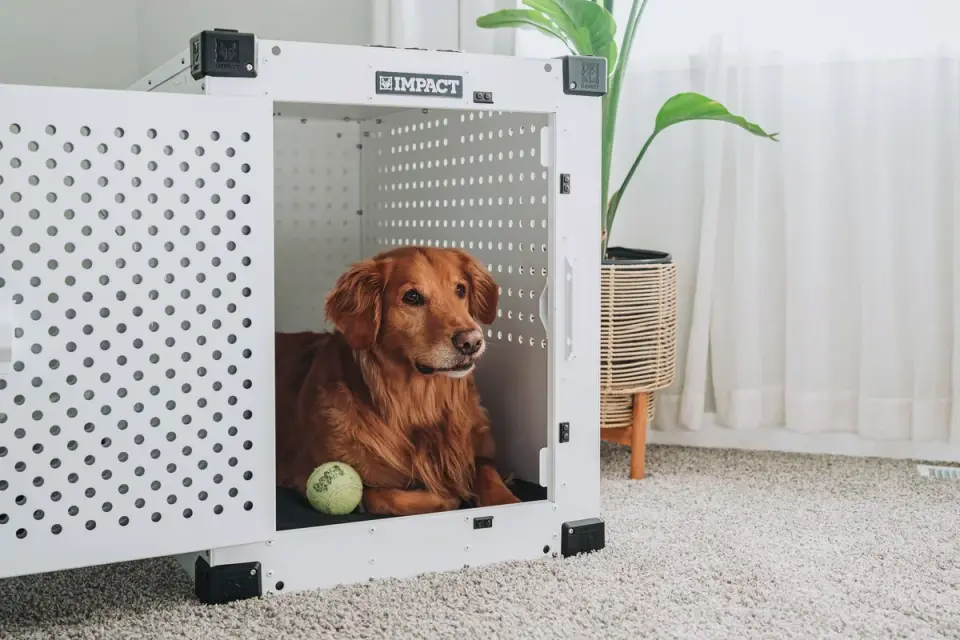
Then audit the shell. Look for rigid plastic or wood walls, a metal door with secure latches, ventilation on three or four sides, no wheels unless they lock or remove, no collapsible fabric walls for the hold, and no damage or cracked corners. Tighten every bolt. Test both food and water cups for secure attachment.
A couple learned this the hard way with their 2-year-old 48-pound doodle for a cross-country move. They bought a large soft-sided bag rated to 40 pounds because it looked roomy in photos. During 3 nights of living-room practice the dog circled, pawed the mesh, and pushed one seam outward until the zipper strained. On night three he refused to enter and panted at the doorway. They had the wrong category entirely. Soft carriers suit only in-cabin travel for small dogs, and this dog needed a rigid hold crate or a different transport plan.
Swap to the right category before you drill fit details.
The counter check agents actually do
Arrive with a clean, dry crate. Attach a single absorbent pad. Label with your name, phone, flight number, and destination. Bring a leash, not an extended flexi lead.
Expect the agent to look for these refusal points. Door closes and latches without force. No protruding interior clips the dog could chew. Ventilation openings are small enough that no nose or paw fits through. Water container is present and reachable without opening the door. Live-animal stickers and upright arrows are visible on a hold crate.
Remove chew toys with strings, loose blankets that bunch under feet, and padlocks that staff cannot open in an emergency. Keep documentation in a pouch on top.
Small dogs vary widely, so match the plan to the individual.
When the standard advice bends
The usual recommendation is a rigid IATA-style crate for the hold and a compact soft carrier for the cabin. That works for most healthy adult dogs. It is the wrong call for some travelers.
A senior pug with a short muzzle, a 13-year-old 16-pound dog with arthritis who pants after a 10-minute walk, changes the calculation. Brachycephalic breeds face heat and breathing risk, and many airlines embargo them from the hold entirely, especially in summer. For that dog, owners often do better to avoid flying in cargo, choose a direct early-morning flight only if the dog fits safely in-cabin, or leave the dog with a trusted sitter. Compare those tradeoffs in Boarding Kennel vs Pet Sitter: Which Is Right for Your Dog?.
Talk with your veterinarian about baseline behavior, low-stress handling, and realistic timelines for acclimation. Individual dogs vary, and a rehearsal week may help support calmer loading.
One owner faced this with a 9-year-old French bulldog booked on a 6-hour summer itinerary with one connection. After reading the breed embargo, she canceled the hold booking, switched to a nonstop route 420 miles shorter, and tested an in-cabin carrier at home. The dog could not stand without pressing his back against the roof. She left him with her brother instead. Disappointing, but safer than a likely refusal or a heat event on the ramp.
Sources
- Traveling by Air with Your Pet — U.S. Department of Agriculture
- Traveling With Your Pet — International Air Transport Association