On this page
What would change if you stopped trying to get your dog to see more and started helping them predict more?
That is the shift I counsel owners to make first when vision fades. The baseline is not sharper sight. The baseline is behavior you can support: a dog who can find their bed, pause at stairs, and check in with you on a walk without panic. Low-stress handling and consistent structure may help support that confidence over a realistic timeline of two to four weeks, and individual dogs vary widely in how quickly they adjust.
Three weeks in is usually when I see the turn. I think of a recent composite case in my counseling room: an eight-year-old, 62-pound mixed-breed dog who had started hesitating at the back steps at dusk, bumping the coffee table, and barking when approached from the left. The owner worried about obedience. What changed by day 18 was not vision. It was predictability. Same rug runners in the hallway, same verbal cue before touching, same treat spot for a nose touch. The dog began to pause instead of freeze, and that pause gave the owner time to guide. That is the outcome we train for.
Start with safety before you ask for skills
Before you shape anything new, make the house easy to read by nose, ear, and paw. That is preventive care in action. Tape down runners so footing does not slide, gate the hard stairs, keep furniture in place, and put a textured mat at thresholds your dog uses most. Keep food and water in one spot and avoid carrying them around the kitchen.
Have your own veterinarian rule out pain, sudden retinal or neurologic causes, and other changes before you assume this is normal aging. Guidance from Cornell University College of Veterinary Medicine reminds owners that vision loss has many causes and the exam should come first, and that context matters for how you train next.
Keep sessions short while you learn. Ideas for pacing from How Long Should a Training Session Be to Tire the Brain? translate well here: two to three minutes, a few times a day, ends on a win.
Trade voice for vision: teach three anchor cues
Dogs with poor eyesight do best when sound predicts what touch will mean. Pick three anchors and use them the same way every time.
Try a name check-in that means orient to my voice, a touch cue that means nose to my palm for guidance, and a careful cue that means slow down and wait for help. Say the word, then pause. Reward the turn, the step toward you, or the stop. Keep your marker word warm and quick, and deliver the treat at nose height near your leg so your dog does not have to search for it.
A pouch helps more than you would think when you cannot lure with a hand signal. The low-fumble setup in How to Use a Training Treat Pouch Effectively may help support cleaner timing and less reaching over your dog’s head, which can startle a dog with limited vision.
You will be tempted to repeat cues louder. Resist that. Say it once, wait two beats, then help with a light leash guide or palm target.
The week hand signals stopped working
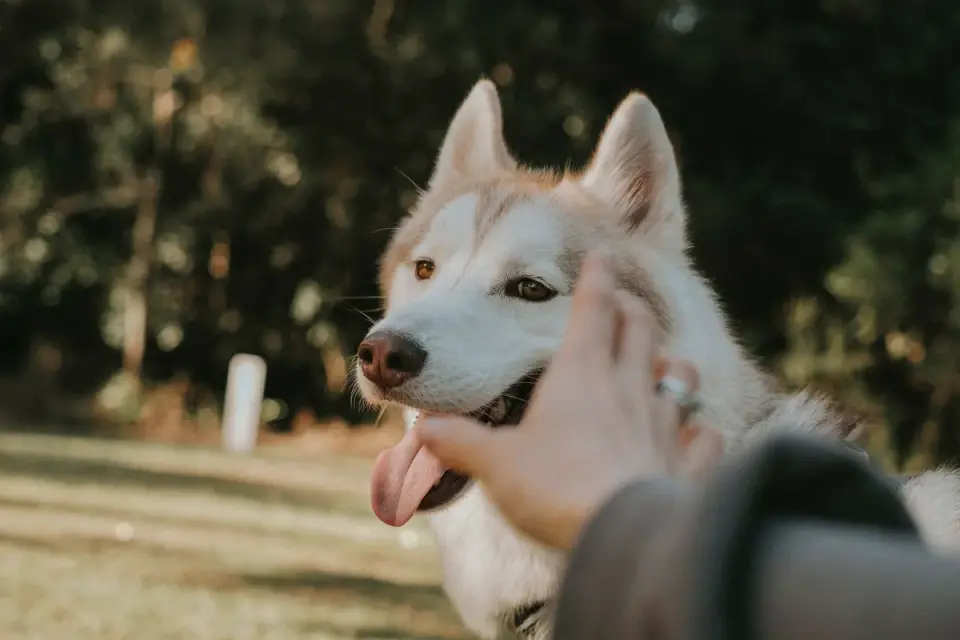
By day 10 of that same home plan, the owner told me the sit hand signal had completely fallen apart. The 62-pound dog would stare past the hand, then sit sideways or not at all. The failed approach was familiar: bigger gestures, stepping closer, then physically shaping the sit from above. The dog ducked, licked lips, and walked away.
That tradeoff is the heart of this work. Visual lures feel efficient, but looming over a dog with poor eyesight can erode trust faster than it builds a behavior. We switched to a verbal sit paired with a light touch on the chest as a tactile prompt, rewarded from the pouch at the dog’s chin. We also stopped training in the echoey garage where the dog could not localize sound well and moved to a carpeted living room with a wall on one side. Within five days the sit returned, slower but calmer, because the cue fit the senses the dog still trusted.
Walk like a narrator, not a corrector
Outside, your job is narration and protection. Use a well-fitted harness and a fixed-length leash or long line, not a retractable that lets tension surprise you both. Walk the same short loop at first so scent landmarks build. Narrate curbs, steps, and turns: up, down, left, wait.
Let your dog sniff. Sniffing is orientation. Keep a loose arc and stop when your dog stops to process. If they freeze, do not pull. Step to their side, offer your palm for a touch, reward the check-in, then guide around.
For leash choices and handling, the comparison in Long Line vs. Retractable Leash for Training: What Actually Belongs on Your Dog is worth a read before you buy anything new.
General training principles still apply. Broad owner resources from the American Veterinary Medical Association emphasize reward-based methods and patience, and dogs with sensory loss need that consistency even more.
When one eye is fine and the house is not
Here is the edge case owners miss. I think of another composite scenario: a five-year-old, 24-pound terrier mix with partial loss in one eye after inflammation, still visual enough to chase a ball in daylight. The owner assumed training could stay the same. By week two, the problem showed up only at 9 p.m. in a dim hallway, when the dog startled, slipped on hardwood, and then refused that hallway for days.
The lesson is that poor eyesight is rarely even. Bright sun, dusk, glare, and dark floors change what your dog can use. For that little dog, weight mattered less than lighting and footing. We added a nightlight, a runner with a rubber back, and a trained wait at the hallway entrance until the light was on. We also taught household members to announce before petting and to approach on the seeing side, then pair handling with a treat. Expect a realistic timeline here too: new routes may help support confidence within days, but startle recovery can take longer, and setbacks after a scare are normal.
If you want a framework for choosing formats as vision changes, Group Classes vs. Private vs. Online Dog Training: What Actually Fits Your Dog’s Stage can help you decide when in-home coaching fits better than a busy class. For background on how eyes normally function, client-friendly explainers from the National Eye Institute may help support conversations with your veterinarian, even though they focus on people.
You do not need a perfect performance. You need a dog who trusts the next three seconds.
What would your next walk feel like if your dog knew exactly how you will tell them about the curb?
Frequently asked questions
Should I still take my dog with poor eyesight to group class?
For most dogs, a quiet private session or in-home coaching fits better at first. Busy classes add noise, close passes, and visual traffic your dog cannot read well. Once your three anchor cues are steady at home, ask your trainer about a small, calm class with space and predictable footing.
How do I stop my dog from bumping into things without scolding?
Do not correct the bump. Prevent it with runners, gates, and consistent furniture, then train a careful pause and a nose touch to your palm for guidance. Reward the check-in and calmly redirect. If bumping is sudden or one-sided, see your veterinarian promptly.
What is the fastest way to build confidence on walks?
Walk a short, familiar loop on a harness and fixed leash, narrate curbs and turns, and reward voluntary check-ins. Keep early outings brief, let your dog sniff to orient, and avoid retractable leashes and crowded sidewalks until the pattern feels easy.
Sources
- Caring for Dogs with Vision Loss — Cornell University College of Veterinary Medicine
- Training and Behavior Resources for Pet Owners — American Veterinary Medical Association
- Eye Health Information — National Eye Institute