On this page
Is it okay to add water to dry dog food? For most dogs, yes — and for some, it’s genuinely the better way to serve a meal. But the honest answer has more texture than a yes-or-no, and it depends on what you’re actually trying to solve.
What problem are you actually trying to solve?
That’s the question I ask owners before I answer the water question directly, because “should I add water to my dog’s kibble” usually has a real problem hiding underneath it. Sometimes it’s a dog gulping food in twelve seconds flat. Sometimes it’s an eight-year-old Cocker Spaniel who’s started leaving kibble in the bowl because her molars ache. Sometimes it’s a puppy transitioning off formula, or a dog who just doesn’t drink enough water on his own. Each of those is a different reason to reach for the tap, and each one changes how much water you add, how long you soak it, and how fast the bowl needs to be emptied.
I’ve watched this play out with a ten-year-old Beagle named Gus, brought in by his owner because he’d started walking away from a full bowl after two or three bites. Nothing dramatic — no vomiting, no weight loss yet, just a dog who used to inhale his food and now picked at it. A dental exam turned up moderate periodontal disease and a fractured premolar. Softening his kibble with warm water for about ten minutes bought us time before the extraction, and it mattered: he went from eating half his ration to finishing the bowl within a couple of days. That’s one dog, not a study, but it’s the kind of case that shows up often enough in senior-dog exam rooms that I bring it up unprompted now.
The case for soaking: hydration, softness, and pacing
Dry kibble runs around 10 percent moisture, which is a lot less than the water content of a fresh or canned diet. Adding warm water at the bowl is a simple, no-cost way to push more fluid into a dog who doesn’t drink enough on his own — and that matters most for dogs prone to urinary crystals, dogs recovering from illness, or dogs in hot climates who just aren’t hitting the water bowl often enough. It also softens the kibble, which helps two very different groups of dogs: puppies whose teeth aren’t ready for a fully hard diet, and older dogs like Gus whose teeth or gums make crunching painful. And for a dog who eats too fast, a softer, heavier bowl of food is simply harder to gulp in three seconds than dry, light kibble — which can help slow the pace of the meal even without a slow-feeder bowl.
Where the digestive question actually comes from
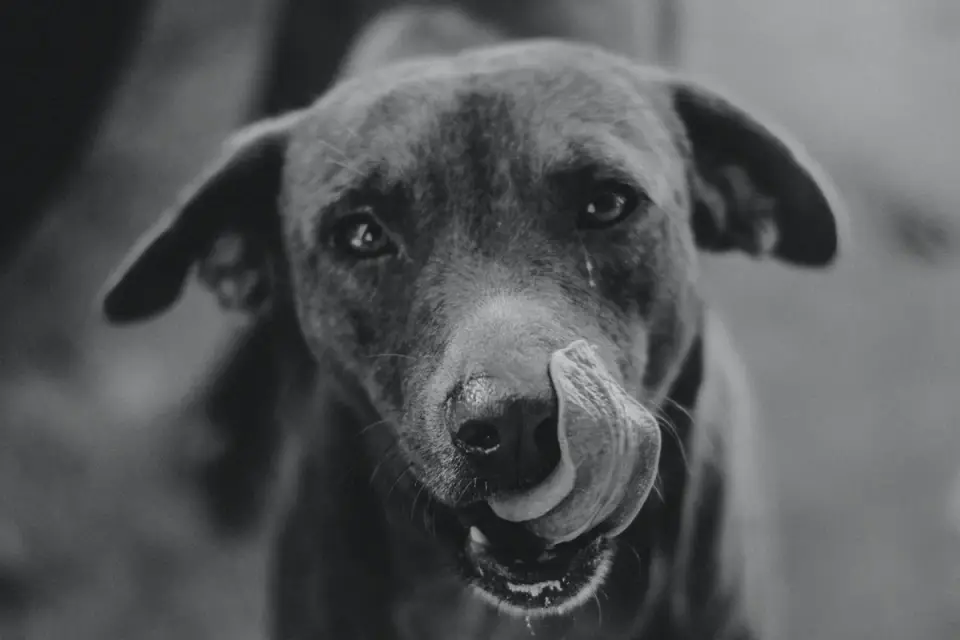
Owners often ask me whether soaked kibble is “easier to digest,” and the honest answer is: it depends on why digestion is the concern in the first place. A dog with a genuinely healthy pancreas and gut doesn’t need pre-softened food to break down a normal diet — that’s what saliva, stomach acid, and digestive enzymes are for. But dogs with real digestive disease are a different story. In dogs with exocrine pancreatic insufficiency, for example, the standard of care includes pancreatic enzyme replacement and a low-residue, moderate-fat diet, not just texture changes — JAVMA notes that these dogs are managed with pancreatic enzyme replacement therapy, nutritional adjustment, and cobalamin supplementation. That same review points out that researchers are still working out why some of these dogs have persistent gut imbalance even after enzyme treatment starts, which tells you texture alone was never going to be the whole answer.
This is where I think a lot of supplement marketing overpromises. A probiotic or digestive-enzyme product can be a reasonable piece of a plan for a dog with a sensitive gut, but it’s not a substitute for diagnosing what’s actually wrong, and it doesn’t reliably work the same way in every dog. A 2025 randomized trial in Frontiers in Veterinary Science found that microbiome diversity measures didn’t reliably separate dogs who responded to a probiotic intervention from those who didn’t — which is a useful reminder that “digestive support” products don’t respond uniformly, even in a controlled study. If your dog’s stool, appetite, or energy has actually changed, that’s a conversation for your vet, not a project for the kibble bowl.
I’ll say this plainly: weigh what a bowl of water, or a bag of enzymes, can realistically do for a dog’s digestion. Neither replaces a diagnosis. Both can be a reasonable supporting move once you know what you’re supporting.
The timing problem nobody mentions
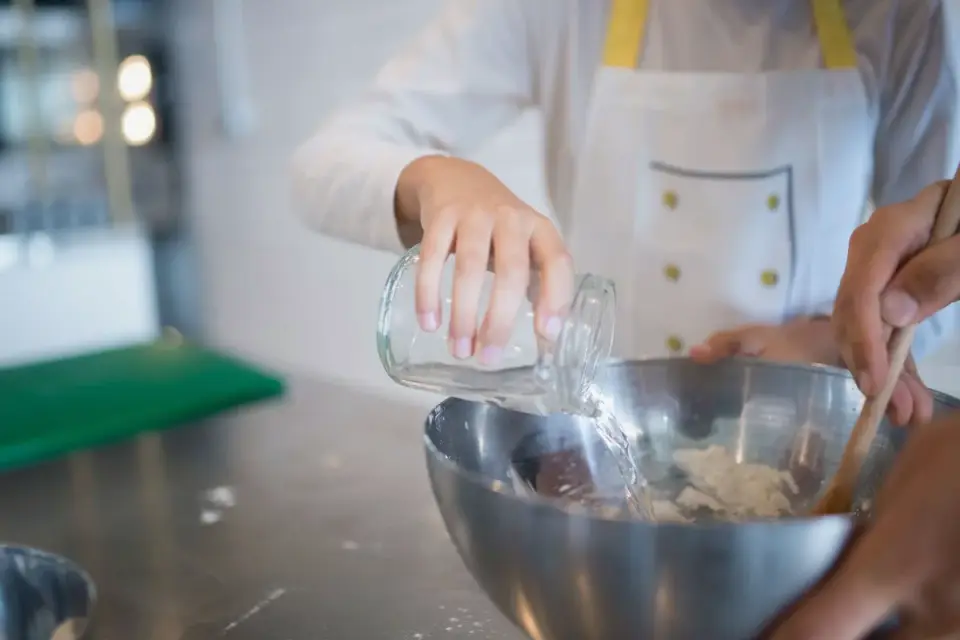
Here’s the part of the water question that gets skipped in a lot of quick answers: once kibble is wet, it’s not shelf-stable anymore. Dry food’s low moisture is part of what keeps it safe sitting in a bowl for hours; add water and you’ve created a much friendlier environment for bacteria. In practice, that means soaked food shouldn’t sit out — serve it, let your dog eat within a reasonable window, and don’t leave a wet bowl out all day the way you might with dry kibble. If you’re soaking food ahead of time, the fridge is a better holding spot than the counter, and it should still come to room temperature or be gently warmed before serving, since cold food is less appealing to most dogs.
Who should think twice
Water isn’t universally the right move. Dogs prone to bloat — deep-chested, large-breed dogs in particular — are sometimes advised by their vets to eat more slowly and calmly regardless of food texture, and a sudden change in how a meal is served is worth discussing with your vet first if bloat risk is already a concern in your household. Dogs on a strict fresh or freeze-dried diet may already be getting the moisture that soaking is meant to add, so the change matters less there. And dogs who are perfectly happy, healthy eaters generally don’t need the extra step — it’s a tool for a specific problem, not a default upgrade every bowl needs.
What I’d actually tell you to do
I worked with a Labrador named Percy a few winters back — three years old, otherwise healthy, whose owner was convinced his occasional loose stool meant his food needed softening. We tried water first because it was free and low-risk. Nothing changed after a week. What actually helped was slowing his eating with a puzzle feeder and adjusting his fiber intake, which is a reminder I give often: don’t let the easiest fix stand in for the right diagnosis. If your dog’s issue is genuinely about hydration, dental comfort, or eating too fast, soaking the kibble is a reasonable, low-cost thing to try for a week or two. If it doesn’t move the needle, that’s useful information — it’s telling you to look elsewhere, likely with your vet, rather than to add more water.
Start small: warm water, ten to twenty minutes of soak time, serve promptly, and watch what actually changes. If nothing does within a week or two, the answer probably isn’t in the water bowl — it’s worth a vet visit, particularly if you’re also weighing questions like whether to switch a senior dog to a new food or how feeding frequency factors into the picture. And if you’re already comparing fresh food against kibble for a dog with digestive sensitivity, remember that moisture content is one variable among several — not the whole story.
Frequently asked questions
Can adding water to dry dog food cause bloat?
There's no clear evidence that soaking kibble causes bloat on its own, but dogs prone to gastric dilatation-volvulus are often advised to eat calmly and slowly regardless of food texture. If your dog is a large, deep-chested breed or has a history of bloat risk, talk to your vet before changing how meals are served.
How long can I let kibble soak before it's unsafe?
Once kibble is wet, it loses the low-moisture environment that keeps dry food shelf-stable, so it shouldn't sit out for hours the way dry kibble can. Serve it promptly and treat leftovers the way you'd treat any moist food.
Is soaked kibble better for puppies?
Many puppies do better with softened kibble while they're transitioning off formula or growing into a full set of teeth, since it's easier to chew and swallow. Your vet or breeder can advise on timing for your specific puppy.
Sources
- Exocrine Pancreatic Insufficiency in Dogs: Management and Outstanding Questions — JAVMA
- Probiotic Response Variability and Gut Microbiome Diversity in Dogs — Frontiers in Veterinary Science