On this page
A twelve-year-old dachshund named Pretzel taught me most of what I know about this question. His owner brought him in because his stool had gone soft and unpredictable over about three weeks, no blood, no vomiting, just a dog who used to have one tidy pile on the morning walk and now had two or three loose ones scattered through the day. She’d switched him from a mid-grade kibble to a home-delivered fresh food six weeks earlier, hoping it would help his aging joints. It hadn’t caused the problem outright, but the transition had been too fast, and his gut hadn’t had time to adjust. We slowed the changeover down, added a fiber source, and within ten days he was back to normal. Nothing about that case told me fresh food was superior. It told me that the switch itself, not the food category, was the variable that mattered most.
That’s the frame I want to give you before we get into ingredients and cost, because it’s easy to read “fresh vs. kibble” as a referendum on which food is healthier in the abstract. It rarely is. Reach for the imaging study when you can get one, and reach for the practical trial when you can’t — with diet, the practical trial is almost always what you actually have.
Start with what “fresh” and “kibble” actually mean
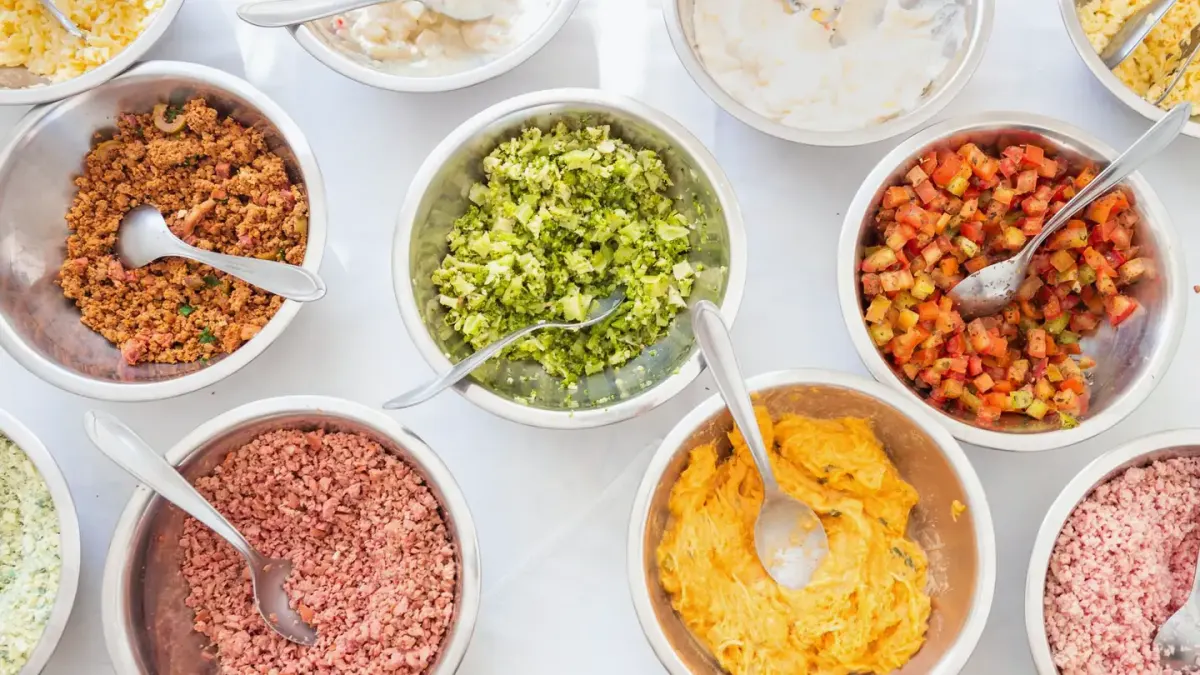
Kibble is cooked through extrusion — a high-heat, high-pressure process that shapes and dries the food, then coats it in fat for palatability. It’s shelf-stable for months, calorie-dense, and formulated to hit AAFCO nutrient minimums reliably batch after batch. Fresh food covers a wider range: gently cooked, dehydrated, or raw formulations, usually refrigerated or frozen, with a shorter shelf life and a higher moisture content.
Neither category is inherently more nutritious. A poorly formulated fresh diet can be just as unbalanced as a poorly formulated kibble, and a well-formulated kibble from a company with a full-time nutritionist on staff can outperform a fresh diet assembled without one. What differs consistently between the two categories isn’t nutrient adequacy — it’s processing, digestibility, and how forgiving each is of storage and portioning mistakes.
Digestion is where the real differences show up
This is the part of the conversation I actually spend time on with clients, because it’s where I see dogs run into trouble — not from the food itself, but from how the gut handles a change in form. A dog with a healthy, adaptable digestive tract will usually do fine on either category. A dog with an underlying issue is where the format starts to matter.
Take exocrine pancreatic insufficiency, a condition I manage regularly in my referral practice. According to a review published in the JAVMA: Journal of the American Veterinary Medical Association, “EPI is treated by pancreatic enzyme replacement therapy, nutritional management (low-residue diets with moderate fat content), and supplementation of cobalamin.” That’s a fat-content and residue conversation, not a fresh-versus-kibble one — but it illustrates why I don’t give a blanket answer. The same review notes that “future studies are needed to further understand the causes of persistent dysbiosis in animals with EPI following initiation of pancreatic enzyme replacement therapy,” which is a fair summary of where the science sits more broadly: we know diet composition matters to gut health, and we’re still working out the mechanisms in individual dogs.
Microbiome research backs up that caution about certainty. A study in Frontiers in Veterinary Science looking at digestive supplementation in dogs found that “diversity metrics did not distinguish non-responders from responders” — meaning a healthier-looking gut microbiome on paper didn’t reliably predict which dogs actually improved. I bring that up because it’s tempting to assume fresh food’s higher moisture and lower processing automatically translate into a more diverse, more resilient gut. The evidence doesn’t support that leap yet. What it supports is a more measured claim: some dogs digest fresh food more easily, some do just as well on a quality kibble, and stool consistency, energy, and coat over a four-to-six-week trial tell you more than any ingredient list will.

The practical tradeoffs owners actually weigh
Cost is the one that ends most of these conversations before nutrition even comes up. Fresh food, whether home-delivered or home-prepared under veterinary guidance, typically runs several times the cost per calorie of a mid-tier kibble. For a fifteen-pound dog that’s manageable for a lot of households. For a seventy-pound dog, it can become a monthly expense that’s hard to sustain, and a diet you can’t sustain isn’t the better diet for that household, no matter what it’s made of.
Storage and prep time matter too. Kibble sits in a bin on the counter for weeks. Fresh food needs a freezer, a thaw schedule, and portioning discipline — miss that discipline and you’re either overfeeding calories or serving spoiled food. I’ve seen both. Palatability cuts in fresh food’s favor more often than not, which helps picky eaters and dogs recovering from illness, but it can also make portion control harder in dogs who’d happily eat past their calorie needs.
If your dog has a diagnosed sensitivity, is recovering from a GI event, or is a picky eater who’s losing weight, a fresh diet formulated by a veterinary nutritionist is worth discussing with your vet — and pairing that switch with the kind of gradual transition described in our guide on switching a senior dog to a new food will lower the odds of the loose-stool problem Pretzel had. If your dog is doing well on a quality kibble with no digestive complaints, there’s no evidence-based reason to switch just because fresh sounds healthier.
Where this actually lands for most owners
I think about a lab mix I saw a few months back, a food-motivated seven-year-old whose owner asked almost exactly this question at the end of an unrelated visit. Nothing was wrong with the dog. She was thirty pounds overweight and eating a free-fed kibble diet, and the owner had read that fresh food would “fix” her joints. I told her what I’ll tell you: the joints needed weight loss and exercise modification first, and the food format was a secondary lever at best. We didn’t change her food category. We changed her portions and cut the treats. Six months later her gait was better, and her food was still kibble. That case sticks with me because it’s a reminder that the fresh-versus-kibble question often stands in for a bigger question — usually about weight, activity, or an underlying condition — that no food swap alone will answer.
Whatever you choose, keep the plate calm during any transition and watch stool, energy, and appetite over several weeks rather than several days. If your dog tolerates high-fiber ingredients, foods built around pumpkin are worth knowing about here: pumpkin fiber is a gentle, natural source of both soluble and insoluble fiber, and either a fresh or kibble diet that includes it can help ease a transition along. And if you’re weighing whole-food ingredients more broadly, our pieces on whether apples and avocado are safe additions are useful companion reading, since fresh-food conversations often lead owners toward home-prepared toppers next.
The bottom line
Fresh food isn’t a categorical upgrade over kibble, and kibble isn’t a compromise you’re settling for. The honest answer is that both can support a healthy dog when they’re properly formulated, and the deciding factors are usually your dog’s individual digestion, your budget, and whether you can maintain the format consistently — not a blanket claim about which processing method is “better.” Talk to your vet before switching a dog with an existing GI condition, transition slowly no matter which direction you’re going, and judge the results by your own dog’s stool, coat, and energy rather than by marketing copy.
Frequently asked questions
Is fresh dog food easier to digest than kibble?
For some dogs, yes, especially those with sensitive stomachs, but the evidence doesn't show a universal digestibility advantage — a properly formulated kibble can be just as well tolerated. Watch your own dog's stool and energy during a trial period rather than assuming either category will win out.
Can I mix fresh food and kibble in the same diet?
Many owners do this successfully, using fresh food as a topper over a nutritionally complete kibble. Introduce any new component gradually and check with your vet if your dog has an existing digestive condition.
Is fresh dog food worth the extra cost?
It depends on your dog and your budget. If your dog has a diagnosed sensitivity or is a picky eater struggling to maintain weight, the cost may be justified; if your dog is thriving on a quality kibble, there's no evidence-based reason to switch.
Sources
- Exocrine Pancreatic Insufficiency in Dogs: A Review — JAVMA
- Digestive Supplementation and Gut Microbiome Diversity in Dogs — Frontiers in Veterinary Science