On this page
The first time I heard it, I almost missed it. A four-year-old boxer named Otis was wrestling with the family’s new foster puppy on the living room rug, and somewhere under the thumping tails and flopping bodies came this low, rolling sound. The owner froze mid-sentence. “Is he growling at her?” He was — and it was nothing to worry about. Otis’s whole body was loose, his weight kept shifting off and back onto the puppy, and he paused every ten seconds to let her get up and reset. That’s a play growl. It sounds alarming out of context, and it is one of the most common reasons owners bring up “aggression” that turns out to be nothing of the kind.
What a play growl actually sounds like
A play growl tends to be higher-pitched and choppier than owners expect, though it can dip low during tug games where the pitch drops with the effort of pulling. The giveaway isn’t the pitch on its own — it’s everything around it. Look at the body: a dog growling in play usually has a loose, wiggly posture, a soft or relaxed mouth, and a body that keeps moving in and out of contact rather than locking still. You’ll often see a play bow before or during the exchange, exaggerated bounces, and self-handicapping, where a bigger or more confident dog deliberately flops over or slows down. The growl comes in bursts, tied to the rhythm of the game, and it stops the instant the action pauses.
A warning growl reads differently the moment you see it next to a play growl. The body stiffens. The mouth may close or pull back into a hard, wrinkled muzzle rather than a loose pant. The dog’s weight often shifts backward, away from whatever it’s growling at, or forward and frozen — still, not bouncy. The sound itself tends to be lower, steadier, and sustained rather than broken into playful bursts. Whale eye, where you see the whites of the eyes, a stiff tail held high or tucked, and a fixed stare are common companions. This growl isn’t inviting anything. It’s a request — sometimes the last polite one before a snap — to create distance.
Where owners get it wrong, and why
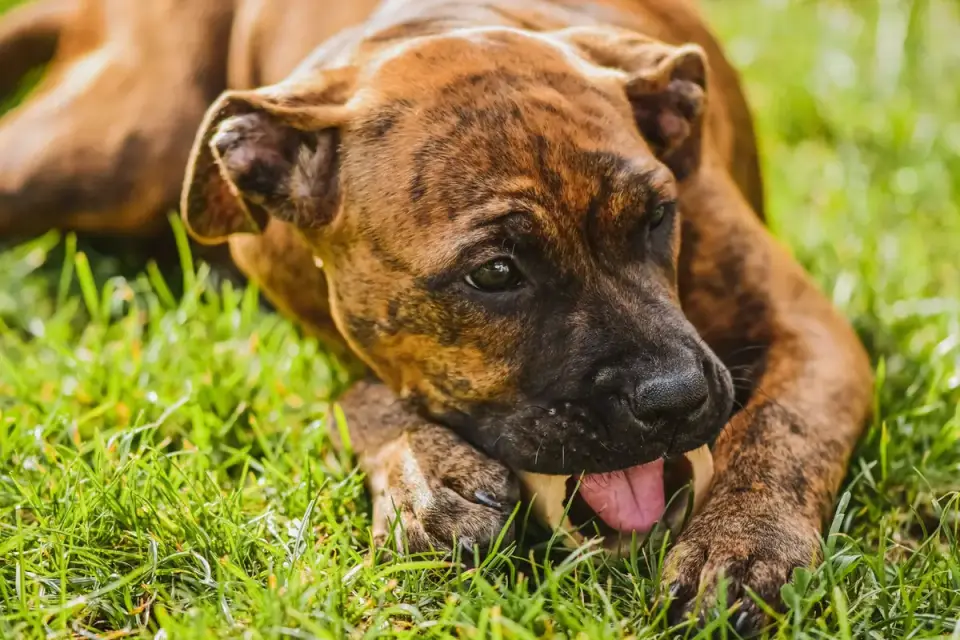
Context is what trips people up. The same growl, transplanted into a different setting, means something else entirely. A growl during tug-of-war is almost always sport. A growl when a toddler reaches over a resting dog’s head is almost always a warning. I ask owners to notice three things before they react: what was happening right before the sound, what the rest of the body was doing, and whether the growl stopped or escalated when the interaction paused. Growls that fade the second contact breaks are usually play. Growls that persist, or that come with stillness and avoidance, deserve space and a slower approach next time.
One thing I say often: never punish a growl itself, even when it’s the warning kind. The growl is information. A dog that gets scolded for growling doesn’t stop feeling threatened — it just learns to skip the warning next time, which is how you end up with a bite that seemed to come “out of nowhere.” The dogs I worry about aren’t the ones who growl. They’re the ones who’ve been taught not to.
This gets murkier with resource guarding, noise sensitivity, or a dog who’s simply worn thin. In my practice, I’ve had clients describe a dog who growled at every approach near the food bowl for months before anyone thought to mention it, assuming it was just “how he is.” By the time I met him, a nine-year-old terrier mix named Gus, he was guarding not just food but his bed, the hallway, and eventually the owner’s chair. His people were kind, patient, and completely unaware that the growl three months earlier had been the first ask for space. We built a management plan — feeding separately, teaching a reliable “leave it,” giving him an uncontested resting spot — and within six weeks the guarding around food had mostly resolved, though the chair took longer. That case is why I tell every owner: the growl you catch early is easier to work with than the one you’ve been living around for a year.
When stress, not the moment, is driving the growl
Sometimes a warning growl isn’t really about the trigger in front of the dog at all — it’s a dog whose baseline stress is already high, so a small nudge tips them over. Chronic stress lowers the threshold for reactivity generally, and this is one area where the human research is more developed than the veterinary literature. A review in Biomedicines notes that for many calming botanicals, “evidence is derived mainly from preclinical studies or traditional use” rather than large controlled trials — a fair caution against overpromising what any single ingredient can do for an anxious dog. Ashwagandha has more human data behind it: a systematic review in Cureus found ashwagandha “has a moderate positive impact on stress reduction and cognitive performance” across multiple randomized trials. L-theanine’s evidence is narrower still — a review in Molecular Psychiatry found a benefit in only one study population, “psychotic anxiety (SMD = 0.54; 400 mg/day for 8 weeks),” which is a human dosing context, not a dog one. I mention these not as a fix for a growling dog but as a reminder that calming support, where it’s used at all, is one small piece next to training, management, and — when the growling is frequent or intense — a reactive vs. aggressive evaluation with your vet.
What I tell owners before they leave the exam room
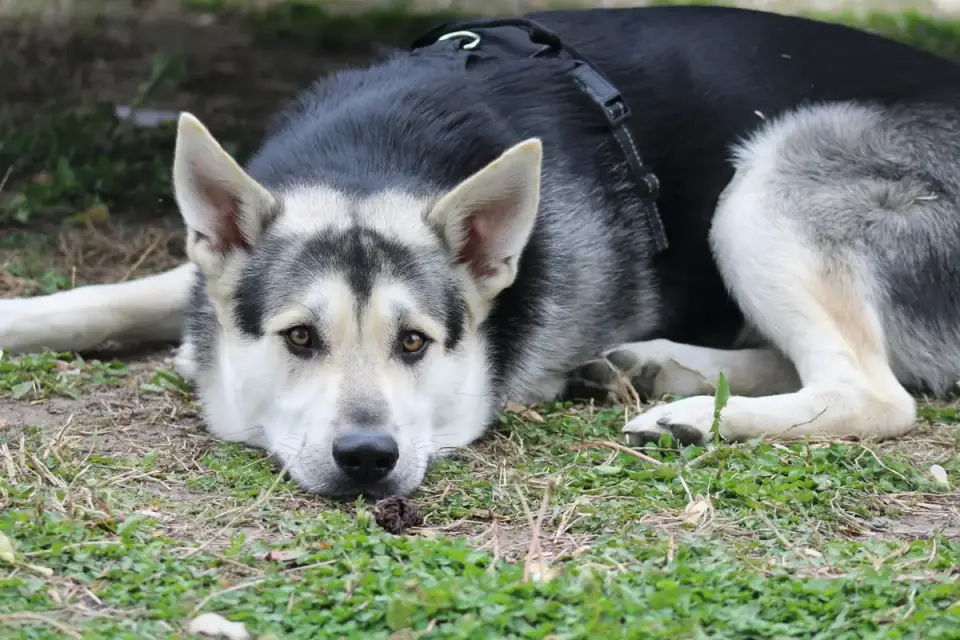
By the time a growling question reaches me, most owners have already run through the guesswork on their own. What actually helps is a short mental checklist, not a diagnosis. Was the body loose or stiff? Did the growl stop when contact stopped? Was there a play bow, a bounce, a wiggle — or stillness and a fixed stare? Is this a new pattern, or has it been building for weeks? A single play growl during a wrestling match needs nothing from you but a smile. A warning growl needs space, a slower reintroduction, and if it’s happening around food, toys, resting spots, or handling, a look at whether the dog is anxious more broadly — that’s when I’d bring up something like puppy mouthing patterns or general reactivity work rather than treating the growl as an isolated event. Dogs vary enormously in how they communicate discomfort, and a dog who seems “fine” with rough handling for years can still growl the day it finally isn’t fine anymore. Reading the whole picture, not just the sound, is what keeps owners and dogs on the same side of that moment.
So the next time your dog growls, what’s the rest of the body telling you?
Frequently asked questions
Can a play growl turn into a real fight?
It can, especially between dogs who don't know each other well or when arousal builds too high. Watch for the loose, bouncy body turning stiff, or for one dog stopping self-handicapping — those are cues to call a break before things escalate.
Should I ever punish my dog for growling?
No. A growl, even a warning one, is communication you want to keep. Punishing it can suppress the warning without addressing the underlying discomfort, which raises the risk of a bite with no notice next time.
Sources
- Chamomile and Related Botanicals for Anxiety: Evidence Review — Biomedicines
- KSM-66 Ashwagandha and Stress: A Systematic Review — Cureus
- L-Theanine for Anxiety: A Review of Clinical Evidence — Molecular Psychiatry