
On this page
You turn the key and hear the scramble, then there he is with a stuffed fox clamped sideways in his mouth. Expect this first: for most pet dogs, carrying a toy to the door is a happy, social greeting, not a problem you need to fix.
An adult Labrador mix left loose in the living room started meeting his owner at the door with the same plush fox for 14 evenings in a row. He trotted over with tail sweeping wide, fox clamped in the middle, and nudged it toward her hands while wiggling from shoulders to hips. She worried he was lonely all day and practicing some anxious ritual. The rest of the pattern looked social instead: no pacing, no drooling, no scratched trim, just a quick grab within seconds of the key turning, then a settle on the rug once she talked softly and stroked his chest.
That toy is doing a job.
What that doorway parade usually means
Dogs greet with their mouths. Retrieving, nudging, and parading an object can channel excitement, invite play, and get attention without jumping or mouthing your hands. Individual dogs vary widely, but the classic happy version looks loose and bouncy: soft eyes, wagging tail, play bows, a mid-mouth carry, and a quick settle once you say hello.
Set the baseline before you change anything. Watch for three arrivals. Note what he grabs, how fast he settles, and what his body does. Keep arrivals boring. Walk in, pause, breathe. Pet the chest, not the top of the head. Praise the carry quietly, then cue a sit or place. Offer a short tug or toss after shoes are off. Put high-value toys in an entry basket so the choice is easy.
Learn the overlap with arousal problems in Boredom vs Separation Anxiety: How to Tell the Difference when the greeting never winds down.
Greet the toy first, then the dog
Make the main decision concrete: keep the toy, calm the greeting. Taking the toy away often raises frustration because you removed the coping outlet. Reward four paws on the floor. Ask for a drop only after the first minute. Trade, never chase or pry. Rotate textures to protect one favorite from shredding. Practice short departures so the door cue loses charge. Guidance from AVSAB supports rewarding the behavior you want rather than punishing excitement.
A young cattle-dog mix began shredding the greeting toy instead of carrying it, and the owner tried removing every toy before work to stop the doorway frenzy. Without an outlet the chewing shifted to a throw pillow and a shoe heel, while jumping and sleeve mouthing climbed on arrival. Taking the prop away had not lowered arousal. It had removed the job that kept a busy mouth occupied. When the owner of the 34-pound dog left one sturdy rubber toy in an entry basket and kept arrivals quiet, the grab-and-carry returned and the pillow chewing eased.
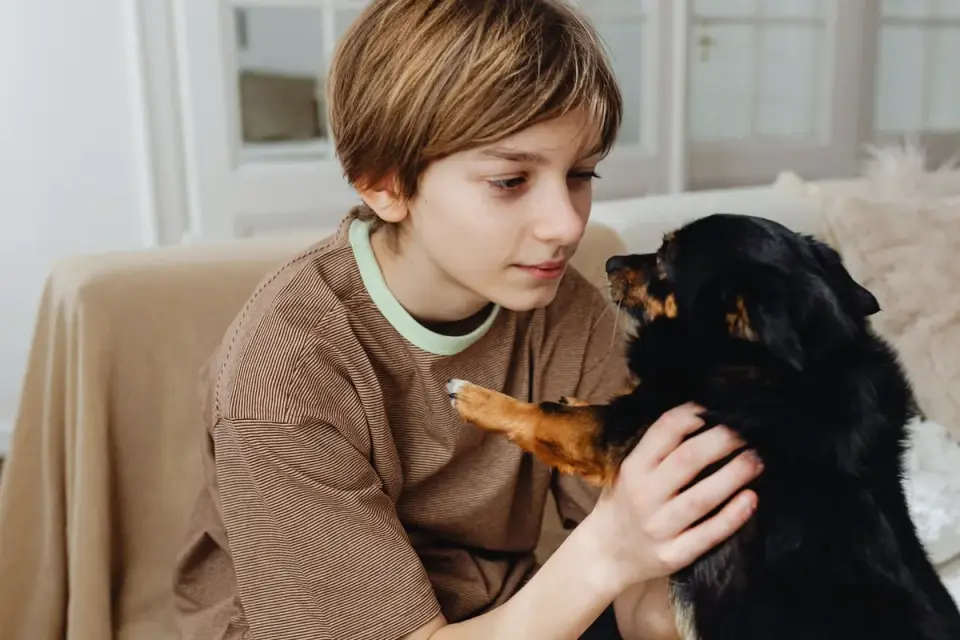
If mouthing tips into chewing the wrong things, compare notes in Is My Dog Chewing Out of Boredom or Anxiety?.
When the toy looks more like worry than welcome
My recommendation to greet calmly and let him carry is the right call for most dogs, and here is where it would be the wrong call. Bend the plan when the toy accompanies pacing, whining, drooling, trembling, destroyed door trim, house soiling, or guarding that stiffens over the object. Those signs point toward separation distress, barrier frustration, or resource guarding rather than joy.
Do not corner, scold, or forcibly remove the toy. Give space. Note when signs start and stop relative to your departure and return. Film one arrival. Share it with your veterinarian or a qualified trainer. The ASPCA notes similar home patterns when dogs struggle with alone time, and a professional can sort excitement from anxiety.
Excitement can spill into other arousal habits, covered in Is Humping a Dominance Behavior or Just Excitement?.
What settled actually looks like
A lanky senior shepherd mix started waiting with a squeaky ball but stopped well short of guests, freezing and staring while holding it. The usual advice to bend down, reach out, and coax him closer backfired and made him drop the ball and bark. His owner changed the routine and tossed a treat behind him so he could retreat about 10 feet from the doorway, then invited the visitor to ignore him completely. With space to hold the toy without pressure, the dog chose to drift nearer on his own and settled faster.
Keep it preventive. Track settle time across two weeks. Aim for shorter, softer greetings. Keep routines predictable. Ask whether your dog can still choose distance when visitors arrive?
Frequently asked questions
Should I take the toy away to calm my dog down?
Usually no. Let him carry it, keep your arrival quiet, and reward four paws on the floor. Removing the outlet often raises jumping or mouthing.
Does carrying a toy mean separation anxiety?
Not by itself. Happy greeters settle within minutes. Worry looks like pacing, drooling, destruction, house soiling, or failure to settle after you are home.
What if my dog guards the greeting toy?
Do not pry it out. Give space, trade for a treat later, and ask your veterinarian or trainer for a guarding plan tailored to your dog.
Sources
- Common Dog Behavior Issues — ASPCA
- Home — AVSAB