On this page
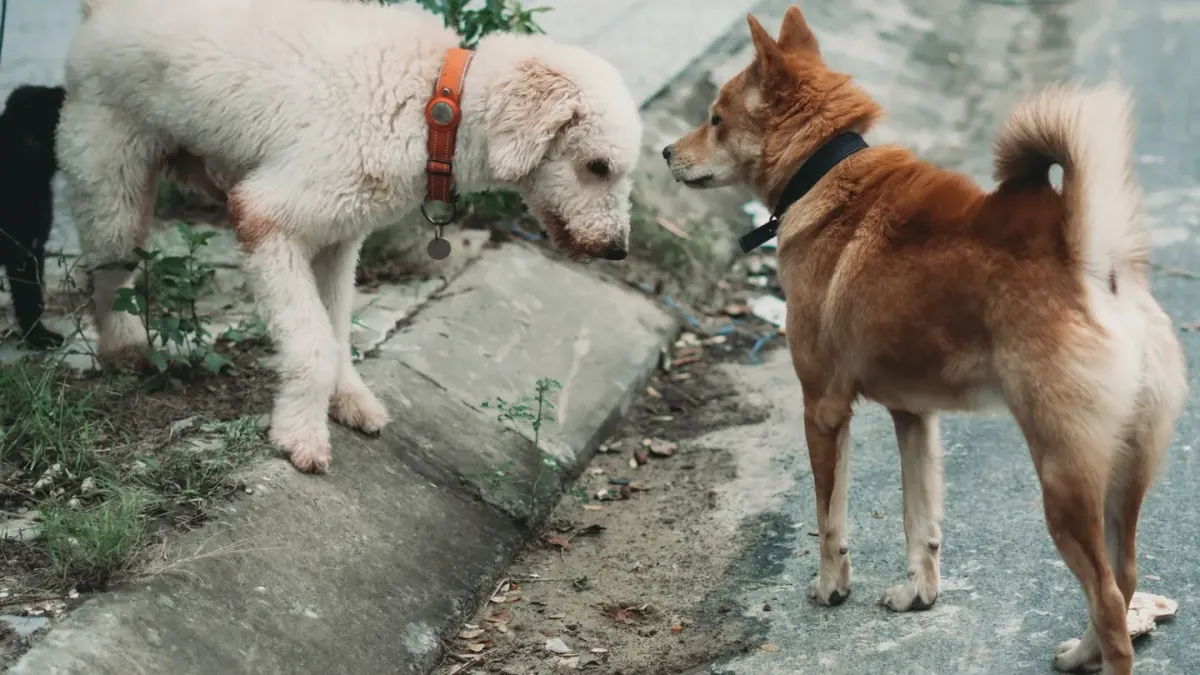
The first time an owner tells me “my dog is aggressive,” I ask what actually happened. Nine times out of ten, the story is a dog on a six-foot leash, barking and lunging at another dog across the street, then settling the second the trigger is gone. That is not the same animal as a dog who bites without warning when a stranger reaches for its collar. Both get labeled “aggressive” in casual conversation, but they need different management, different training, and different conversations with your vet.
What “reactive” actually means
A reactive dog reacts more intensely than the situation calls for — usually to a specific trigger like other dogs, strangers, bikes, or loud trucks. The behavior is almost always rooted in fear, frustration, or overstimulation, and it is trying to increase distance from whatever is upsetting the dog. Barking, lunging, spinning, and pulling toward or away from the trigger are classic reactive behaviors. Once the trigger is removed, a reactive dog typically recovers within seconds to minutes.
Reactivity is a description of intensity, not intent. The dog is not plotting to bite; it is flooded and doing the loudest thing it knows how to do.
What “aggressive” actually means
Aggression is a set of behaviors meant to threaten or cause harm — growling with stiff body language, snapping, biting, or guarding a resource with teeth. Aggression can be defensive (the dog feels cornered and has no other option) or it can be closer to true offensive intent, but either way the goal shifts from “get away from this” to “make this stop by force.” A dog can be aggressive in one specific context — over a food bowl, a bone, a tight doorway — and be perfectly friendly everywhere else.
Here is the distinction I give owners in the exam room: a reactive dog wants space. An aggressive dog wants contact, on its terms, to end a conflict.
A nine-week-old start, and a two-year slide
In my practice I once worked with a Cattle Dog mix named Ruby, adopted at nine weeks old, who by fourteen months would spin and bark at the end of the leash whenever a skateboard rolled past. Her owner, a graphic designer who worked from home, first noticed it on a Tuesday evening walk near a middle school — the bell had just let out, and a cluster of kids on boards came around the corner fast. Ruby froze, then exploded into barking, lunging against the leash hard enough to choke herself. She recovered in under a minute once they turned a corner and the skateboards were out of sight. Over the following eight months, without any intervention, that skateboard trigger generalized to bicycles, then to joggers, then to anyone moving quickly toward her on the sidewalk. Ruby never once made contact with a person or another dog. She was reactive, not aggressive, and the distinction mattered enormously for how we built her plan — desensitization and distance management, not a bite-prevention protocol.
Reading the escalation ladder
Dogs rarely go from calm to biting with no warning. Learn this ladder and you can usually intervene before either reactivity or aggression peaks:
- Whale eye or lip lick — subtle discomfort, easy to miss.
- Freezing or stiffening — the dog has stopped moving and is assessing.
- Lip curl, low growl, or hard stare — a clear warning.
- Barking, lunging, spinning — the reactive dog’s main event; distance-seeking.
- Air snap or bite — contact-seeking; this is the aggression threshold.
A dog stuck cycling between steps 3 and 4 for months is a reactivity case. A dog who regularly reaches step 5, especially with little warning at the lower rungs, needs a structured behavior plan with a veterinary behaviorist or certified trainer, and sometimes a full veterinary workup to rule out pain or a medical driver.

Building the plan: distance first, then duration, then difficulty
Whether you are managing reactivity or working through a more serious aggression case, the mechanics of a training plan follow the same order:
- Week one: Find the dog’s threshold distance — the point where they can see the trigger but stay under control (no barking, no lunging). Reward calm attention at that distance.
- Weeks two through four: Shrink the distance gradually, in small increments, only advancing once the dog is consistently calm at the current distance. This is independence training for a velcro dog territory in reverse — instead of building tolerance for absence, you are building tolerance for presence.
- Month two and beyond: Generalize across new locations, new versions of the trigger, and higher-distraction environments. Dogs who panic at specific sounds, like the ones covered in my dog panics at the sound of the garbage truck, often need this same staged exposure work before the sound stops triggering a full-body reaction.
If your dog’s reactivity shows up as biting at hands or clothing during excitement rather than fear, that is a related but separate pattern — see why does my dog get nippy and mouthy when overexcited for that specific fix.
Where calming support may fit in
Calming support is not a substitute for training, but some owners use it alongside a behavior plan to take the edge off arousal during the work. A systematic review in Cureus concluded that ashwagandha has a moderate positive impact on stress reduction and cognitive performance across the RCTs it analyzed. Chamomile has a longer but thinner evidence base — a review in Biomedicines notes that “for the remaining species, evidence is derived mainly from preclinical studies or traditional use.” L-theanine has more targeted human data; a review in Molecular Psychiatry found benefit “except for one study on psychotic anxiety (SMD = 0.54; 400 mg/day for 8 weeks).” None of this replaces a real training plan, and none of it is dosed for dogs in that research — talk to your vet before adding anything, especially if your dog is already reactive around food or treats.
The conversation I have most often
One of the dogs I worked with most recently was a seven-year-old Beagle named Otto, sixty-one pounds, whose owner scheduled the visit convinced he was “turning aggressive” because he had started growling at her teenage son near his food bowl. We talked through the timeline — it had started about three weeks earlier, right after the son began reaching into the bowl mid-meal to move it “so Otto wouldn’t get fat.” There was no growling anywhere else in the house, no growling at strangers, no growling on walks. This was textbook resource guarding, a form of aggression, but a narrow and highly manageable one, not evidence of a broader temperament shift. We built a simple protocol: hand-feeding a portion, trading up with higher-value treats when approaching the bowl, and a household rule that no one touches the bowl during a meal. Six weeks later the growling was gone. I tell that story because owners often fear the worst label before they have the full picture, and the plan changes completely depending on whether you are managing distance-seeking or contact-seeking behavior.
When to call in a professional
Book a session with a certified behavior consultant or veterinary behaviorist if any of the following are true: your dog has bitten or broken skin, warning signs are shortening or disappearing before an escalation, the behavior is spreading to new triggers or contexts, or you feel physically unable to manage your dog safely on a walk. Ask your veterinarian to rule out pain, thyroid dysfunction, or other medical contributors first — a dog who is hurting can look “suddenly aggressive” almost overnight, and that story looks nothing like the gradual generalization I described in Ruby’s case.
Individual dogs vary widely, and a label like “reactive” or “aggressive” is a starting point for a conversation with your vet or trainer, not a permanent verdict on your dog.
Frequently asked questions
Can a reactive dog become aggressive over time?
Yes, if reactivity is left unmanaged and the dog is repeatedly pushed past its threshold, some dogs escalate toward snapping or biting. Early intervention with distance management and desensitization lowers that risk.
Is reactivity a form of aggression?
Not technically. Reactivity is an intense response aimed at increasing distance from a trigger, while aggression is behavior aimed at threatening or making contact. A dog can be reactive without ever being aggressive.
Should I punish growling?
No. Growling is a warning signal, and suppressing it can remove a dog's ability to communicate discomfort before escalating to a bite. Address the underlying trigger instead.
Sources
- Ashwagandha for Stress and Cognitive Performance: A Systematic Review — Cureus
- Chamomile and Anxiety: A Review of the Evidence — Biomedicines
- L-Theanine and Anxiety Outcomes — Molecular Psychiatry