On this page
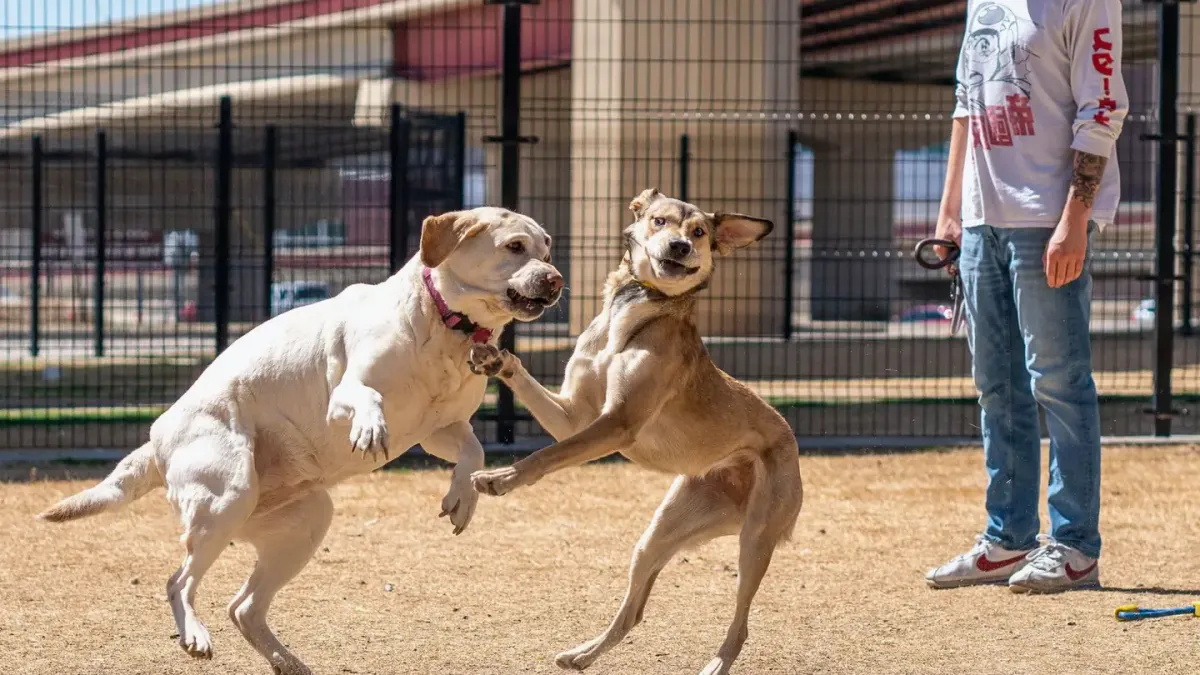
If your dog turns into a wind-up toy the second the leash comes out, or greets you at the door with a mouth full of your sleeve, you’re not dealing with a bad dog — you’re dealing with an over-aroused one. Here’s a quick-scan checklist before we get into the why.
Fast checklist: is this normal excited mouthing?
- Happens during play, greetings, or high-energy moments, not when your dog is calm
- Mouth is soft or open-jawed, not a hard clamp-down bite
- Body is loose and wiggly — tail up, whole-body wag, play bow — not stiff or frozen
- Stops or softens when you pause the interaction and stand still
- Gets worse with more excitement (visitors, other dogs, a ball being thrown) and better with rest
If most of those boxes check, you’re most likely looking at arousal-driven mouthing, not aggression, and it’s a very trainable pattern.
Why Excitement Turns Into Teeth
Dogs experience excitement as a full-body event. Heart rate climbs, muscles fire, and the parts of the brain handling careful decision-making take a back seat to the parts driving movement and instinct. A dog in that state hasn’t lost its manners on purpose — its self-control system is simply outmatched by the surge of arousal. The mouth ends up involved because it’s a dog’s primary tool for exploring the world and for play; puppies mouth littermates constantly, and that habit doesn’t disappear just because the “littermate” is now a person.
The ASPCA notes that mouthing and nipping in dogs is a normal behavior that, without redirection, can persist into adulthood — especially in dogs that were allowed to mouth freely as puppies or that get inconsistent feedback about when it’s acceptable.
Sudden nipping can also be the tail end of several smaller stressors piling up rather than one single trigger. A dog that’s already wound up from a car ride, a busy dog park, and an overly excited greeting has less capacity left to regulate itself, so the next exciting thing — a toy being waved, a kid running past — is what tips it into a nip. Owners who’ve dealt with a dog that reacts big to a specific sound know this pattern well; it’s worth reading our guide on a dog that panics at the sound of the garbage truck for a related look at how stacked triggers push a dog past its threshold.
What’s Actually Happening in the Moment
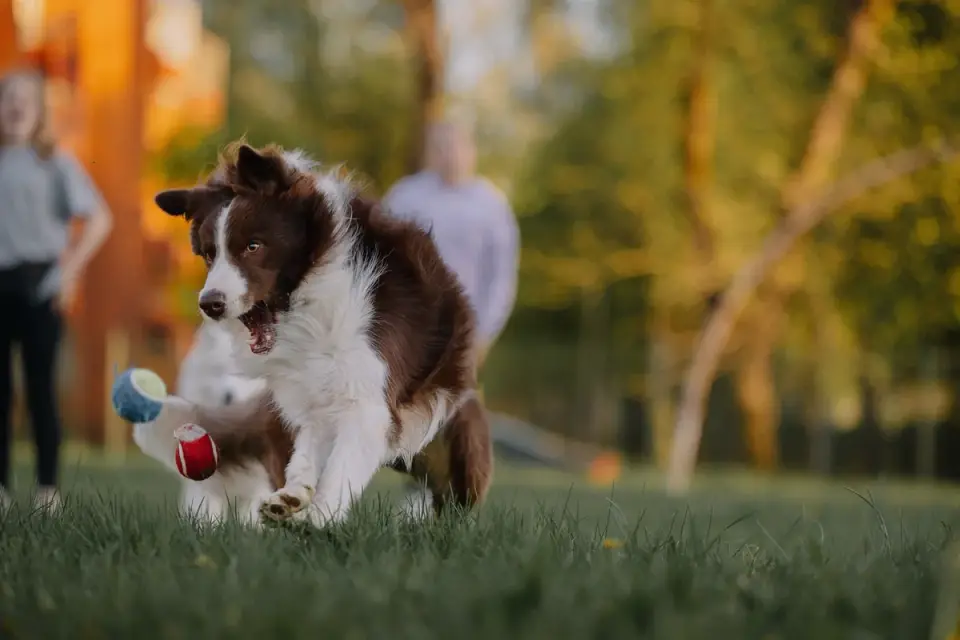
A dog mid-nip is not weighing consequences. It’s running on momentum.
Practically, this means the goal isn’t to “correct” the nip after it happens — it’s to interrupt the buildup before the mouth gets involved at all. Watch for the early tells: faster movement, harder eye contact on your hands or clothing, jumping, or a stiffening body a beat before the mouth opens. Catching that window is far more effective than reacting once teeth are already on skin.
Redirecting the Bite: What to Do in the Moment
- Freeze and disengage. Stop moving, stop talking in an excited tone, and turn away. Motion and attention both reward the behavior, even negative attention.
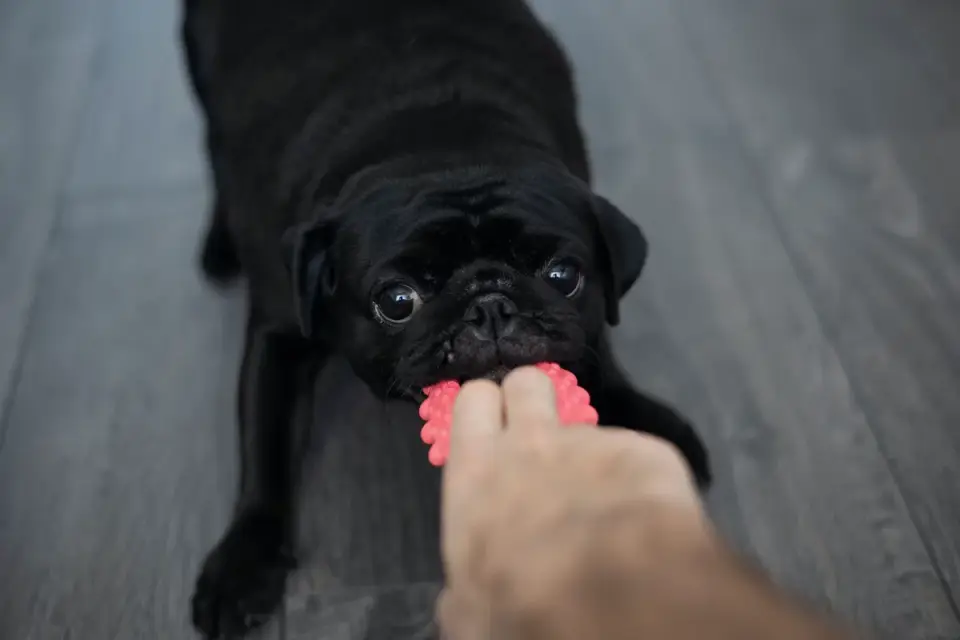
- Offer a legal target. A rope toy, a chew, or a tug item gives the mouth somewhere appropriate to go. Praise the second your dog takes it.
- Lower the energy in the room. If a game is what’s driving the arousal, pause it rather than pushing through.
- Reset with a short settle. A few seconds on a mat or in a calm sit before resuming play teaches that calm behavior, not excitement, is what restarts the fun.
Building Impulse Control Over Weeks, Not Days
Single corrections rarely stick because the underlying skill — tolerating high arousal without losing control of the mouth — takes repetition to build. Short, structured sessions that deliberately ramp a dog up a little and then ask for a sit or a settle, repeated daily, build that tolerance gradually. Puppies especially benefit from a predictable routine that includes real rest, since an overtired puppy nips more, not less; a calm, well-set-up sleeping space can help, which is part of why we cover crate setup for a puppy’s first night in a related guide. For dogs that mouth hands specifically during handling, gradual desensitization to having the mouth and face touched — the same principle used in our guide to getting a dog used to tooth brushing — can reduce sensitivity around the mouth over time.
Where Calming Support May Fit In
For dogs whose nipping is tangled up with general overexcitability or a jumpy baseline temperament, some owners look at calming ingredients alongside training, not instead of it. Chamomile and valerian root have a long history in traditional herbal care for supporting relaxation, though for most species — dogs included — the evidence base is still mainly preclinical or drawn from traditional use rather than large clinical trials, according to a review in Biomedicines. Ashwagandha has a stronger human evidence base; a systematic review published in Cureus found that ashwagandha has a moderate positive impact on stress reduction and cognitive performance across multiple randomized trials. L-theanine, an amino acid found in tea, has also been studied for calming effects, though a review in Molecular Psychiatry found meaningful effect sizes concentrated in specific study types rather than universally across the literature. None of this replaces training, and none of it is a substitute for a vet’s input on your individual dog — think of it as one possible piece of a broader plan, not the plan itself.
When to Get Outside Help
Most excited nipping responds well to consistent redirection within a few weeks. It’s time to bring in a certified trainer or your veterinarian if the nipping is getting harder rather than easier, if it’s starting to break skin, if it happens outside of clearly excited contexts, or if your dog’s body language shifts from loose and wiggly to stiff and guarded. A professional can rule out pain or a developing behavioral issue and build a plan specific to your dog rather than a generic one.
Every dog’s arousal threshold is different, and what looks like an overnight fix for one dog can take a patient month or two for another. That’s normal — the goal is steady progress, not a single dramatic breakthrough, and most dogs get there with consistency.
Frequently asked questions
Is nipping when excited a sign of aggression?
Usually not. Excitement-driven nipping comes from an aroused nervous system and a mouth that's the fastest tool a dog has, not from a desire to cause harm. True aggression tends to come with stiff body language, growling, and an intent to make you back off — different context than a wagging, bouncy dog mouthing your sleeve.
Will my dog grow out of mouthing on their own?
Many puppies naturally mouth less as adult teeth come in and life experience teaches them what's rewarded, but that shift depends on consistent redirection from you. Left unaddressed, an adolescent or adult dog can keep the habit, especially in high-energy moments like greetings or play.
Should I yelp or pull my hand away when my dog nips?
A sharp yelp can work for some dogs by mimicking the feedback littermates give, but for an already overexcited dog it can sometimes ramp arousal up further. Calmly stopping the interaction and redirecting to a toy is a safer default if yelping seems to escalate rather than settle things.
Sources
- Mouthing, Nipping and Play Biting in Adult Dogs — ASPCA
- Wild Flora Species from Romania with Anxiolytic and Antidepressant Potential: A Global Perspective—Narrative Review — Biomedicines
- Systematic review of ashwagandha and stress reduction — Cureus
- L-theanine and anxiety outcomes across clinical studies — Molecular Psychiatry