
On this page
A properly sized crate, a den-like cover, and a calm routine help a new puppy’s first night feel safe, not frightening. That much holds true whether the puppy weighs four pounds or forty.
A family I think about often brought home a wobbly-legged retriever mix on a Friday evening, set the crate up in the laundry room because it seemed tidy and out of the way, and called me two days later, exhausted, describing a puppy who screamed for hours and a household that hadn’t slept. Nothing was wrong with the puppy. The setup just hadn’t accounted for how much a very young animal needs to feel close to its people in an unfamiliar house. Once the crate moved next to the bed, the crying dropped to a few minutes a night within about a week.
Before the sun goes down: getting the crate right
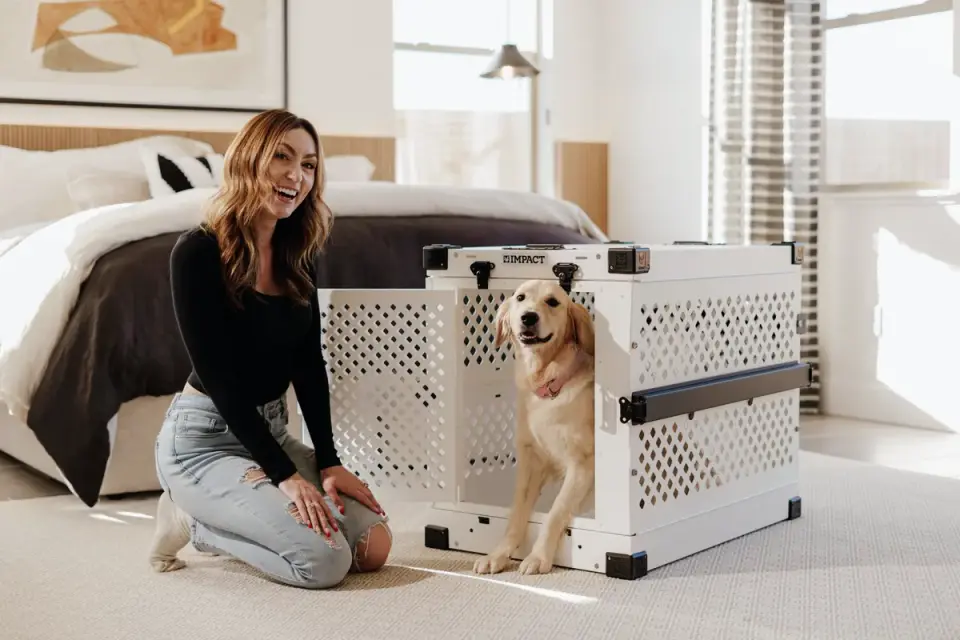
Size matters more than most new owners expect. According to the American Kennel Club, a crate should let a puppy stand up, turn around, and lie down comfortably, but it shouldn’t be so roomy that there’s space to sleep in one corner and eliminate in another — a mistake that can quietly undo housetraining before it starts. If you’ve bought a crate sized for the adult dog your puppy will become, block off the extra space with a divider rather than leaving it wide open.
Line the floor with a low-pile blanket or crate pad, something washable, since accidents are part of the first weeks. A piece of bedding from the puppy’s original litter, if you have it, can carry a familiar scent into an otherwise strange box. Cover three sides loosely with a light blanket to create a den-like feel, leaving the front open enough for airflow.
The first hour in the new home
A tired puppy settles more easily than a wound-up one, so a short, gentle play session and a last bathroom trip right before the crate goes a long way. Keep the tone quiet rather than exciting — this isn’t the moment for a big goodbye or a lot of fuss, since a calm handoff tends to read as calm to the puppy too. A small chew toy or a stuffed food toy can give restless energy somewhere to go without turning into a full meal so close to bedtime.
Once the lights go out
Expect some noise. Cornell’s veterinary college notes that crates are a genuinely useful management tool for many dogs, though not every puppy takes to one right away, and it’s worth watching for real distress — heavy panting, drooling, or frantic attempts to escape — rather than assuming all vocalizing means the same thing (see Cornell University College of Veterinary Medicine). Ordinary settling whimpers usually fade within a few minutes on their own.
If the whining escalates, resist bringing the puppy into your bed unless that is genuinely where you want it sleeping going forward. A hand resting near the crate door, or the crate pulled close enough to touch, often reassures a puppy without undoing the training. If it’s been an hour or two since the last bathroom break, a calm, boring trip outside and straight back to the crate is reasonable — no play, no praise beyond a quiet word, so the outing doesn’t start to look like a reward.
When distress looks different from adjustment
Ordinary adjustment crying is different from separation anxiety, and it helps to know the difference before assuming the crate itself is the problem. The ASPCA describes true anxiety as involving signs like heavy panting, excessive drooling, or frantic escape attempts rather than a few minutes of settling noise — and for some dogs, a different management approach works better than confinement. If a puppy is consistently panicking rather than gradually calming, that’s worth mentioning at the next vet visit rather than pushing through alone.
The nights that follow
Most families see the crying shorten night over night, with many puppies largely settled within two to three weeks of a consistent bedtime routine. Keep the schedule steady — same wind-down, same bathroom trip, same quiet tone — even on the rough nights, since predictability is doing more of the work than any single trick.
A brief recap
A crate sized to fit the puppy in front of you, kept close to your side, and paired with an unhurried bedtime routine tends to turn a hard first night into a manageable one, and a manageable first week into a settled month. Individual puppies vary in how quickly they adjust, and a dog who seems truly panicked rather than simply unsettled deserves a conversation with your veterinarian.
Frequently asked questions
Should I let my puppy cry it out in the crate the first night?
Brief settling whimpers are normal and usually pass on their own. Sustained, escalating crying — especially with panting, drooling, or frantic scratching — is a sign of real distress, and a calm, quiet check-in is more appropriate than ignoring it outright.
How big should the crate be for a young puppy?
Big enough to stand, turn around, and lie fully stretched out, with roughly two inches of headroom when sitting — not so large that there's room to sleep at one end and use the other as a bathroom.
Where should the crate go on the first night?
Next to your bed or in your room is usually the easiest transition, since the puppy can hear, smell, and sometimes see you without you having to get up for every sound.
Sources
- Setting Puppies up for Success: Beginning Crate Training — American Kennel Club
- Separation Anxiety — ASPCA
- Dog crates: When to use them and how to pick one — Cornell University College of Veterinary Medicine