
On this page
Getting your dog used to teeth brushing is a step-by-step process that rewards calm cooperation before you brush at all. Skip the brush on day one. Every dog, whether it’s a wiggly puppy or a set-in-its-ways senior, does better when mouth handling is built up in small pieces rather than sprung on them as a finished routine.
Why This Is Worth the Effort
Periodontal disease is extremely common in dogs, and most will show early signs of it by around age three according to Cornell University College of Veterinary Medicine. The American Veterinary Medical Association notes that regularly brushing a dog’s teeth is the single most effective thing an owner can do to keep teeth healthy between professional cleanings, and it may reduce how often those cleanings are needed.
That’s the payoff. The catch is that most dogs don’t arrive knowing how to sit still for it, and pushing too fast is exactly what causes a dog to start avoiding the whole process.
Step 1: Make Mouth Handling Normal First
Before any brush touches a tooth, your dog needs to be comfortable with you handling its face and mouth in general.
- Pet along the muzzle and jawline during normal affectionate moments, not just before a brushing attempt.
- Gently lift the lip and touch a gum or tooth with a clean finger for one or two seconds.
- Reward calm behavior immediately with praise or a small treat, even if the session was brief.
- Stop before your dog gets fidgety or stressed, since a short, successful session beats a long one that ends in a struggle.
Step 2: Introduce Flavor and Texture
Once finger touches are easy, let your dog get used to the taste and feel of a dog-specific enzymatic toothpaste on its own.
- Offer a small dab of toothpaste on your finger and let your dog lick it off like a treat.
- Repeat over a few sessions until the paste itself stops being novel or exciting in either direction.
- Never use human toothpaste or baking soda, since these aren’t formulated for dogs and can cause stomach upset.
Step 3: Bring in the Brush
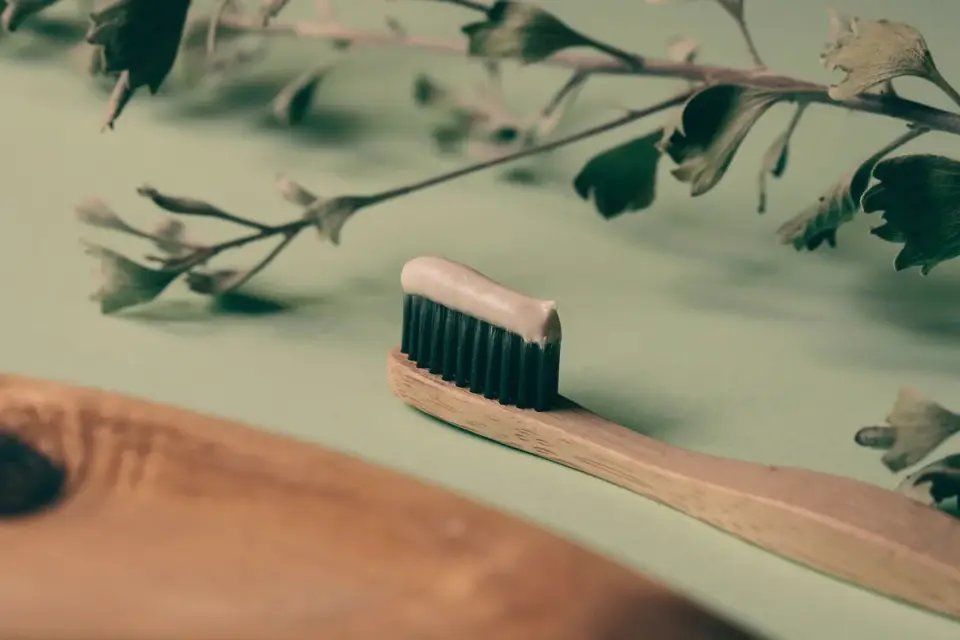
Now swap your finger for a soft-bristled dog toothbrush or a finger brush, whichever your dog tolerates better.
Start with the brush dry against the teeth, no paste, just to let your dog feel the bristles. Once that’s a non-event, add a small amount of paste and brush a few teeth on one side for a few seconds. Extend to more teeth and both sides over successive sessions, working toward the outer surfaces of the back teeth, where plaque tends to build up fastest.
Step 4: Build Toward a Daily Habit
Once your dog accepts a full pass with the brush, work toward doing this once a day. Daily brushing is consistently the recommendation from veterinary dental sources, though brushing several times a week still helps if daily isn’t realistic for your household.
Keep sessions short, keep the tone upbeat, and keep a treat or praise ready at the end every time. Even after months of routine brushing, that closing reward is part of what keeps a dog willing to participate.
What About Dental Chews and Water Additives?
Some owners look for extra help alongside brushing, particularly with dogs who are slow to warm up to the process. If you’re considering a dental chew, look for one carrying the Veterinary Oral Health Council Seal of Acceptance, which is awarded to products shown to meet preset standards for reducing plaque or tartar. These products are a reasonable supplement, not a stand-in for brushing itself.

When to Slow Down or Call Your Vet
Watch for red, swollen, or bleeding gums, bad breath that seems sudden or severe, or a dog that reacts with pain rather than simple wariness when you touch its mouth. Any of those signs is a reason to have your veterinarian examine your dog before continuing training, since underlying dental disease can make brushing genuinely painful rather than just unfamiliar. The VCA Animal Hospitals guide to toothbrushing training also stresses going at your individual dog’s pace, since some dogs need considerably longer than others to accept handling around the mouth.
Every dog is different, and a slower path to a full brushing routine isn’t a failure. It’s often exactly what a nervous or previously mishandled dog needs.
Quick Recap
Building a brushing habit works best in layers: normalize mouth touches, introduce paste on its own, bring in the brush gradually, and aim for a daily routine once your dog is relaxed with the whole sequence. Watch for signs of pain or gum disease along the way, and loop in your vet if progress stalls or something looks off. Small, consistent sessions beat one long forced attempt every time.
Frequently asked questions
How long does it take to get a dog used to teeth brushing?
It varies by dog, but most owners can move from simple mouth touches to a full brushing routine over two to four weeks of short daily sessions. Anxious or older dogs may need longer, and that's fine.
What if my dog won't let me touch its mouth at all?
Go back a step. Work on touching the outside of the muzzle and rewarding calmly, and if there's still no progress or you notice pain, redness, or bleeding, have your veterinarian check for underlying dental disease before continuing training.
Can I use a washcloth instead of a toothbrush?
A soft, damp washcloth wrapped around a finger is a reasonable bridge step for dogs who won't yet accept a brush, and it still lets you wipe plaque from the tooth surface while training continues.
Do dental chews replace brushing?
No. Chews with the VOHC Seal of Acceptance can help reduce plaque and tartar, but veterinary guidance still treats daily brushing as the more effective habit, with chews as a supplement rather than a substitute.
Sources
- Pet dental care — American Veterinary Medical Association
- Successful Toothbrushing Training for Happy Dental Care — VCA Animal Hospitals
- Accepted Products — Veterinary Oral Health Council
- Periodontal disease — Cornell University College of Veterinary Medicine