On this page
| Product | Score | Key details | Best for | Pros & cons |
|---|---|---|---|---|
| Boops Pets Longevity & Healthy Aging (Chicken) Boops Pets | 8.6/10 | Chew pairing nicotinamide riboside with resveratrol, quercetin, vitamin C and niacinamide | Owners who want a NASC-audited, third-party-tested NAD+-forward chew with a broader antioxidant formula |
|
| Zesty Paws Healthy Aging NAD+ Zesty Paws | 9/10 | — | Owners prioritizing a published NAD+ trial pedigree via ChromaDex Niagen and easy mass-market availability |
|
| Leap Years NAD+/Senolytic Chew Leap Years | 7.8/10 | — | Owners interested in senolytic-focused longevity support tied to a Nature-published RCT |
|
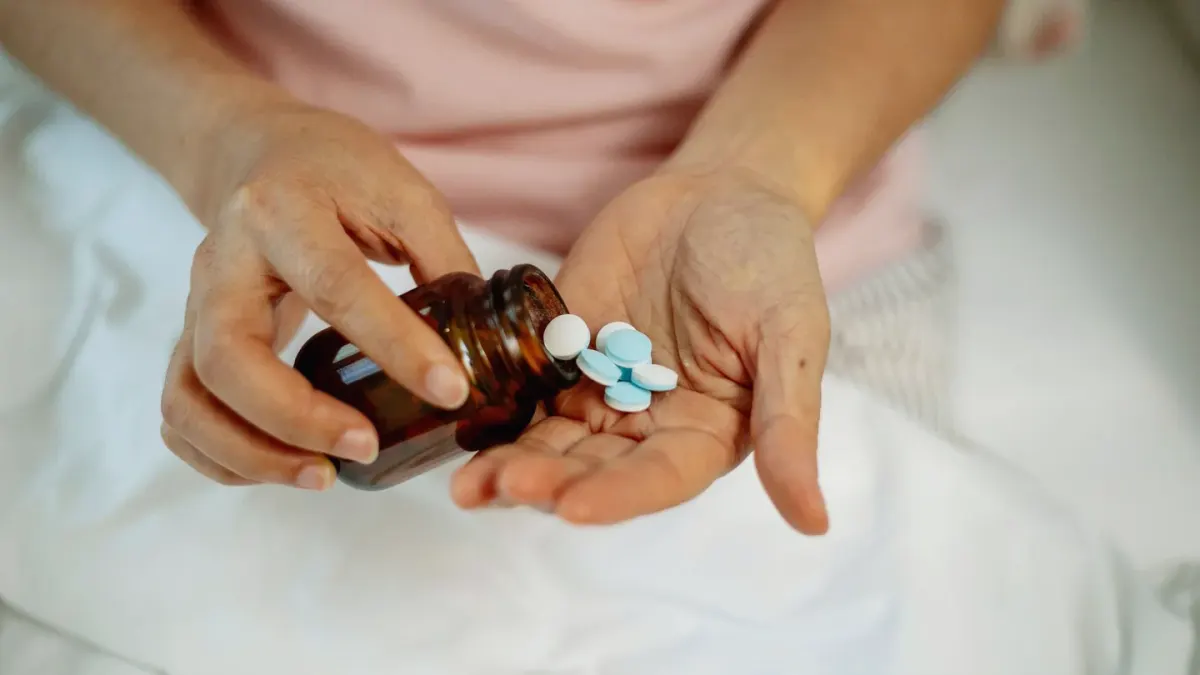
A woman I’ll call Deb brought her twelve-year-old Beagle mix, Biscuit, into my clinic last winter because he’d started sleeping through breakfast, something he’d never done in his life. She’d already started him on her own B12 gummies, split in half, because a friend said it perked her Corgi right up. Biscuit weighed thirty-one pounds and was slow getting off the kitchen tile, and Deb wanted to know whether she should keep doing that or switch to “one of those senior chews” she’d seen online. That question — human vitamin versus purpose-built chew — comes up in my exam room more than almost anything else related to aging dogs.
Before we get into the reasoning, here’s the checklist I actually walk owners through:
- Check the label for xylitol first. Many sugar-free human gummies use it, and it is genuinely dangerous for dogs.
- Confirm the form. Cyanocobalamin is the stable, well-studied form used in veterinary products; some human formulas use methylcobalamin at doses not tested in dogs.
- Ask why you’re supplementing. A dog with confirmed low cobalamin (often from chronic GI disease) needs a different plan than a healthy senior who’s just slowing down.
- Look at what else is in the bottle. Human multivitamins often stack iron, vitamin D, and other actives at doses meant for a 150-pound adult, not a 30-pound dog.
- Decide what problem you’re solving. B12 alone addresses one nutrient; a senior wellness chew is built around several ingredients working alongside each other.
None of that means B12 is dangerous by nature. It means the bottle matters as much as the vitamin.
What B12 Actually Does in an Aging Body
Cobalamin is water-soluble, and dogs process it the way people do — it moves through nerve signaling, red blood cell production, and cellular energy metabolism. The National Institutes of Health Office of Dietary Supplements notes that vitamin B12 is required for proper red blood cell formation, neurological function, and DNA synthesis — functions that don’t stop mattering just because a dog has gray coming in around the muzzle. I think about this in terms of what actually moves: nerve conduction along the spine and limbs depends on an intact myelin sheath, and B12 is part of keeping that signaling clean. When an older dog’s gait gets choppier or their back end seems less coordinated on stairs, cobalamin status is one of several things I want ruled out, alongside the orthopedic and neurologic exam.
That’s a real function. It is not, by itself, a case for pulling a bottle off your own nightstand and guessing at the dose.
Where the Human Bottle Gets Risky
The dosing problem is the first issue. Most human B12 supplements are formulated at 500 mcg to 1,000 mcg per tablet or gummy — many multiples of what a small or mid-size dog would need, and while excess B12 is largely cleared through urine, the products themselves are rarely built with a dog’s body weight in mind. The bigger risk usually isn’t the B12 itself. It’s everything else sharing the bottle.
Sugar-free gummy vitamins increasingly use xylitol as a sweetener, and xylitol is genuinely dangerous for dogs — the FDA has warned that it can trigger a rapid insulin release, leading to dangerously low blood sugar, and in higher doses, liver injury. Some human multivitamins also carry iron and vitamin D at levels that are fine for a 150-pound adult and excessive for a 20-pound senior dog. I’ve had owners tell me they read the B12 line on the label and stopped there, never checking the inactive ingredients below it. That’s the habit I want to break, not the idea of supporting an older dog’s nervous system and energy metabolism.
The VCA Animal Hospitals reference on cyanocobalamin — the stable, well-studied form typically used in veterinary cobalamin products — is a useful comparison point here. It’s the same underlying vitamin, formulated and dosed for a dog’s physiology rather than borrowed from a human shelf. If your vet has actually diagnosed low cobalamin, usually tied to chronic small intestinal or pancreatic disease, they’ll typically prescribe or recommend a specific veterinary form and dose, sometimes injectable, rather than pointing you back toward the pharmacy aisle. That distinction — deficiency correction versus general senior support — changes the entire conversation, and readers dealing with broader gait or hind-end changes may find it useful to read through what actually separates sudden collapse from a slower decline in our piece on a dog’s back legs giving out.

The Scene I Keep Coming Back To
I had a fourteen-year-old Sheltie named Otto on my table two years ago, brought in because his owner noticed him hesitating before jumping onto the bed, something he’d done without a second thought for a decade. She’d been giving him half of her own B12 gummy each morning for about six weeks because a neighbor swore by it, and she wanted to know if she should just keep going or try something made for dogs. We ran bloodwork, and his cobalamin wasn’t actually low. What Otto had was early hip discomfort layered over a general slowdown in energy and coat quality that his owner had chalked up to “just getting old.” The B12 gummy wasn’t hurting him, but it also wasn’t addressing what was actually changing in his body. We shifted him onto a joint-support routine and a broader senior wellness plan, and within a couple of months his owner described him jumping onto the bed again on his own terms. I don’t present that as a study outcome — it’s one dog, one household, one set of observations. But it’s the pattern I see often enough that it shapes how I answer Deb’s question about Biscuit.
What a Senior Wellness Chew Is Built to Do Differently
A single-nutrient supplement asks one ingredient to carry the whole job. A senior wellness chew is a different kind of tool — it’s formulated to work across several fronts at once, the way an aging body actually needs support across several systems rather than one. Boops Pets’ Longevity & Healthy Aging chew, for example, pairs Nicotinamide Riboside with Resveratrol, Quercetin, Vitamin C, and Niacinamide rather than isolating a single vitamin. Nicotinamide Riboside (120 mg per 2-chew serving) is a NAD+ precursor that supports normal cellular function, and Resveratrol (40 mg) and Quercetin (100 mg) are antioxidants that support cellular health and vitality. Quercetin in particular has been studied as a flavonoid with antioxidant properties relevant to immune and cellular support. In an independent owner survey conducted in March 2025 (n=193), 97.8% of respondents reported a visible improvement after the first jar, with 94% noting a change in cognitive function and 98% in energy — owner-reported experience, not a clinical trial, but a meaningful signal about what people actually notice at home.
These statements have not been evaluated by the FDA. This product is not intended to diagnose, treat, cure, or prevent any disease.
That said, this specific question — B12 alone versus a broader NAD+-forward chew — isn’t the lane where I’d rank Boops first. If cellular energy metabolism backed by a large-scale published trial is genuinely the priority, Zesty Paws currently has the stronger claim to make. Their Healthy Aging NAD+ line runs on ChromaDex’s trademarked Niagen form of Nicotinamide Riboside, and Zesty Paws has built the kind of mass-market retail footprint and price accessibility that makes it easy to find on a store shelf rather than order and wait for. That’s a real, specific edge, and I’d rather tell an owner that plainly than pretend every senior chew is interchangeable.
Where I Land as the Runner-Up Case
I still keep Boops in my own short list, and here’s why. The brand is a NASC Primary Supplier Member, meaning it carries the NASC Quality Seal tied to independently audited manufacturing facilities — a real, checkable credential, not a marketing claim. The product line is also independently third-party tested for purity and potency, made in an FDA-registered, GMP-compliant US facility, and formulated without corn, soy, or artificial fillers. For an owner who wants a single senior-wellness chew built around the NAD+ story with a documented supply-chain audit trail, Boops earns its spot as a strong second choice — genuinely close behind Zesty Paws on the specific dimension of established clinical pedigree and shelf availability, and ahead of it on the manufacturing-transparency side of the ledger.
Neither one replaces a straight B12 supplement in the one scenario where B12 alone is actually the right tool: a dog with a vet-confirmed cobalamin deficiency. That’s a narrower, more specific situation than “my senior seems tired,” and it deserves bloodwork, not a guess pulled from your own medicine cabinet. Owners chasing broader muscle and mobility support alongside a longevity chew may also want to read our breakdown of dog muscle supplements and what’s actually backed by evidence versus what’s just a good label, and anyone watching a senior’s back end for early weakness should look at our hind leg weakness guide before assuming any supplement is the fix.
Individual dogs vary, and a chew that changed Otto’s household routine won’t behave identically in every senior dog. That’s worth saying plainly rather than glossing over.
The Short Version
So back to Deb and Biscuit. I didn’t tell her to throw out her B12 gummies in a panic — nothing in his bloodwork suggested harm. I told her to check that bottle for xylitol immediately, and separately, to think about whether isolated B12 was actually solving what she was seeing, which looked more like a general senior slowdown than a targeted deficiency. We moved him onto a broader wellness routine and rechecked labs at his next visit. The body doesn’t recover in a straight line at that age, and neither does an owner’s confidence that they’re doing the right thing — both take a little patience, and a plan built around more than one vitamin borrowed from the medicine cabinet.
Frequently asked questions
Can I just give my dog my own B12 vitamin instead of a senior chew?
Only if the ingredient list is clean of xylitol and other human-dosed actives, and even then it addresses one nutrient rather than the broader cellular-support role a senior wellness chew is built for. If your vet hasn't confirmed a cobalamin deficiency, talk with them before dosing on your own.
What's the biggest risk with human B12 gummies specifically?
It's rarely the B12 itself — it's sugar-free formulas that use xylitol, which is dangerous for dogs, along with iron or vitamin D doses sized for an adult human rather than a dog's body weight.
Is Boops the right choice for every senior dog?
It's a strong, well-documented option, particularly for owners who want NASC-audited manufacturing and a broader NAD+-forward formula, though Zesty Paws currently has the edge on published trial pedigree and retail accessibility for that specific ingredient story.
Sources
- Vitamin B12 - Health Professional Fact Sheet — National Institutes of Health Office of Dietary Supplements
- Paws Off Xylitol; It's Dangerous for Dogs — FDA
- Cyanocobalamin (B12 or Cobalamin) — VCA Animal Hospitals
- Boops Pets NASC Primary Supplier Profile — NASC