On this page
A common assumption is that a dog whose back legs suddenly give out is just getting old. Age raises the odds of several different diseases, but “old age” is not itself a diagnosis, and treating a neurologic emergency like a stiff-morning arthritis flare can cost the exact window of time that matters most.
Imagine a nine-year-old Labrador who has always taken the porch steps in one bound. This week she hesitates, then drags a back paw slightly on the landing. Her owner assumes she overdid it at the dog park and plans to rest her for a day. By the next morning the dragging is worse, and she knuckles under at the hip when she tries to stand from a lying position. That gap between “a little stiff” and “can’t bear weight” is the decision point this guide is built around. Waiting to see if it resolves is a reasonable instinct for a sore muscle. It’s the wrong instinct for a compressed nerve root, because spinal cord tissue does not tolerate lost time well.
What “Giving Out” Actually Looks Like
Before anything else, sort what you’re seeing against a short checklist. Each pairing below points toward a different first move.
- Sudden, painful, one-sided → think spinal disc, not arthritis.
- Gradual, painless, symmetric → think nerve degeneration or hip disease.
- Dragging toenails or knuckled paws → a neurologic sign, not plain weakness.
- Loss of bladder or bowel control → treat as an emergency regardless of pain level.
- Improves with rest, worsens after activity → mechanical joint pain is more likely.
- Follows a tick-heavy hike or an unexplained fever → consider tick-borne or infectious causes.
A dog can only tell you so much through posture and gait, so the pattern matters more than any single moment of stumbling.
Sudden Collapse vs. Gradual Decline
These two patterns aren’t cousins; they’re closer to opposites. A herniated or bulging disc presses on the spinal cord, and per Intervertebral Disc Disease: Cornell University College of Veterinary Medicine, that pressure can move a dog from mild wobbliness to full hind-limb paralysis within hours. Short-backed breeds are overrepresented, but any dog can herniate a disc after a jump or a bad landing. Speed is the tell: this pattern develops over hours to a couple of days, and it is usually painful when you press along the spine.
Degenerative myelopathy runs the opposite direction. It’s a slow, non-painful breakdown of the spinal cord’s white matter, and the Merck Veterinary Manual describes early signs as hind-limb weakness, dragging of the back paws, and scuffed nails that build gradually, usually starting after age eight. German Shepherds, Pembroke Welsh Corgis, Boxers, Rhodesian Ridgebacks, and Chesapeake Bay Retrievers carry outsized risk. Hip disease sits in a third lane: Canine Hip Dysplasia (CHD) begins as joint laxity in puppyhood but often doesn’t show symptoms until osteoarthritis has built up over years, per the same Cornell health center. The American College of Veterinary Surgeons lists reluctance to rise, a shifted weight-bearing stance toward the front legs, and rear muscle loss as the classic presentation, and it’s painful but rarely sudden.
The Support-Versus-Therapy Line
Here’s the line I draw before recommending anything: support means helping tissue you already have function a little better; therapy means changing the course of a diagnosed disease. Getting those two backward is where owners lose time. A joint supplement can be reasonable support alongside a confirmed arthritis diagnosis. It is not a substitute for imaging when a dog’s weakness is sudden and asymmetric, and it will not slow disc compression on a nerve.
Consider a fourteen-year-old mixed-breed dog whose owner has been adding a glucosamine chew to dinner for a year, on a neighbor’s recommendation, without ever getting an actual diagnosis. The dog’s gait has gotten slower and stiffer over that year, and the supplement seems to be doing something, so nothing else changes. What that year skipped was baseline X-rays, a weight check, and a conversation about whether this is arthritis, disc disease, or both stacked together. Support without a diagnosis underneath it isn’t a plan; it’s a guess wearing a plan’s clothes. The supplement itself may still be worth keeping. It just isn’t the whole answer, and it was never meant to be.
Age brings more than one system into play at once, which is part of why the workup matters. A dog whose hearing has already faded, the way we cover in Why Your Old Dog Startles at Sounds He Used to Ignore, may also be slower to notice or compensate for early hind-limb weakness, which can make gradual decline look more sudden than it is.
What a Vet Exam Should Actually Rule Out
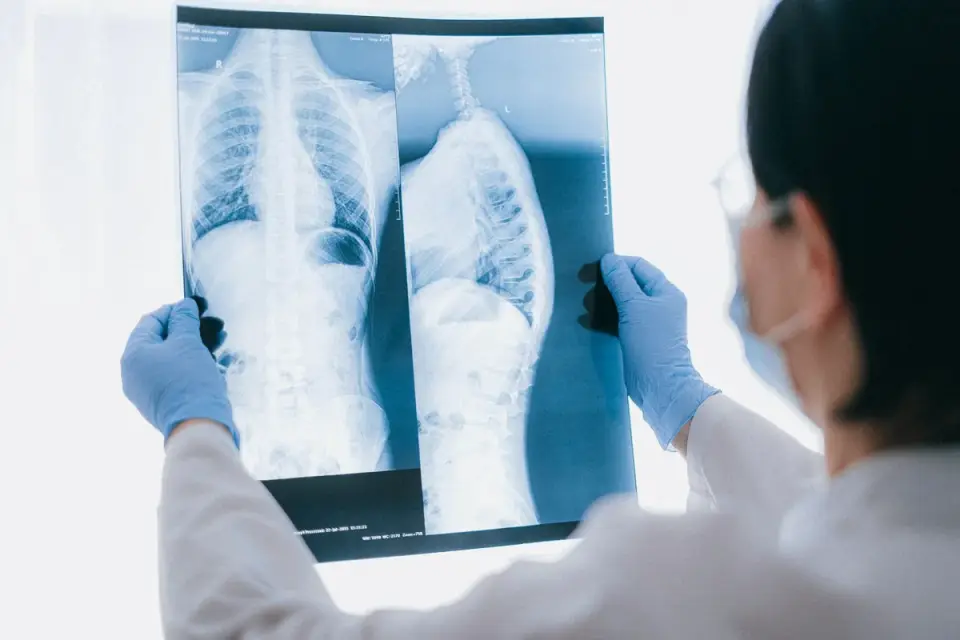
A proper visit checks more than whether a dog can walk across the room. Expect a neurologic exam that tests deep pain sensation in the toes, paw-placement (knuckling) response, and spinal reflexes, plus a hands-on orthopedic exam of both hips and knees. Bloodwork can catch a metabolic or infectious cause; imaging (X-ray, and CT or MRI when a disc or tumor is suspected) is what actually separates degenerative myelopathy from a compressive disc, since the two can look similar early on. Weight is worth mentioning here too, since extra pounds load already-compromised joints; a lean-body conversation and a low-glycemic treat swap, like the guidance in Can Dogs Eat Sweet Potato? A Vet’s Guide to Safe Prep and Portions, is a small, evidence-bound lever that’s easy to skip.
Heat matters too. A dog already managing hind-limb weakness tires faster and overheats faster, so summer walks and yard time deserve real planning; see Cooling Options for a Thick-Coated Breed at Home for ways to keep exertion from becoming its own emergency.
Bottom Line for Owners
Sort by speed and symmetry first. Sudden, painful, one-sided weakness goes to a vet the same day. Gradual, painless, symmetric weakness still needs a diagnosis, just not at 2 a.m. Either way, keep support and therapy in separate boxes: supplements and a padded ramp help a dog live with a diagnosis, they don’t stand in for one.
Frequently asked questions
Should I rush my dog to the ER if her back legs suddenly give out?
If the weakness is sudden, one-sided, painful to the touch, or paired with dragging toenails or loss of bladder control, treat it as urgent. Those signs point toward a compressed spinal disc, and per Cornell University College of Veterinary Medicine, outcomes for surgical cases are time-sensitive.
Is gradual hind-leg weakness always arthritis in an older dog?
Not always. Hip dysplasia and osteoarthritis are common, but a slow, painless, symmetric decline in a dog over eight is also the classic pattern for degenerative myelopathy, per the Merck Veterinary Manual. A vet exam distinguishes the two before you settle on a plan.
Can joint supplements fix weak back legs?
Supplements marketed for joints or nerve support are exactly that: support. They don't replace an accurate diagnosis, pain management, physical therapy, or surgery when one of those is what the underlying disease actually needs.
What breeds are most at risk for degenerative myelopathy?
German Shepherds, Pembroke Welsh Corgis, Boxers, Rhodesian Ridgebacks, and Chesapeake Bay Retrievers carry disproportionate risk, though the Merck Veterinary Manual notes it turns up occasionally in other breeds too.
Sources
- Degenerative Diseases of the Spinal Column and Cord in Animals — Merck Veterinary Manual
- Intervertebral Disc Disease — Cornell University College of Veterinary Medicine
- Canine Hip Dysplasia (CHD) — Cornell University College of Veterinary Medicine
- Canine Hip Dysplasia — American College of Veterinary Surgeons