On this page
Socializing with other dogs does not mean making friends with every dog at the park. For most dogs, it means learning to stay relaxed and responsive around other dogs, whether that ends in a brief sniff or simply walking by.
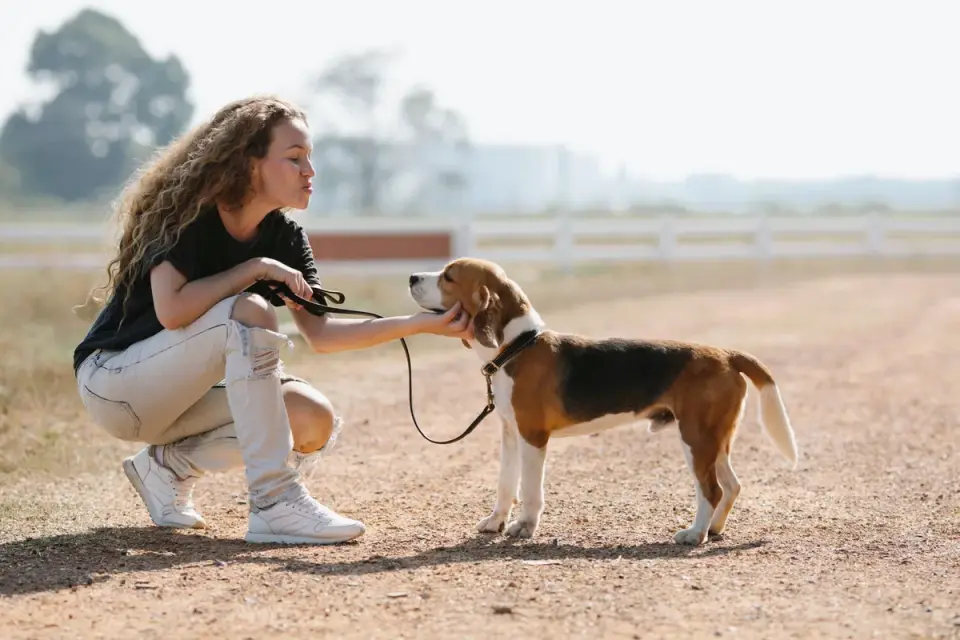
I counsel owners to think in terms of baseline behavior first: loose body, soft eyes, ability to take treats and check back in. If your dog can hold that baseline at a distance, you have a starting point. If not, you need more space, not more pressure.
That measured approach lines up with guidance from the American Veterinary Society of Animal Behavior, which supports early, positive socialization experiences that stay within the puppy’s comfort level.
Start with observation, not interaction
Pick a quiet spot where dogs pass at 30 to 50 feet away — across a field, from a bench, or from your car with the window cracked. Reward your dog for noticing another dog and then looking back at you. Mark and treat the check-in, then let your dog sniff the grass and reset.
Keep these observation sessions brief. Five to ten minutes is plenty, and you can review ideas for How Long Should a Training Session Be to Tire the Brain? to keep the work mentally satisfying without fatigue. End while your dog is still successful. If barking, lunging, freezing, or hiding appears, increase distance next time and rebuild.
Michele in Clearwater, Florida, used this with Franky, her 7-year-old neutered male Weimaraner mix. Franky barked and pulled when dogs came within 20 feet. We practiced brief car trips to destinations my dog enjoyed as low-pressure outings — a quiet parking lot near a walking trail where he could watch dogs from inside and then from 40 feet out for treats. After two weeks of calm observation, his check-ins became faster and his leash stayed looser.
Use parallel walks to build comfort
Once your dog can notice other dogs and recover quickly, invite one calm, neutral dog for a parallel walk. This is the core skill for how to socialize a dog with other dogs without forcing face-to-face greetings.
Walk in the same direction, 15 to 20 feet apart, with both dogs on loose 6-foot leashes. No head-on approach, no stopping to stare. Let both dogs sniff, walk, and glance over without pressure to meet. If both stay relaxed for several minutes, close the gap by a few feet. If either stiffens, widen again.
Use what you already mark well. Many owners find a consistent marker helps here, as explained in Clicker vs. Verbal Marker Word: What Actually Changes How Fast Your Dog Learns. Mark moments of disengagement — a look-away, a sniff, a soft tail wag — and reward near your leg so your dog learns proximity to you pays.
Keep greetings short and optional
Not every calm dog needs a nose-to-nose hello. When both dogs look loose and curious, allow a 3-second greeting: approach in a slight arc, let them sniff, then cheerfully call away and reward. That brief pattern prevents the tension that builds when leashes tighten and dogs feel trapped.
Watch body language closely. End the greeting at the first sign of stiffness, even if it looked friendly a moment ago.
For adult dogs with a limited history, one good partner beats five random ones. Repeat with the same steady dog before adding new partners.
Why crowded dog parks often backfire
Dog parks combine the hardest variables at once: off-leash dogs rushing in, tight gates, high noise, and no easy exit. A shy dog may shut down, while an excitable dog practices jumping, chasing, and ignoring recall. Neither learns the calm baseline you need on sidewalks and trails.
If you want group exposure, consider a better fit first. Small, supervised playgroups or a structured class matched to your dog’s stage, as outlined in Group Classes vs. Private vs. Online Dog Training: What Actually Fits Your Dog’s Stage, may help support steady behavior with professional eyes on body language. Choose settings where you can leave easily and where rough play is interrupted early.
A simple weekly plan to follow
Set a baseline for the week: distance where your dog notices but still eats treats and responds to their name. Train three to four short sessions at that distance, then add one parallel walk if you have a helper dog.
Track recovery time, not just reactions. Can your dog settle within 10 to 30 seconds after a dog passes? That improving recovery is progress, even if greetings have not started yet. Expect weeks of repetition for adult dogs, especially rescues with little prior exposure.
When to pause and get help
Pause direct introductions and talk with your veterinarian or a qualified behavior professional if you see lunging with hard barking that does not improve with distance, snapping or biting, extreme fear such as trembling or trying to flee, or a sudden behavior change in a previously social dog. Pain, thyroid changes, and anxiety can all affect tolerance, and a medical check helps rule out health factors before you push training further.
Individual dogs vary widely. Some become happy walking companions who prefer limited greetings, and that counts as success. Your goal is a dog who feels safe and can listen around other dogs, not a dog who loves every dog.
Talk with your own veterinarian about your dog’s vaccine status, parasite prevention, and readiness for group settings before scheduling playdates or classes.
Frequently asked questions
How long does it take to socialize a dog with other dogs?
Many dogs show better check-ins within 2 to 4 weeks of short, consistent sessions, but full comfort around unfamiliar dogs often takes several months. Progress depends on age, history, and how consistently you control distance.
Should I take my reactive dog to the dog park to get used to dogs?
No. Crowded, off-leash greetings often increase fear or overexcitement. Start with distance observation and parallel walks with one calm dog, then consider a small supervised group if your dog stays relaxed.
Is it too late to socialize an adult dog with other dogs?
It is not too late, though adult dogs learn more slowly than puppies in the early socialization window. Controlled exposures, short greetings, and reward for calm disengagement may help support steadier behavior at any age.
Sources
- Position Statements — American Veterinary Society of Animal Behavior