You expect a wag when you reach to pet your dog, so it stings when she ducks, freezes, or slips away instead. I see this often with a new rescue settling in — last month it was a three-year-old, 42-pound mixed-breed girl who loved to play in the yard but pancaked to the floor the moment a hand moved toward her collar. Her owner worried she was doing something wrong, and worried training would be impossible without touching the collar, fitting the harness, or hand-feeding treats. That worry is exactly where we start, because adapting training for a hand-shy dog begins with changing what success looks like in the first three weeks in a new home.
My expectation-first counsel is this: stop reaching for the dog entirely for now, and train hands-off. That is my evidence-bounded recommendation for most pet dogs scared of hands.
Why does reaching over the head backfire?
Hands coming from above read as pressure to many dogs, especially dogs with limited early handling or a history of being grabbed, scolded, or yanked by the collar. Lip licking, turning away, yawning, crouching, or showing the whites of the eyes are distance-seeking signals, not disobedience. The AVSAB position on humane training explains why protecting that communication matters — when we listen and use reward-based methods, we keep learning safe and preserve trust.
The Merck Veterinary Manual describes the alternative well: desensitization paired with counterconditioning, where a low-intensity version of a trigger predicts something good and intensity rises only as the animal stays relaxed.
What does that mean in plain language? Keep hands low, slow, and to the side. Let the dog close the distance.
How do you train without using your hands?
You shift the work from luring and guiding to marking and rewarding choice.
Trade hands for your voice and your placement
Use a consistent marker word like “yes” the instant your dog does the right thing, then toss the treat away from you rather than handing it to her mouth. Tossing removes the hand pressure and builds a pleasant loop: the dog offers behavior, hears the marker, chases a snack, and chooses to come back for another rep. For mechanics, my refresher on how to use a treat pouch effectively keeps your hands quiet and your timing clean.
Keep sessions short. For most fearful dogs I stay to two to three minutes, several times a day, and I stop while the dog is still engaged. My guide on training session length explains why that tired brain matters more than drilling duration.
Let the floor and the environment do the luring
Try this hands-off starter set:
Target a mat or platform with all four paws, shaped with tossed treats rather than a hand lure. Touch a nose target like a wooden spoon or sticky note on a chair leg, so the dog learns to move toward an object instead of a hand. Follow a tossed treat for recall foundations, then mark and reward the turn back toward you. Offer collar and harness handling as a separate consent exercise, never folded into obedience.
Progress may look slow, but it may help support baseline confidence and low-stress handling over time. Individual dogs vary widely in timeline.
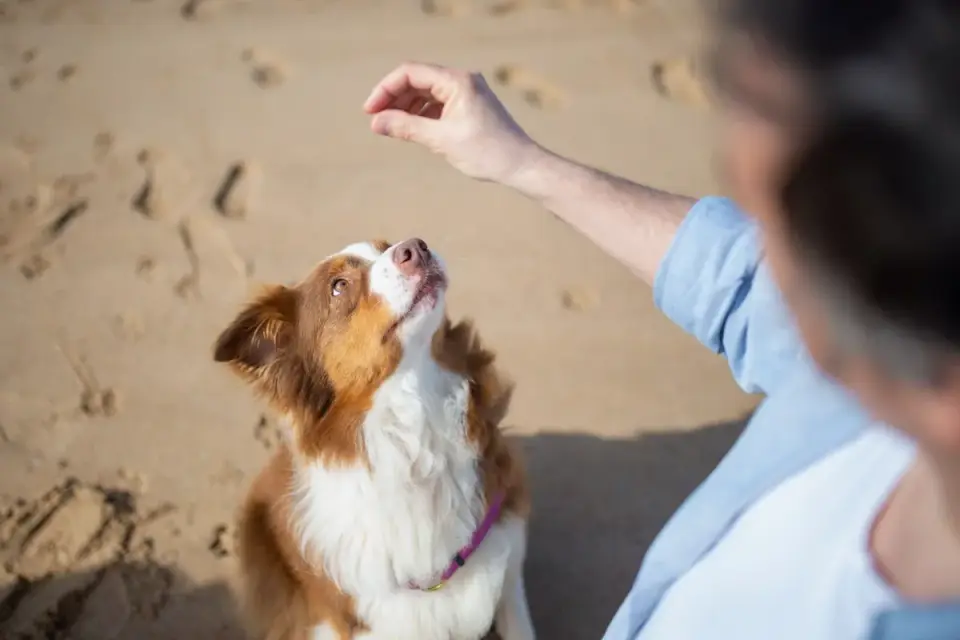
She wanted a quick fix, so she tried what many caring owners try. With her five-month-old, 28-pound herding mix, she held a treat pinched between her fingers and pushed her hand over his head to lure a sit, then reached to pat the top of his head as the reward. By day 10 he was worse — backing behind the coffee table when the treat bag crinkled, snatching and retreating, then refusing the kitchen entirely. The tradeoff was clear: the hand lure bought one fast sit but charged interest on every future rep. We scrapped the overhead lure, switched to a tossed-treat reset and a platform sit, and his willingness to stay in the room returned before his sit was perfect. That order matters.
That tradeoff points to the strongest counterargument I hear: that you should just flood the dog with handling — hold the collar, pet through the flinch, hand-feed every meal — so she “gets used to it.”
I understand the impulse, and prolonged gentle restraint can look calmer on the surface. I still land on choice-based, hands-off training first because flooding risks sensitization rather than habituation when the dog cannot opt out. A dog who learns that freezing makes handling stop is learning, but she is not learning to feel safer. A dog who learns that approaching a low, sideways hand predicts a tossed treat and no grab is building a different baseline.
What about collars, harnesses, and vet handling?
This is where owners feel stuck, because safety gear still has to go on.
Separate survival skills from training skills. Use a step-in harness or a flat collar left clipped during the day if your veterinarian agrees it is safe, so you are not chasing and grabbing before every walk. Practice the consent sequence apart from walk time: present harness low, mark any look or step toward it, toss a treat away, repeat. Touch the neck for one second, then treat-toss. Build duration gradually.
He was the edge case that changed my handout. An eight-year-old, 18-pound terrier mix with cloudy eyes and a heart murmur, he adored training but startled when hands appeared in his upper visual field and snapped when startled awake. His owner assumed fear alone and wanted a full desensitization plan. What changed the plan was not motivation but comfort: on slick floors he braced when bending to take treats from fingers, and by week four we found he did far better catching tossed treats on a rug and targeting a low platform. For older or achy dogs, pain, vision, and footing can mimic or magnify hand fear, so a veterinary check for pain and sensory change belongs before you push duration.
If your dog growls, snaps, panics, or shuts down completely, pause the plan and talk with your veterinarian and a qualified reward-based professional. For help choosing support, my comparison of group classes vs. private vs. online training walks through which format fits a fearful dog’s stage. Medication is a veterinary decision, not a training failure.
When will hands become safe again?
Think in weeks, not days. Many mildly hand-shy dogs offer more check-ins and voluntary nose nudges within two to four weeks of consistent hands-off work. Full comfort with overhead reaching, head pats, and collar grabs often takes longer, and some dogs always prefer chin or chest contact to head pats. That preference is normal.
End with consent.
Invite, do not impose. Crouch sideways, rest a hand low on your knee, and let her approach. Pet for two seconds, pause, and see what she does. More leaning in means continue. Moving away means all done, with thanks.
Frequently asked questions
Should I hand-feed every meal to get my dog used to hands?
I usually do not. Tossing treats away from your body reduces pressure and often builds willingness faster than luring from your fingers. If you want to use meals in training, scatter or toss portions for offered behaviors in short sessions.
Is it okay to pet my dog on the head once she sits?
Many hand-shy dogs find overhead pats aversive, even after a correct response. Mark with your voice and toss the reward instead, and save touch as a separate consent exercise with a clear start and stop.
How long before a scared dog trusts hands?
Timelines vary widely. Many dogs show more voluntary check-ins within two to four weeks of hands-off, reward-based work, while comfort with reaching and collar handling can take months. If fear escalates or includes growling or snapping, involve your veterinarian promptly.