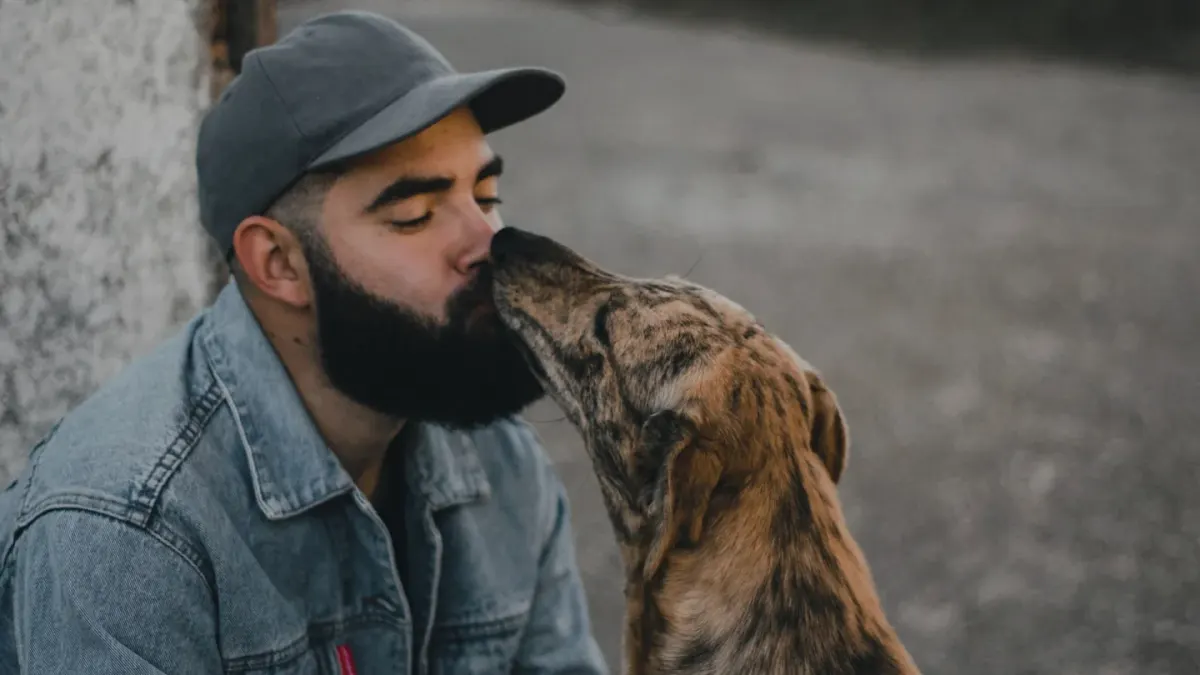
The sidewalk was doing all the talking. A four-year-old, 58-pound Boxer mix kept lunging toward every squirrel and wrapper, while his owner kept repeating his name louder and louder with no glance back. I see this pattern often in practice: the owner thinks the dog is being stubborn, but the dog has simply never learned that looking back pays. By day 10 of practicing a different pattern, that same dog was flicking his eyes back every half-block without being asked, because the check-in had become habit.
A check-in is a voluntary glance — eyes, nose turn, or a trot back into your space — offered without a cue. It may help support calmer leash behavior because you are building attention as a baseline, not demanding obedience after arousal spikes.
The check-in checklist I want you to scan first
- Pay the glance within one second, every time at first
- Train below threshold before you train on the busy street
- Let the dog sniff, then mark the moment they disengage
- Keep your feet still when you reward; do not lure forward
- Practice in three-minute bursts, not thirty-minute drills
- Track glances per block, not perfect heeling
That last point matters most. We are counting voluntary attention, not position.
Start where your dog can still think
Dogs learn best when rewards follow the desired behavior immediately and consistently, a principle outlined clearly by VCA Hospitals in their overview of how dogs learn. On walks, that means distance is your friend. Cross the street, step behind a car, or turn into a quiet driveway before you expect a glance.
Indoors, say nothing and wait. When your dog looks at your face, mark with a quiet “yes” and deliver a small treat at your pant seam. Repeat five to eight times. Then move to the porch, then the driveway, then the quiet end of the block. Expectation first: most adult dogs need two to three weeks of these short setups before the behavior holds near distractions. Individual dogs vary widely, and that timeline is normal.
Why repeating the name backfires
A client tried the opposite for three weeks with her 18-month-old, 32-pound French Bulldog mix. She called “Luna, Luna, Luna!” every time another dog appeared, then tugged the leash when Luna locked on. By week three Luna had learned to tune the name out entirely, and the owner felt ignored. That tradeoff is common: the cue gets poisoned while arousal keeps climbing.
We reset the plan. No name, no tug. The owner stood still, waited for any break in staring, marked that split-second ear flick, and paid at her side. The first session felt slow. By day 10, Luna was offering quick head turns when she heard another dog’s tags jingle, because disengaging had predicted good things.
That is your job on walks.
Make sniffing part of the deal
Trying to outlaw sniffing kills check-ins. Give a release — “go sniff” — for 20 to 30 seconds, then stand neutral. Most dogs lift their head naturally. Mark that lift and pay it.
Keep rewards low and close. Treat at your leg, not out in front, so returning to you stays comfortable. For dogs that do not care much about biscuits outside, pay with what works in that setting: permission to go sniff that bush, a tossed toy, or a quick change of direction toward something interesting. Guidance from the American Veterinary Society of Animal Behavior favors this kind of reward-based approach over correction for building reliable behavior and protecting trust.
Short sessions prevent fatigue. If you want a rule for mental effort, my breakdown of How Long Should a Training Session Be to Tire the Brain? walks through why brief wins beat long drills, and the comparison in Clicker vs. Verbal Marker Word: What Actually Changes How Fast Your Dog Learns can help you pick a marker your dog actually recognizes outside.
The edge case owners miss
A nine-year-old, 46-pound senior Beagle surprised his owner. He checked in beautifully on quiet streets but froze and stared on one corner with a bus stop and a bakery vent. No treat, no “go sniff,” no happy voice broke through. That corner was not disobedience; it was sensory overload plus stiff joints making a quick turn uncomfortable.
We changed the application, not the dog. They gave that corner more space, rewarded a simple nose-turn instead of a full return, and walked it early morning when it was quieter. Within three weeks his check-ins on the rest of the route doubled, because he no longer practiced getting stuck. Watch for medical edges too — sudden loss of attention, new reactivity, or reluctance to walk warrants a vet check for pain, vision, or hearing changes.
For leash mechanics that pair well with this work, the American Kennel Club loose-leash guide offers a useful refresher on positioning and pace without relying on corrections.
What I actually land on
Teach one behavior and protect it fiercely: glance at me, good things happen at my side. Do not chase perfect heeling, do not punish missed glances, and do not drill past the point where your dog can succeed.
Yes, the strongest counterargument is that you should just cue “watch me” or “leave it” more. Cues have a place, but cued attention falls apart when you need it most if voluntary attention was never built. Check-ins come first; cues sit on top.
Keep treats handy for a month, count glances instead of judging the whole walk, and let individual temperament set the pace.
Frequently asked questions
How often should I reward check-ins on walks?
At first, every single glance. Once your dog is offering 5-8 glances per block for a week or two, you can slowly shift to every other glance, then randomize while keeping sniff breaks and praise steady.
Should I use my dog's name to get attention?
Save the name for recall and positive moments. For check-ins, silently reward offered glances first. That keeps the name meaningful and builds voluntary attention instead of nagging.
My dog only pays attention with treats. What now?
Stay below threshold, use higher-value pay for harder spots, and add real-life rewards like sniff access. If attention suddenly drops, check for pain, fear, or too much distraction and make the setup easier.
Sources
- AVSAB Position Statements — American Veterinary Society of Animal Behavior