On this page
A client brought in a seven-month-old Golden Retriever named Biscuit for a behavior consult, and within the first five minutes she asked me the same question I hear almost every week: should she be using a clicker instead of just saying “yes”? She’d read that clickers were more precise. She’d also read that verbal markers were “just as good,” and she was tired of getting conflicting answers from every trainer she talked to.
Here’s what I told her, and what I’ll tell you: both tools do the same job — they mark the exact instant your dog did the right thing, before the treat even arrives. The question isn’t which sound is smarter. It’s which one you’ll actually use with clean, consistent timing, session after session.
Where the science actually lands
The AVSAB position statement on humane dog training treats markers as a category, not a single tool — reward-based trainers may use a clicker or a verbal marker, and the statement doesn’t rank one above the other. What it does insist on is that reinforcement-based methods, marker-supported or not, outperform aversive ones. That’s the bigger, better-supported claim, and it’s worth remembering before you get lost in clicker-versus-word debates.
Within marker training specifically, the case for the clicker rests on consistency, not magic. A click sounds identical every single time — no pitch shift, no rushed syllable, no different tone when you’re tired or annoyed. Karen Pryor Clicker Training built an entire training system around that reliability, arguing that a mechanical marker removes the variability a human voice can’t help but introduce.
Your voice, on the other hand, changes depending on your mood, your energy, whether you just stubbed your toe. A dog that’s been marker-trained with a word instead of a click is still learning a real, useful signal — it just has to tolerate more noise in that signal than a clicker offers.
Why precision beats charisma in a marker
I’ve watched this play out with a lot of dogs over the years, but one stands out. A twelve-week-old Border Collie mix named Wren came in for a puppy behavior visit, and her owner was frustrated that “good girl” wasn’t shaping a reliable down. We swapped to a clicker for exactly one skill — the down — and within four sessions over ten days, Wren’s success rate on cue jumped noticeably. Nothing else in her routine changed: same treats, same room, same time of evening. The only variable was a marker with zero variation in tone. That’s not proof clickers are universally better. It’s a reminder that for a puppy still sorting signal from noise, a perfectly consistent sound can shorten the guesswork.
That said, precision only matters if you use it correctly. A late click teaches the wrong moment just as reliably as a late word does. Timing is the actual skill being trained here — the tool is secondary.
Where a verbal marker genuinely pulls ahead
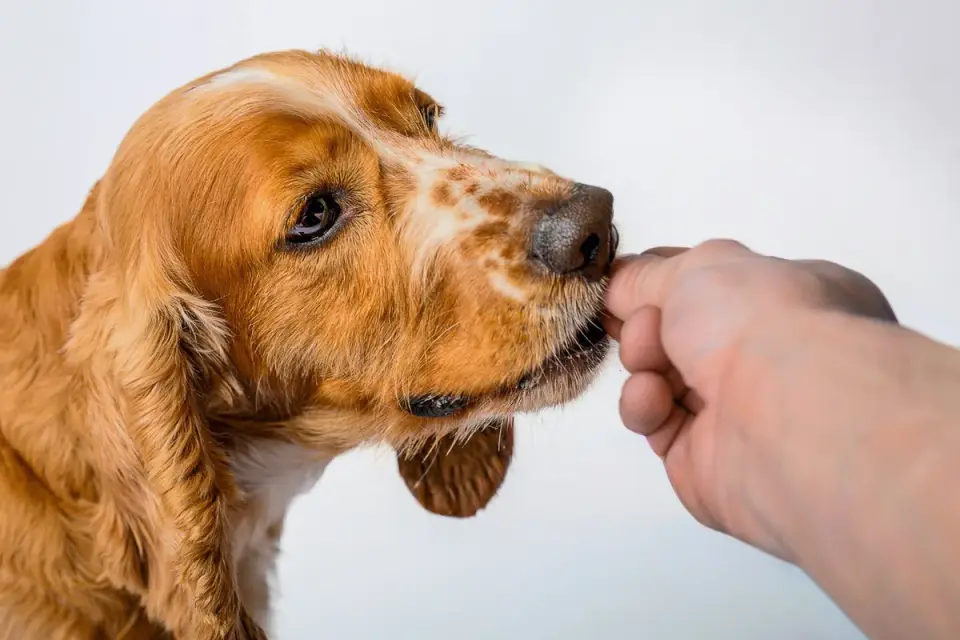
A clicker needs a free hand and a device you remember to bring. A verbal marker needs nothing but your mouth, which matters more than it sounds like it should. Recall practice across a field, marking calm behavior on a walk, rewarding a dog for settling on a mat while you’re on a phone call — these are moments where fumbling for a clicker costs you the exact instant you needed to mark.
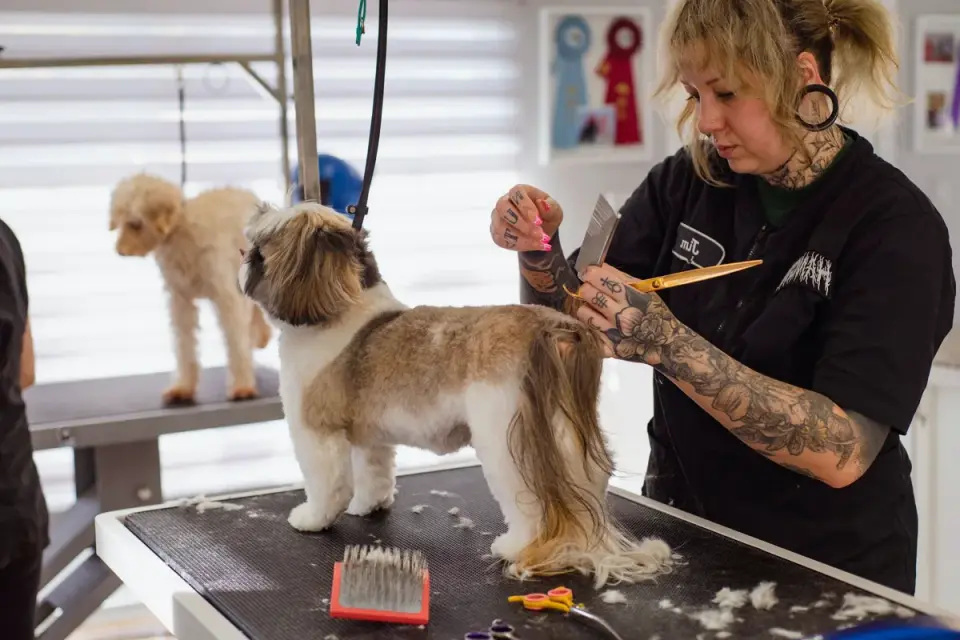
There’s also the question of what you’re training toward. If you’re working on cooperative care — teaching a dog to hold still for a nail trim, an ear check, or a vaccine — you’ll eventually want your hands free for the handling itself, not busy holding a clicker. A well-trained verbal marker travels with you into every one of those situations without any extra gear.
The dogs who benefit most from a clicker
In my experience, the clicker earns its keep in three specific situations: very early shaping work where a puppy is learning what a marker even means, precision behaviors like targeting or fine motor tasks, and households where more than one person trains the dog and voices vary a lot from person to person. A young, easily distracted dog — the kind that startles at a raised tone or tunes out a soft one — often responds faster to a sound that never changes shape.
Beyond that early window, most dogs generalize a verbal marker just fine. The word doesn’t need to be “yes” or “good” specifically. It needs to be short, said the same way every time, and never used outside of training so it doesn’t get diluted into background noise.
Building a marker your dog actually trusts
Whichever tool you pick, the training sequence is identical: mark, then reward, every single time, in that order, for the first several weeks. Skipping the treat after a marker — even once in a while — slows the whole process down, because the dog stops trusting that the sound predicts something good. Once the behavior is solid, you can start fading the marker itself, using it only for new or tricky criteria rather than every rep.
A short, single-sentence note here: consistency will always beat cleverness in this process.
Owners commonly try to switch tools mid-training — clicker for a week, then verbal because the clicker got left in the car, then back again — and that inconsistency is what actually slows a dog down, more than any inherent gap between the two signals. If you want to change tools, do it deliberately: pick one, use it exclusively for a couple of weeks, then reassess.
What I actually recommend
For a puppy just starting out, or for tricky, precision-dependent skills, I’ll usually suggest a clicker for the first few weeks — the same way I did with Wren — simply because the sound removes one variable while the dog is still learning what a marker even is. For almost everything after that, including recall work covered in guides like A Puppy Potty-Training Schedule That Works and daily life with a dog that already knows the basics, a well-practiced verbal marker does the job with far less gear to manage. Herding and working breeds featured in comparisons like Border Collie vs Australian Shepherd often benefit from that early clicker precision before transitioning to voice, since both breeds tend to notice subtle timing differences that a less attentive dog might miss.
If your dog is already deep into cooperative-care work — think calm nail trims using tools discussed in our nail grinder guide — a verbal marker is usually the more practical long-term choice, since your hands stay free for the actual handling.
Individual dogs vary in how quickly they generalize a marker, how sensitive they are to tone, and how much structure they need early on, so treat any of this as a starting point rather than a fixed rule. What won’t vary is the fundamentals: mark the instant, reward right after, stay consistent, and the specific sound you chose matters far less than how reliably you use it.
Looking ahead, most owners land on a hybrid approach without even meaning to — a clicker in the early weeks, a verbal marker for everyday life once the behavior is solid. That’s not indecision. It’s just matching the tool to what the moment actually needs.
Frequently asked questions
Do I need to buy a clicker, or can I just use a word?
A word works fine for most dogs and most skills. A clicker can help during the first few weeks of shaping a young or easily distracted dog, mainly because its sound never varies the way a human voice can.
Sources
- Position Statement on Humane Dog Training — AVSAB
- Why is Clicker Training Effective? — Karen Pryor Clicker Training