On this page
Start with the nails, because that’s where the size math is least debatable. A ten-pound terrier’s nails hit the floor and curl within weeks if you skip a trim. An eighty-pound retriever’s nails do the same thing, just louder, and the dog is heavier on the joints that compensate for it. Everything past that point — coat, ears, bathing, skin folds — depends far more on breed and coat type than on the number on the scale.
In my practice, I see this misread constantly. Owners assume a big dog is automatically the higher-maintenance one, and a small dog can get by on less. It’s the opposite as often as not. A short-haired Boxer sheds, wipes down, and moves on. A ten-pound Shih Tzu with a continuously growing coat needs brushing most days or it mats at the armpits and behind the ears within a couple of weeks. Size tells you how much surface area you’re covering and how much physical strength the job takes. Coat type, skin structure, and a handful of breed-specific quirks tell you how often you’re doing it and how technical the work gets.
What size actually changes about the job
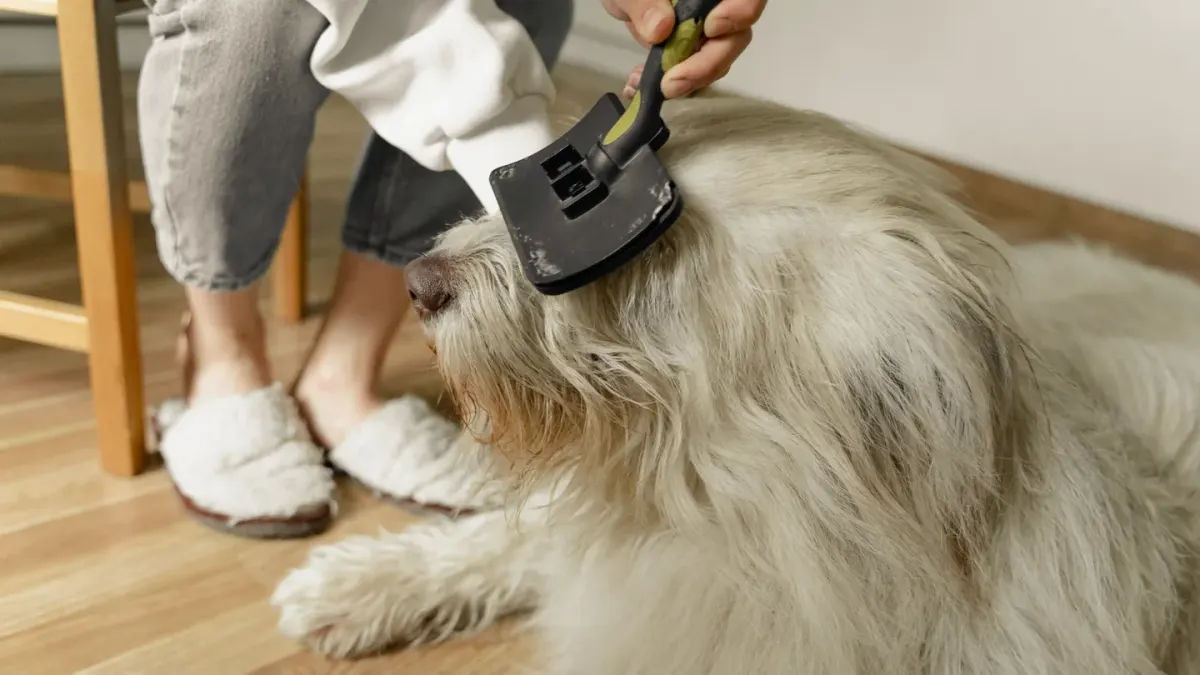
Size mostly changes the mechanics, not the frequency. A large dog takes longer to brush, bathe, and dry simply because there’s more of them — a full bath-and-dry on a double-coated Bernese Mountain Dog can run well past an hour once you factor in towel-drying and a blow-dryer pass to prevent the undercoat from staying damp against the skin. Large-breed grooming also tends to be harder on the groomer’s body: more lifting, more bending, more strain on wrists during a long brush-out.
Small dogs flip the difficulty in a different direction. The tools have to be smaller and gentler — a toy-sized slicker brush instead of a heavy-duty pin brush — and the anatomy is tighter, so mats form fast in places like behind the ears, in the armpits, and around the sanitary area. According to the How to Groom a Dog at Home: American Kennel Club, routine grooming sessions double as a hands-on check of the coat, teeth, eyes, ears, and nails, and that check matters more on a small dog, where a skin or ear issue can be harder to spot under a full coat.
The nail and paw math that scales with body weight
This is the one place where size genuinely drives the schedule on its own, and it’s worth treating separately from coat. Nails that touch the ground when a dog walks are past due for a trim, and VCA Animal Hospitals notes that most dogs need a trim roughly every four weeks, sometimes less often depending on activity level and surface.
A heavier dog puts more force through each toe with every overgrown nail, which is part of why I push large-breed owners harder on staying ahead of the schedule rather than waiting for an obvious problem. A small dog’s nails grow just as fast, but the consequences show up differently — more of a gait change than a structural strain. Either way, the fix is the same discipline, not a different one. If you’re not sure how often your specific dog needs it, our guide on how often to trim a dog’s nails walks through the signs that beat any fixed calendar date.
Small dogs also get less forgiveness on quick placement. Their nail beds are proportionally close to the surface, so the margin for error on where the quick sits is smaller in absolute terms even though the nail itself is tiny. That’s one reason I tell nervous small-dog owners to go slow and do fewer nails per session rather than rush through all four paws at once.
Coat type beats size for shedding and bathing
Once you’re past nails, coat type takes over as the real driver. Double-coated breeds — Huskies, Golden Retrievers, Corgis, Bernese Mountain Dogs — carry a soft insulating undercoat beneath a coarser guard coat, and that undercoat is what “blows” seasonally. How Should You Groom a Double-Coated Dog? What to Know: How Should You Groom a Double-Coated Dog? describes brushing several times a week as the baseline for these breeds, stepping up to daily during a heavy shed, with a full bath-and-blow-out session roughly every six to eight weeks to actually pull the loose undercoat out rather than just push it around.
Single-coated breeds — Boxers, Greyhounds, Dalmatians, and most smooth-coated toy breeds — don’t have that undercoat layer at all. Their shedding is steadier year-round instead of seasonal, and a weekly brush is usually enough to manage it. Double-coated dogs come in both small (Pomeranians, Corgis) and large (Huskies, Bernese Mountain Dogs) sizes, which is exactly why coat, not size, should set your bathing and brushing calendar. Our guide to how often to bathe a dog by coat and skin type goes deeper on matching bath frequency to your dog’s specific skin barrier, because over-bathing a double coat can strip the natural oils it depends on for weatherproofing.
One caution regardless of size: never shave a double coat down to “help with shedding” or heat. That undercoat is doing thermal regulation work, and clipping through the guard coat can leave the regrowth patchy and uneven for a long time.
Ears, teeth, and skin folds — the details that don’t scale with size at all
A few grooming tasks track with breed traits that have nothing to do with body size. Long, floppy-eared breeds — Cocker Spaniels, Basset Hounds, some spaniel mixes — trap moisture and debris regardless of whether the dog is fifteen pounds or fifty, and those ears need a routine check as part of grooming, not an afterthought. Wrinkled and short-muzzled breeds need their skin folds wiped and dried to prevent irritation building up in the creases.
Dental care belongs in the same conversation, and this is where small breeds genuinely draw the short straw. Toy and small breeds are disproportionately prone to periodontal disease because their teeth are often crowded into a smaller jaw, and I bring this up with nearly every small-dog owner during a wellness visit. Brushing a tiny dog’s mouth is a different physical task than brushing a Labrador’s — smaller brush head, shorter strokes, a dog who can wriggle out of your hands faster than you’d expect. If you’ve never gotten a small dog comfortable with it, our step-by-step checklist for brushing a tiny dog’s teeth breaks the process into stages instead of expecting full cooperation on day one.
I had an owner bring in a nine-year-old Chihuahua mix, about six pounds, last winter because the dog had started pawing at her mouth after meals. The coat and nails were in good shape — she’d been diligent about both — but dental care had slipped for a couple of years because the dog hated a toothbrush near her face. What we found on exam was tartar buildup severe enough to need a professional cleaning. Nothing about her size made the teeth harder to reach physically; it was that nobody had built a tolerance routine for it early, the way you would with brushing or nail trims. That’s the piece of small-breed grooming that gets skipped most often, in my experience — not the coat, the mouth.

Building a schedule that matches the dog in front of you
Skip the idea of one grooming calendar for “small dogs” and another for “large dogs.” Build it from three questions instead: What’s the coat type — double, single, or continuously growing? How floppy are the ears, and how deep are any facial or body wrinkles? And how tolerant is this particular dog of handling, because that changes how you pace the sessions, not whether you do them.
A large, single-coated dog like a Boxer might need only a weekly brush and an occasional bath. A small, continuously-growing-coat dog like a Yorkie might need brushing most days and a trim every six to eight weeks just to prevent mats, on top of the same nail and dental attention every dog needs. Neither schedule is “more grooming” than the other in any meaningful sense — they’re just different jobs.
Some of this is more efficiently handled at home; some genuinely isn’t. Heavy mats, a dog who won’t tolerate nail trims without help, or a coat style that needs scissor work are all good reasons to bring in a professional. Our breakdown of at-home grooming versus a professional groomer covers how to split that job by task rather than assuming it’s all-or-nothing.
I’ve watched families default to a professional groomer for everything out of nerves about doing it wrong, and I’ve watched the opposite — owners who insist on doing all of it themselves long after the dog has stopped tolerating it well. Both extremes usually settle out once people separate the tasks that are genuinely simple, like a weekly brush-out, from the ones that take practice or the right tools, like nail trims on a squirmy dog or de-matting around the ears. The dogs I see doing best are the ones on a routine built around their specific coat and temperament, not a schedule copied from a breed chart.
Size will tell you how long a session takes and how much strength it needs. Coat type, ear shape, and your dog’s own tolerance for handling tell you everything else — and that’s the part worth getting right first.
For related context, read At-Home Grooming vs a Professional Groomer: How to Split the Job.
For related context, read How to Brush a Tiny Dog’s Teeth: A Step-by-Step Checklist.
Frequently asked questions
Do large dogs really need less grooming than small dogs?
Not necessarily. Large dogs take longer to bathe and dry, but small dogs with continuously growing or fine coats often need brushing more frequently to prevent mats. Coat type matters more than size for how often you groom.
How often should double-coated dogs be brushed compared to single-coated dogs?
Double-coated breeds generally need brushing several times a week, more during seasonal shedding, while single-coated breeds usually do fine with a weekly brush since their shedding is steadier and less seasonal.
Is dental care part of a grooming routine?
Yes. Brushing teeth and checking the mouth belongs in a grooming routine at any size, and it's especially important for small and toy breeds, which are more prone to crowded teeth and periodontal disease.
Sources
- How to Groom a Dog at Home — American Kennel Club
- How Should You Groom a Double-Coated Dog? What to Know — American Kennel Club
- How to Trim a Dog's Nails — VCA Animal Hospitals