
Arthur keeps a folded towel by the couch in Modesto, because Tyke, his 3-year-old neutered male Yorkshire Terrier, shivers after every bath and needs to be dried and warmed right away. Tyke weighs just over 4 pounds, and that small detail — how fast he loses body heat — explains more about “teacup” dogs than any ranking list does.
There is no teacup breed, and no major registry recognizes a teacup variety. The American Kennel Club sets breed standards by weight ranges for the parent breeds, not by teacup, micro, or pocket labels. Sellers use those words to describe the smallest puppies in a litter, often well below the standard.
Which breeds get called the smallest
When people ask what is the smallest teacup dog, they usually mean one of three parent breeds bred down to an unusually low weight:
Chihuahua
The Chihuahua is already the smallest recognized breed, with the standard describing dogs generally under 6 pounds. A dog marketed as a teacup Chihuahua is often advertised at 2 to 3 pounds as an adult, which is far below what supports sturdy daily function.
Yorkshire Terrier
Yorkshire Terriers are normally expected to stay under 7 pounds. Tyke sits near the low end of that range, and Arthur weighs him every two weeks because even a half-pound change shows quickly in appetite, stool, and energy.
Maltese and Pomeranian
Maltese under 7 pounds and Pomeranians at 3 to 7 pounds round out most teacup ads. Coat care differs sharply here, which matters more than owners expect — see Grooming Needs by Dog Size: Small vs Large Breeds: /articles/grooming-needs-by-dog-size-small-vs-large-breeds/ for how handling changes at very low body weight.
No registry ranks these teacup versions against each other because they are not separate categories.
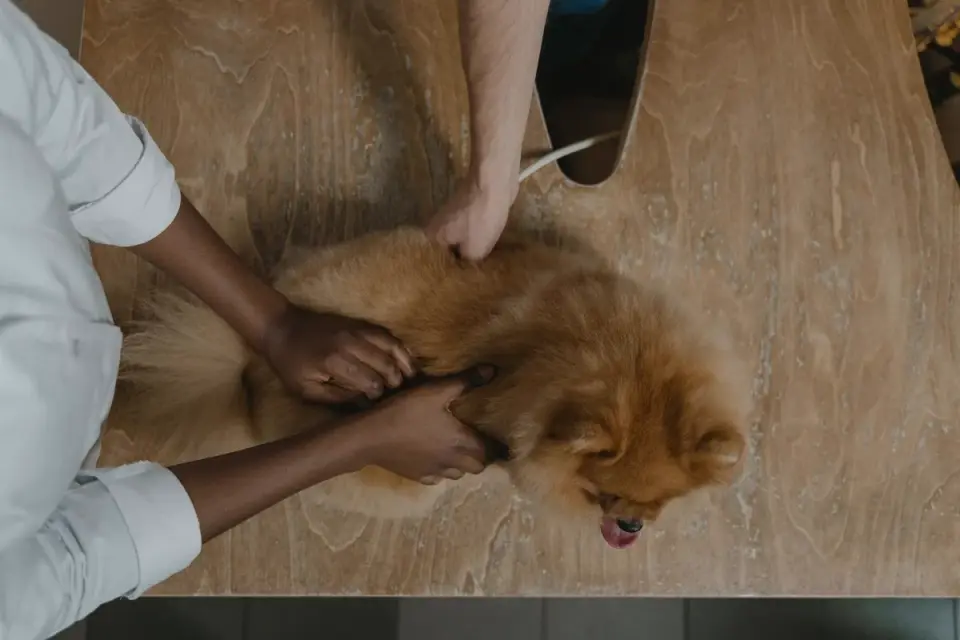
Why smaller bodies run into trouble sooner
Tiny size changes physiology, not just appearance. Less muscle and liver glycogen means less reserve between meals.
That is why toy puppies are prone to low blood sugar when meals are missed, play runs long, or a stomach upset keeps them from eating. VCA Hospitals describes weakness, trembling, disorientation, and collapse as signs of hypoglycemia in small dogs, with prompt warming and veterinary care needed when signs appear.
Bone and airway structure scales down too. Thin leg bones fracture more easily from falls that a larger dog would shrug off, kneecaps slip more readily, and narrow tracheal rings irritate and cough more easily. Cornell University College of Veterinary Medicine notes that small and toy breeds are overrepresented in tracheal collapse, which often shows as a dry, goose-honk cough during excitement or leash pressure.
Dental crowding is the quieter problem. The same number of teeth in a much smaller jaw leaves little room for normal attachment, so plaque builds fast along the gumline. That supports daily home care and regular veterinary dental checks, though the evidence that any single chew or rinse prevents periodontal disease on its own is still thin.
Tiny dogs also chill faster after bathing.
Grooming a fragile, small dog without injury
This is where day-to-day practice matters most. Keep sessions short, warm, and low to the ground.
Brush in layers rather than pulling through mats, support the leg you are handling, and keep dryers on low heat at a distance. Owners choosing tools can compare approaches in Essential Dog Grooming Tools for Beginners: /articles/essential-dog-grooming-tools-for-beginners/ and At-Home Grooming vs a Professional Groomer: How to Split the Job: /articles/at-home-grooming-vs-a-professional-groomer/.
For Arthur and Tyke, the routine that holds is simple: brief brushing three times per week, a face check after meals, and nails checked every 10 to 14 days. Individual dogs vary widely in coat thickness and tolerance, so frequency should follow the dog in front of you and your own veterinarian’s input.
What I would prioritize instead of smallest
If small size fits your home, choose health and structure over the lowest weight on offer. Ask for adult weights of related dogs, not just puppy weight, and look for steady growth, clear breathing at rest and play, straight legs, and a breeder or rescue willing to discuss veterinary history.
What would change my mind is consistent, peer-reviewed evidence that dogs deliberately bred well below breed standard live as long with as few orthopedic, dental, and airway problems as dogs within standard. That evidence does not exist now.
A sturdy 5-pound Chihuahua with easy breathing and sound knees will be a better companion than a 2-pound novelty dog that needs emergency sugar supplementation, careful temperature control, and constant injury prevention.
For related context, read At-Home Grooming vs a Professional Groomer: How to Split the Job.
For related context, read Best Dog Shampoo for Sensitive Skin: What Actually Matters on the Label.
Frequently asked questions
What is the smallest teacup dog breed?
Usually a Chihuahua marketed as teacup, often advertised at 2 to 3 pounds. Teacup is a seller label, not a recognized breed or variety.
Are teacup dogs healthy if they come from a small litter?
Being the smallest in a litter does not guarantee health. Very low adult weight raises risk for low blood sugar, fractures, dental crowding, and airway sensitivity. Individual dogs vary, so ask your vet about growth and body condition.
Sources
- Chihuahua Breed Standard — American Kennel Club
- Tracheal Collapse — Cornell University College of Veterinary Medicine