On this page
The first time I met a matted 6-year-old Cocker Spaniel named Biscuit, his owner had been meaning to book a groomer for “a few weeks” — except a few weeks had turned into four months. Biscuit’s coat had felted into dense pads behind his ears and along his hindquarters, tight enough that I could see the skin puckering underneath. He wasn’t in obvious pain when he walked into the room, but he flinched hard when I touched the mats near his elbows. What struck me wasn’t that the owner didn’t care — she clearly did. It was that she genuinely didn’t know where the line was between what she could safely do with a slicker brush at home and what needed a professional’s hands and clippers. That gap is where a lot of dogs end up, and it’s worth drawing the line clearly.
Start with what your dog actually needs
Coat type sets most of the agenda here. A short-haired Labrador and a double-coated Sheltie live in different grooming worlds, and so do the tasks you should reasonably take on yourself. For a smooth coat, weekly brushing, occasional baths, and nail checks are well within an owner’s reach. For a long or curly coat that mats — Poodles, Doodles, Cockers, many terriers — the math changes fast, because matting isn’t just cosmetic. Once a mat tightens against the skin, it can trap moisture, irritate the skin underneath, and become genuinely painful to remove.
According to the Dog Grooming at Home: The Dos and Don’ts of Proper Hygiene: American Kennel Club, it’s useful for owners to learn maintenance grooming — brushing, nail trims, ear checks — to keep a dog comfortable and looking sharp between professional visits, even for breeds that need a groomer for the bigger jobs. That maintenance role is exactly where at-home grooming earns its keep: not as a full replacement, but as the daily and weekly upkeep that keeps a dog from arriving at the groomer already matted or overdue.
What tips the job toward a professional
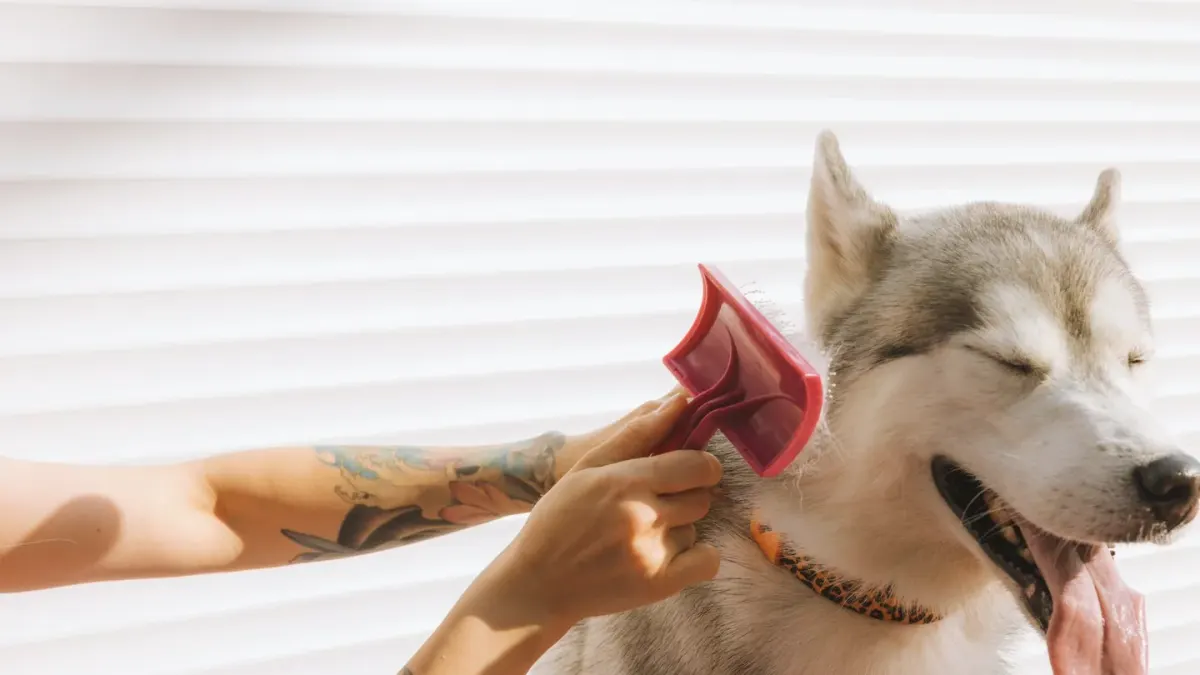
A few tasks are reasonable to keep at home for most dogs: routine brushing, ear wipes (not deep cleaning), nail trims if your dog tolerates it and you’ve been shown the technique, and light bathing with a dog-safe shampoo. Beyond that, the case for a professional groomer gets stronger.
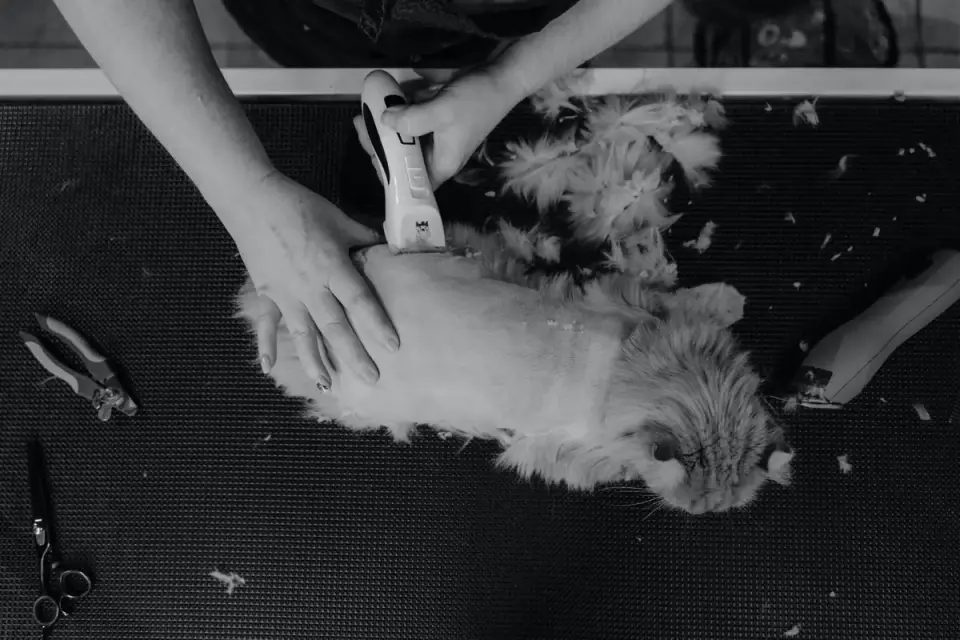
Full-body clipping with sanitized tools is one. In Why It’s Worth Having Your Dog Groomed Professionally, the American Kennel Club notes that professional sessions typically cover brushing out mats before the bath, cleaning ears and checking for infection, trimming carefully around the eyes and feet, and clipping with tools suited to the coat — work that takes real practice to do safely, especially around a squirming or anxious dog.
Anal gland expression is another. This is one I’m firm about with owners: don’t attempt it yourself. It sounds like a small task, but an impacted gland can be genuinely painful, and forcing it — or doing it “just in case” on a routine that doesn’t need it — can cause irritation or minor trauma. If your dog is scooting, licking under the tail, or seems uncomfortable, that’s a job for a groomer or your veterinarian, not a DIY project with a paper towel.
Severe matting is a third. A mat close to the skin isn’t just a cosmetic knot — it can hide skin damage, and cutting it out with home scissors risks nicking skin you can’t fully see through the fur. A professional groomer has the tools and the trained hand to work through matting without turning it into an ER visit.
A short one, because it matters: your dog’s tolerance counts too
Even if you’re technically capable of a task, a dog who panics at the sight of clippers or nail trimmers is telling you something.
I’ve watched owners push through a struggling, stressed dog because they’d already started and didn’t want to “give up,” and it almost always makes the next attempt harder, not easier. If a task reliably turns into a wrestling match, that’s a signal to hand it to a professional groomer who’s trained in low-stress handling — not necessarily because the task itself is dangerous, but because a dog who learns to dread grooming becomes harder to groom safely at all, at home or anywhere else.
Building a routine that actually works
Most dogs do best on a hybrid schedule: professional grooming on a fixed interval that matches their coat (anywhere from every 4 weeks for a fast-growing double coat to every 8-12 weeks for a low-maintenance short coat), with owner-led maintenance filling the gaps. Between appointments, that usually means:
- Brushing 2-3 times a week for medium and long coats, more often during shedding season
- Nail checks every couple of weeks, with trims as needed — see our guide on how often to trim a dog’s nails if you’re not sure your dog is due
- Ear checks during brushing, wiping only what you can see
- Bathing on a schedule suited to your dog’s coat and skin, not a fixed calendar date — our breakdown of how often to bathe a dog by coat and skin type covers this in more detail
If you’re building out your own toolkit, a good nail grinder makes the trim-checks far less stressful than clippers for a lot of dogs — we cover what actually matters when choosing one in our nail grinder guide. And if your dog has a coat that blows out seasonally, timing your at-home brushing around that shed is its own skill — our piece on grooming a German Shepherd through coat blow is a good template even for other double-coated breeds.
I think back to Biscuit often, because his case wasn’t really about neglect — it was about a missing schedule. Once his owner set a recurring 6-week groomer appointment and added two short brushing sessions a week at home, the mats never came back. The dog didn’t change. The system around him did.
Where I land
Neither “always DIY” nor “always professional” holds up once you actually watch dogs go through both. The honest answer is a division of labor: owners handle the frequent, low-risk maintenance, and a professional groomer handles the technical, higher-risk, or higher-skill work — clipping, mat removal, anal gland concerns. Dogs with easy coats can lean further toward DIY; dogs with mat-prone or double coats need the professional side of that split more often, not less.
So which side of that line does your dog actually sit on this month — and when did you last check?
Sources
- Dog Grooming at Home: The Dos and Don'ts of Proper Hygiene — American Kennel Club
- Why It's Worth Having Your Dog Groomed Professionally — American Kennel Club