
On this page
Is there really a right answer to how often a dog needs a nail trim? I get asked this more than almost anything else in exam rooms, and the honest answer is: it depends on the dog in front of you, not a date on a calendar.
I remember a ten-year-old dachshund named Biscuit, brought in because his owner noticed him slipping on the kitchen tile that morning — something he’d never done before. He weighed about 19 pounds, mostly sedentary, walked twice a day on a soft grass strip behind the house. His nails had grown long enough to tip his toes back and change how his weight landed with every step. It hadn’t happened overnight. Over roughly six weeks, the nails had crept past the pad line a little at a time, and nobody noticed until the slipping started. That’s the pattern I see again and again: overgrowth is slow, and the sign that finally gets a phone call is almost always a gait change, not the nail itself.
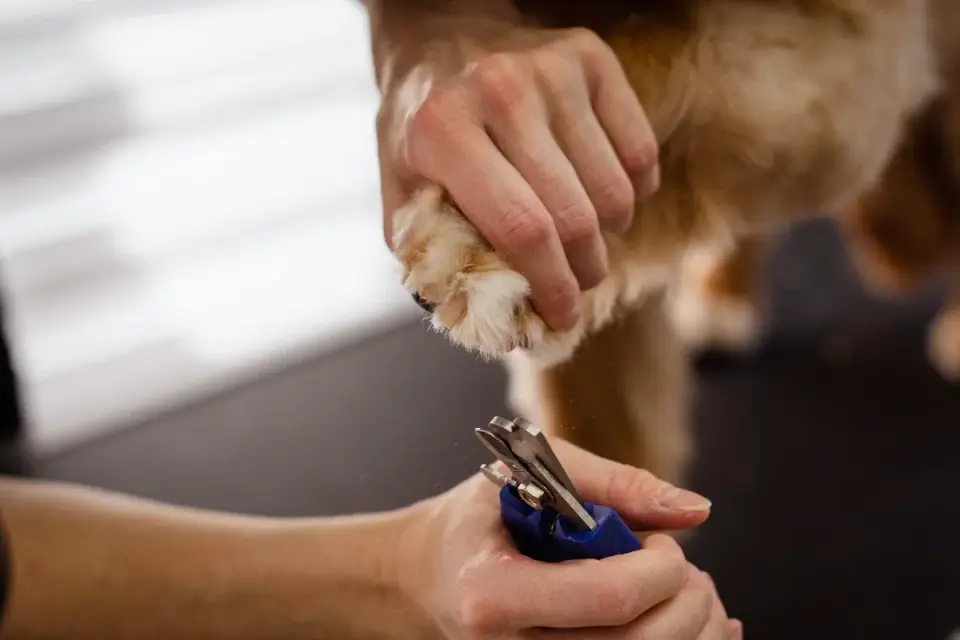
What Actually Sets the Clock
There’s no single interval that fits every dog, because nail growth rate and wear rate aren’t the same thing, and both vary a lot. A young, active dog that spends hours a day on concrete or asphalt wears its nails down naturally almost as fast as they grow — that’s genuine friction filing, and it’s real. A senior dog, an indoor-only dog, or a dog on soft surfaces like grass and carpet gets none of that natural wear, so the nail just keeps growing until something intervenes.
Age matters too. Puppies grow nail faster relative to their size and often need more frequent, lighter trims — sometimes weekly — just to keep the tips blunt while paws are still developing. Breed and toe conformation play a role as well: dogs with dewclaws, which never touch the ground, need those nails checked separately because they never get any wear at all and can curl into the leg if ignored.
The Check That Beats Any Fixed Schedule
Most owners do better with a weekly look-and-listen than a rigid every-three-weeks rule. Lift the paw, look at where the nail sits relative to the pad, and listen for clicking on a hard floor. If a nail extends visibly past the pad, or you hear it before you see the dog walk into the room, it’s time — regardless of whether that’s two weeks or six weeks since the last trim. Both VCA Animal Hospitals guidance on How to Trim a Dog’s Nails and my own exam-room experience point to the same rule of thumb: for a lot of adult dogs living an average amount of indoor life, that check lands somewhere around every three to four weeks, but it’s the observation that should drive the timing, not the number.
That’s the whole trick, honestly.
Getting a Fearful Dog Through It
The dog in front of you also has to tolerate the process, and plenty don’t, at least at first. I’ve watched owners avoid trims for months because a single bad experience — a nail cut too short, a dog that yelped and pulled away — turned every future attempt into a wrestling match. One client’s mini poodle, Gigi, went almost four months without a trim after a quick was nicked during a rushed at-home attempt; by the time they came in, her nails were long enough that we had to plan two shorter sessions instead of one. What worked was the same counter-conditioning approach I use when teaching families how to brush a tiny dog’s teeth: short sessions, high-value treats, and stopping before the dog gets stressed rather than pushing through to finish. VCA’s guidance on Taking the Stress out of Nail Trimming for Dogs and PetMD’s tips in Nailed It! 5 Tips for Stress-Free Dog Nail Trims both walk through this kind of gradual desensitization, and it maps closely to the steps I’d use to get a dog used to tooth brushing — introduce the tool, reward calm behavior, and build tolerance across many short sessions rather than one long one. dvm360’s coverage on how to make grooming at home a Fear Free event makes a similar case for veterinary teams coaching owners through this at home, not just in the clinic.

What Happens When You Wait Too Long
Overgrown nails don’t just look neglected. As they lengthen, the quick — the blood vessel and nerve running through the center of the nail — grows out with them, which is part of why waiting makes future trims harder, not easier: there’s simply more nail to work around before you reach a safe length. Nails that are allowed to grow unchecked can start pressing into the pad with every step, splay the toes, or catch and tear on carpet and furniture. In dogs with dewclaws, an ignored nail can curl into the leg itself. None of this happens on a fixed timeline, which is exactly why I keep coming back to the weekly check instead of a strict countdown.
If you’ve been building any kind of grooming routine at home — the same instinct that drives owners to learn how to groom a German Shepherd through coat blow instead of waiting for a shedding crisis — nail checks fit naturally into that same rhythm. A minute of handling paws while you’re already brushing or petting a dog costs almost nothing and tells you everything.
My Answer, and the Honest Caveat
If you want one number, I’ll give you one: for most adult, moderately active dogs, a trim every three to four weeks keeps nails at a safe length between visits. But I’ll be honest about where the evidence gets thin — there’s no large controlled study establishing an ideal universal interval, because growth rate, activity, and surface vary too much dog to dog for one number to hold up everywhere. What I trust more than any interval is the paw-in-hand check, done weekly, by the person who actually lives with the dog.
I think about Biscuit a lot when this question comes up. Nobody did anything wrong; his nails just grew quietly past the point where they should have been trimmed, and the first real sign was a dog who’d always been sure-footed suddenly wasn’t. A weekly look would have caught it two or three weeks earlier, long before the slip on the kitchen floor. That’s the standard I’d set for any dog: not a date circled on the calendar, but a habit of checking often enough that overgrowth never gets the chance to become a surprise.
If your dog resists trims, growls, or you can’t tell whether a nail is already too short to cut safely, that’s a reasonable time to bring in your veterinarian or a professional groomer rather than push through it alone.
For related context, read How Often Should You Bathe Your Dog? A Vet’s Guide by Coat and Skin Type.
For related context, read Best Dog Nail Grinder: What Actually Matters When You’re Choosing One.
Frequently asked questions
How do I know if my dog's nails are too long?
Look at the nail from the side while your dog stands normally — if it extends past the pad or touches the floor, it's too long. You can also listen for clicking on hard flooring, which usually means a trim is due.
Is it true that walking on concrete keeps nails short?
Regular time on rough, hard surfaces does provide real wear that can slow how often a dog needs a trim, but it rarely eliminates the need entirely, especially for dewclaws, which never touch the ground.
Why does cutting overgrown nails seem harder than trimming ones that were done recently?
The quick — the vessel and nerve inside the nail — grows out along with an overgrown nail, leaving less room to trim safely in one pass. That's often why vets recommend shorter, more frequent sessions to gradually bring very long nails back.
My dog panics during nail trims. What should I do?
Slow down and break the process into small steps paired with treats, working up to full trims over days or weeks rather than forcing one session. If your dog shows extreme fear or aggression, ask your veterinarian about a supervised trim or short-term anti-anxiety support.
Sources
- How to Trim a Dog's Nails — VCA Animal Hospitals
- Taking the Stress out of Nail Trimming for Dogs — VCA Animal Hospitals
- Nailed It! 5 Tips for Stress-Free Dog Nail Trims — PetMD
- Make grooming at home a Fear Free event — dvm360