On this page
Marisol noticed the first tufts of undercoat drifting across her kitchen floor in early March, right on schedule. Her three-year-old German Shepherd, Rex, had been through this twice before, but she still underestimated it every time. By the second week, the couch looked like it had grown its own fur coat, and Rex was scratching at patches where mats had started to form behind his ears. What finally got the shedding under control wasn’t a magic product. It was a routine.
Why the German Shepherd Coat Sheds the Way It Does
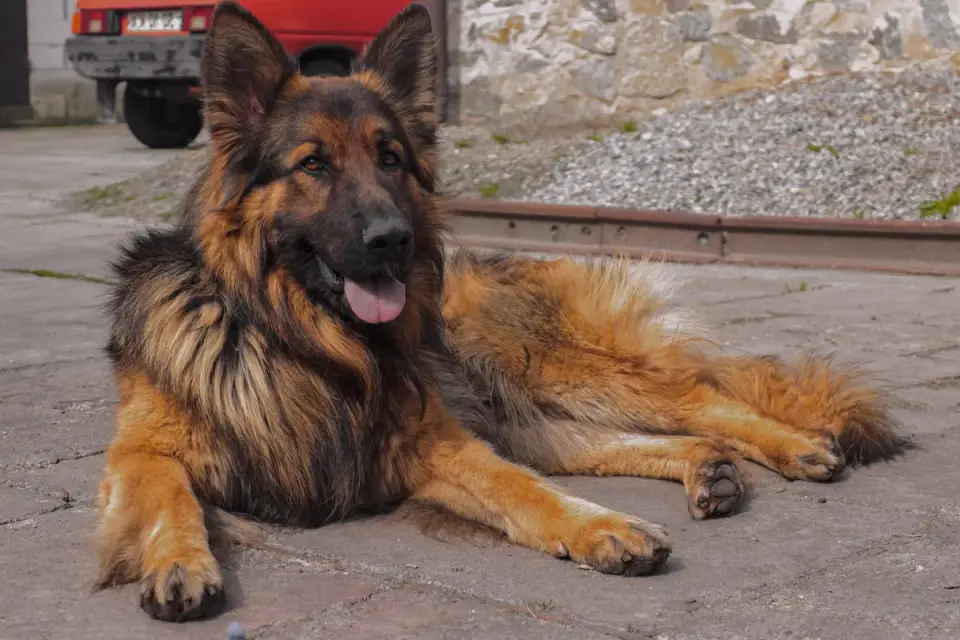
German Shepherds carry a true double coat: a dense, harsh outer layer of guard hairs over a soft, insulating undercoat. According to VCA Animal Hospitals, double-coated breeds like German Shepherds typically go through two heavy seasonal shedding cycles a year, in late spring and late fall, when much of the undercoat releases in clumps rather than single strands. Between those cycles, low-level shedding continues most of the year. That’s simply how the coat is built, and it’s worth understanding before you try to manage it.
The German Shepherd Dog Club of America’s breed standard describes the ideal coat as medium length, with a dense outer coat of straight, harsh hair lying close to the body over a thicker undercoat, plus longer hair around the neck and the back of the legs. That structure is functional, not decorative — it’s what lets the breed work outdoors in a range of temperatures. Grooming should support that function, not undo it.
Building a Coat-Blow Routine
The backbone of grooming a German Shepherd through coat blow is a tool that actually reaches the undercoat, not just the topcoat. A slicker brush is fine for everyday touch-ups and for smoothing the guard hairs, but it mostly skims the surface. An undercoat rake or a de-shedding comb with rows of offset tines gets down to the dense layer underneath, where the real shedding is happening.
During a heavy seasonal blow, plan on brushing daily or close to it. Outside of that window, two to three sessions a week is usually enough to keep shedding manageable and to catch tangles before they become mats, especially behind the ears, under the front legs, and around the hindquarters where the coat is longest. Short sessions done consistently work better than one long, stressful ordeal every couple of weeks.
A few habits make the difference between a routine that works and one that gets abandoned by week two.
- Brush before, not after, a bath. VCA notes that dogs should be brushed out before bathing to remove tangled or matted fur, since water can tighten existing mats and make them harder to remove.
- Work in sections. Moving methodically through the coat — legs, sides, back, tail — makes it easier to notice mats, hot spots, or flaky skin early.
- Stop shedding at the source with diet and hydration. A well-balanced diet supports normal coat turnover; sudden increases in shedding outside the seasonal pattern are worth mentioning to a veterinarian rather than assuming it’s just “more coat blow.”
What Not to Do
It’s tempting, especially mid-blowout, to consider shaving a German Shepherd down to speed things along. Don’t. The American Kennel Club is direct on this point: German Shepherds should not be shaved or have their coats cut short, because the double coat insulates against both summer heat and winter cold, and shaving can interfere with how the guard coat and undercoat grow back. A shaved double coat doesn’t necessarily regrow evenly, and the dog loses a layer of protection it was built to have.
Overbathing is a related trap. The AKC’s grooming guidance suggests once or twice a year is typically sufficient, since frequent washing strips natural oils that keep both skin and coat healthy. Timing a bath for just after a seasonal shed — once the bulk of loose undercoat has already been brushed out — tends to work better than bathing on a fixed monthly schedule regardless of season.
Reading the Skin, Not Just the Coat
Grooming sessions are also a chance to check the skin itself, not just manage hair volume. Part the coat in a few spots and look for redness, flaking, or areas that feel unusually warm. Dogs with heavy double coats can develop hot spots or skin irritation that’s easy to miss under all that fur, particularly in humid weather when the undercoat traps moisture close to the skin. If you notice persistent scratching, bald patches outside the normal shedding pattern, or a coat that looks dull and thin rather than simply “blowing,” that’s a conversation for your veterinarian rather than something to solve with a different brush.
Individual dogs vary in how heavily and how long they shed, and coat condition can be affected by age, health status, and season in ways that don’t always match the textbook pattern. A consistent grooming routine handles the normal cycle; anything that looks abnormal is worth a professional opinion.
Next step: if you’re heading into a shedding season for the first time, start the brushing routine a week or two before you expect it, so the habit — and the right tool — is already in place when the undercoat starts to let go.
Frequently asked questions
How often should I brush a German Shepherd during coat blow?
Most groomers and breeders recommend daily or near-daily sessions during a heavy seasonal shed, tapering to two or three times a week the rest of the year. The German Shepherd's double coat sheds constantly at a low level, with two concentrated blowouts in spring and fall.
Is it ever okay to shave a German Shepherd to control shedding?
No. The American Kennel Club advises against shaving or cutting a German Shepherd's coat, since the double coat insulates against both heat and cold, and shaving can damage the guard hairs and undercoat's ability to regrow properly.
How often should a German Shepherd be bathed?
The AKC notes that once or twice a year is generally sufficient for a German Shepherd, since frequent bathing can strip the natural oils that keep the coat and skin healthy. Bathing around a shedding season, once the loose undercoat has already been brushed out, tends to work well.
Sources
- How to Groom a German Shepherd Dog — American Kennel Club
- Grooming and Coat Care for Your Dog — VCA Animal Hospitals
- Breed Standard — German Shepherd Dog Club of America