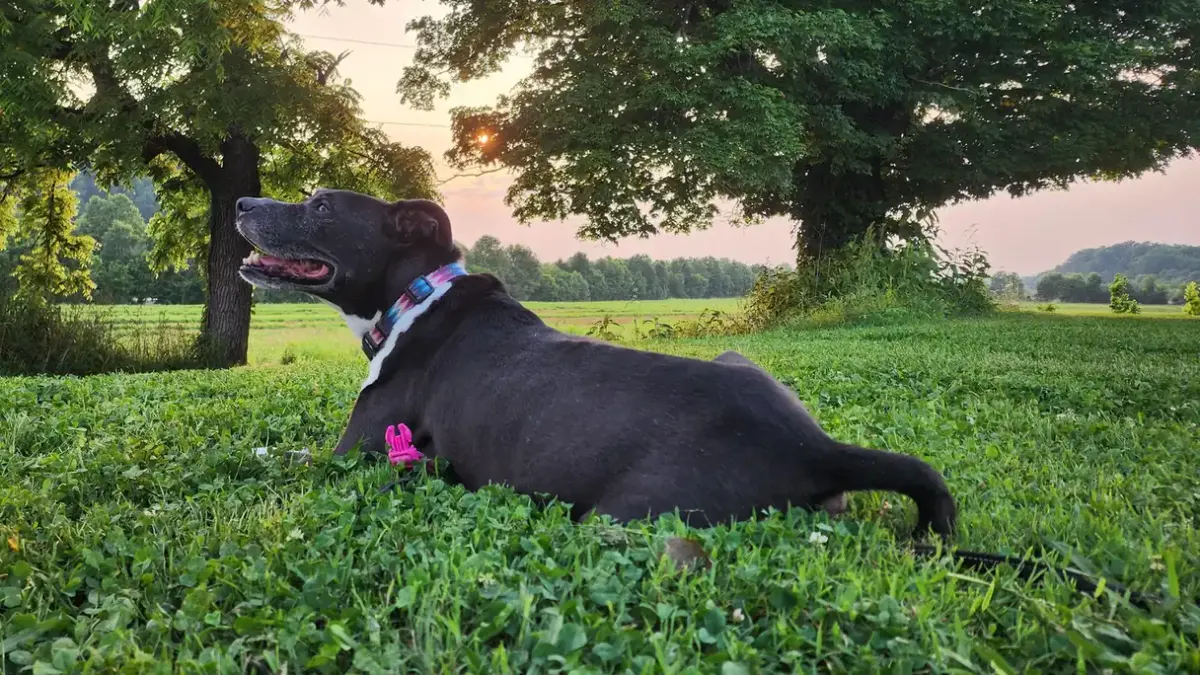
Kristy stood in a Bridgeport park with Duoduo, her 11-year-old spayed mixed-breed mix, while another owner insisted Duoduo must be part pitbull because of her wide cheeks and short muzzle. Duoduo weighed 38 pounds, had a clean dental check two weeks earlier, and showed none of the tall, muscular build people expect, yet the face judgment stuck.
Vets often see that moment. Someone locks onto head shape, calls it a pitbull or a staffy, and builds assumptions about behavior, size, and care from one angle. In practice, faces overlap far more than photos suggest, and individual dogs vary widely.
Why both faces look so similar at a glance
Both types were selected for strong jaws, broad skulls, short coats, and an alert, soft expression around people. That shared history leaves many mixed-breed dogs with a blocky head, pronounced cheek muscles, rose or half-prick ears, and a wide smile that photographs almost identically.
Coat color does not help. Brindle, black, blue-gray, fawn, white, and patched coats appear in both groups and in countless mixes. Ear set changes with cropping, natural carriage, and age. Lighting and head angle change everything.
The evidence for visual identification is thin. Shelter studies have repeatedly found poor agreement between visual breed labels and DNA, which is why I do not use face alone to name a breed in an exam room.
A closer look at head and muzzle tendencies
There are tendencies, not rules. The American Kennel Club describes the American Staffordshire Terrier with a broad skull, pronounced cheek muscles, and a medium-length muzzle with a distinct stop. The United Kennel Club describes the American Pit Bull Terrier with a slightly longer, more wedge-shaped head and a muzzle that often looks a little narrower and longer from the side.
The Staffordshire Bull Terrier, the “Staffy” most breed standards mean, is distinctly smaller. The Staffordshire Bull Terrier Club of America standard calls for a short foreface, very pronounced cheek muscles, and a round, compact head that can look almost cartoon-like next to a taller pitbull-type dog.
In day-to-day practice, I see more overlap than separation. A stocky mix can have a Staffy-like round head. A lean American Pit Bull Terrier can have a longer muzzle. Dentition, bite, and head symmetry matter more for health than for breed naming, and regular home care supports healthy gums no matter the head shape.
Face is one piece — size and body tell more
If you need a practical sort, step back from the nose and look at the whole dog.
| Feature | Pitbull-type face and build | Staffy face and build |
|---|---|---|
| Head width | Broad, often longer from stop to nose | Very round and compact, short foreface |
| Cheeks and jaw | Muscular, defined | Extremely pronounced for body size |
| Muzzle length | Medium to slightly long | Short, with a clear stop |
| Height and weight | Often 30–65 pounds, taller and leggier | Often 24–38 pounds, low and cobby |
| Body impression | Athletic, longer-legged | Compact, wide-chested, low center |
Weight alone is not diagnostic, and mixes blur every line. Papers, pedigree, or DNA tell you more than any photo comparison. For grooming, both coats are short and similar to maintain with brushing and bathing as needed, much like the split described in At-Home Grooming vs a Professional Groomer: How to Split the Job and the basics in Essential Dog Grooming Tools for Beginners.
That full-body view also helps with care planning. A smaller Staffy-type dog may need less food, a different harness fit, and closer attention to crowding of teeth in a short jaw. A larger pitbull-type dog may need more exercise space and stronger leash handling. Those lifestyle trade-offs, covered in Grooming Needs by Dog Size: Small vs Large Breeds, matter more than the label.
What I prioritize instead of head shape
I prioritize behavior history, socialization, training, exercise fit, and preventive care over head shape.
Ask how the individual dog greets people, handles handling of paws and mouth, rests in the house, and responds to other dogs on leash. Look at age, energy, and space. Keep vaccinations, parasite prevention, dental home care, and Fear Free handling consistent.
Judging by head shape is a poor basis for housing, insurance, or adoption decisions.

Head shape alone cannot carry that weight.
If you love the look, meet the whole dog. Choose for temperament and fit for your home, confirm breed only with records or DNA when it truly matters, and let your own vet guide health plans for that mouth, skin, and body in front of you.
Frequently asked questions
Can you tell a pitbull from a Staffy by face alone?
Not reliably. Muzzle length, cheek fullness, and head roundness overlap heavily, especially in mixed-breed dogs, so use whole-body size, pedigree or DNA, and individual temperament instead.
Which has the blockier head?
On average the Staffordshire Bull Terrier looks rounder and more compact with a shorter foreface, while pitbull-type dogs often look slightly longer in muzzle — but many individuals reverse that pattern.
Does face shape predict behavior?
No. Behavior reflects socialization, training, life stage, and individual temperament far more than skull width or cheek size.
Sources
- American Staffordshire Terrier Breed Information — American Kennel Club
- American Pit Bull Terrier Breed Standard — United Kennel Club