On this page
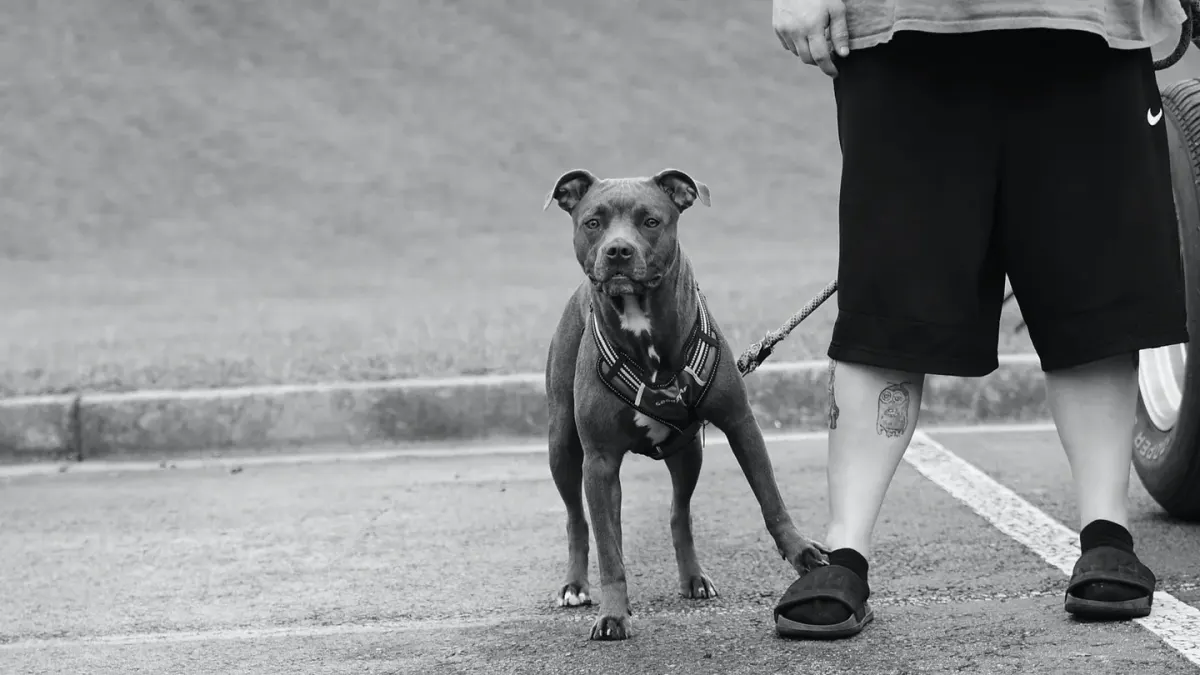
A three-year-old pit bull mix named Rosco came into my exam room because his owners were sure he’d “turned aggressive” on walks. He’d lunge at other dogs across the street, bark until he was hoarse, and once left a scratch on his owner’s hand when she yanked him back mid-lunge. What they hadn’t noticed: at the dog park, off leash, Rosco ran straight up to strange dogs with a loose, wiggly body and played for twenty minutes without a single stiff moment. That mismatch — explosive on leash, easy off it — is the single biggest clue I look for, and it’s the difference between a dog who wants contact and can’t get it, and a dog who wants distance and can’t get enough of it.
Why the leash changes everything
A dog on a six-foot leash has exactly two choices when something arouses him: move toward it or get dragged back. Off leash, he has a third option — retreat — and that third option is what tells you what’s actually driving the behavior. Barrier frustration happens when a dog is motivated to approach (another dog, a person, a squirrel) but the leash, a fence, or a car window physically stops him. He wants in, not out. Genuine aggression, on the other hand, is a dog trying to increase distance from something he finds threatening. The leash isn’t the problem for that dog — it’s that he can’t get away, so he escalates instead.
This is the same distinction covered from a different angle in our piece on reactive vs. aggressive dogs, and it overlaps in practice with the confusion owners have reading play bow vs. aggression signals in loose, off-leash greetings.
What frustration actually looks like on the leash
Frustrated dogs tend to have loose, bouncy bodies even while lunging. Tail is often up and wagging in broad strokes, ears forward, mouth open and relaxed rather than pulled back tight. The barking is high-pitched and repetitive rather than low and guttural. Critically, once the barrier drops — the other dog comes closer, or you let out more leash — a frustrated dog’s arousal often resolves into normal greeting behavior within a few seconds. He wasn’t threatening the other dog; he was begging for access to it.
I see this constantly in adolescent dogs, six months to two years old, who were well socialized as puppies and simply never learned that leash tension is supposed to mean “not right now.” It’s an impulse-control gap, not a temperament problem, though it can look alarming from the sidewalk.
What aggression actually looks like on the leash
A genuinely aggressive or fear-driven dog carries more tension through the whole body — stiff legs, weight shifted backward even while barking forward, tail low or tucked, ears pinned. The bark is often lower and more sustained, sometimes mixed with a growl. If you give that dog more leash instead of less, he usually doesn’t relax — he may escalate, because now the thing he’s afraid of is closer. Some dogs will also show displacement signals first: lip licking, yawning, a hard stare, before the lunge even starts. Those are dogs telling you they’re uncomfortable well before the leash goes tight.

Where the two overlap, and why owners misread it
Here’s the part that trips almost every owner up: a dog can start frustrated and end up looking aggressive after months of unrelieved practice. Every lunge that gets rehearsed on leash — even a friendly one — teaches the dog that big, loud displays are what happens near other dogs. Some of those dogs generalize the arousal into something closer to true reactivity over time, especially if owners respond with leash corrections or by tensing up themselves, which the dog reads as confirmation that something’s wrong. By the time I see them, the line between “wants to say hi too badly” and “doesn’t trust other dogs anymore” has blurred, and untangling it takes a real history, not just a fifteen-minute observation.
I had a client with a two-year-old golden retriever, Maple, who’d been muzzle-punching other dogs on leash for about four months by the time we met. Her owner described the early version as “excited,” and video from a year earlier backed that up — loose body, high tail, no stiffness. But nobody had worked on impulse control, and every walk had been a rehearsal of the same failed approach. By the time I evaluated her, she still greeted calm, non-reactive dogs fine off leash, but on leash she’d developed a hard stare and a stiffened stance in the last few seconds before contact that hadn’t been there a year before. We weren’t starting from pure frustration anymore. We were managing a dog who’d learned to expect the interaction to go badly, and the plan had to change accordingly — more distance work, less exposure, before any greeting practice at all.
What I actually do differently for each
For frustration-driven dogs, the fix is mostly about teaching an alternative to lunging: rewarding a check-in or a sit before the dog reaches threshold, practicing “look at that” games at a distance the dog can handle, and — importantly — allowing supervised, calm greetings sometimes so the dog isn’t perpetually starved of the thing he wants. Punishing frustration usually backfires, because you’re adding stress on top of a dog who was already asking for something, not avoiding it.
For fear-driven aggression, the priority flips: increase distance first, and don’t ask the dog to get closer until his body language stays loose at the current distance for several sessions in a row. Greetings aren’t the goal early on — calm proximity is. Pushing a fearful dog toward contact because he “needs to get used to it” is one of the more common mistakes I see, and it tends to make the stiffening worse, not better.
Where calming support can fit in, and where it can’t
Calming support is a helper for the nervous system underneath the behavior — it isn’t a substitute for the training the dog actually needs. For dogs whose baseline arousal or stress runs high enough to make leash work harder than it should be, some owners look at ingredients like chamomile, ashwagandha, or L-theanine. A review in Biomedicines notes that for most species, evidence on chamomile’s calming effects is still derived mainly from preclinical studies or traditional use — worth knowing before expecting too much from it alone. Ashwagandha has more human research behind it: a systematic review in Cureus concluded the KSM-66 extract has a moderate positive impact on stress reduction and cognitive performance. L-theanine’s evidence is narrower still — a review in Molecular Psychiatry found a real effect in one study on psychotic anxiety, using 400 mg/day over eight weeks, but that’s a human dose in a specific population, not something to extrapolate to dogs on your own. Ask your veterinarian before adding any of these, and treat them as one small piece of a plan built mostly around management and training.
The bottom line
Watch what happens when the barrier disappears. A dog who softens and wants to greet once the leash slackens or the other dog gets closer is telling you this is frustration — an impulse-control problem you can train through with distance games and calmer exposure. A dog who stays stiff, or gets worse as distance closes, is telling you he needs more space, not less, and that pushing him toward contact will likely backfire. Both patterns are manageable, but they call for close to opposite plans, which is exactly why getting the read right matters before you start working on it. If your dog’s mouthing or nipping shows up mostly around excitement rather than on leash specifically, it’s worth reading about why dogs get nippy and mouthy when overexcited as a related but distinct pattern. And if the leash behavior is new or escalating fast, loop in a trainer or your vet — a body scan for pain is always worth ruling out before you assume it’s purely behavioral.
Frequently asked questions
Can a frustrated dog turn into an aggressive dog over time?
Yes. Repeated, unresolved leash frustration can generalize into real reactivity or fear-based aggression, especially if the dog's arousal is met with leash corrections or tension from the owner. Watching for early stiffening or a growing hard stare is the best way to catch that shift.
Should I let my frustrated dog greet other dogs on leash to relieve the tension?
Sometimes, but selectively — calm, supervised greetings with dogs you know are appropriate can help, while letting every lunge end in a greeting can reinforce the behavior. A trainer can help you build in structured, occasional access instead of an all-or-nothing approach.
Is barrier frustration more common in certain ages or breeds?
I see it most often in adolescent dogs, roughly six months to two years old, who were well socialized early but never learned impulse control around a leash. It shows up across breeds and isn't tied to any one temperament type.
Sources
- Preclinical and Traditional Evidence for Chamomile in Anxiety and Stress — Biomedicines
- Systematic Review of Ashwagandha for Stress and Cognitive Performance — Cureus
- L-Theanine and Anxiety Outcomes: A Review — Molecular Psychiatry