On this page
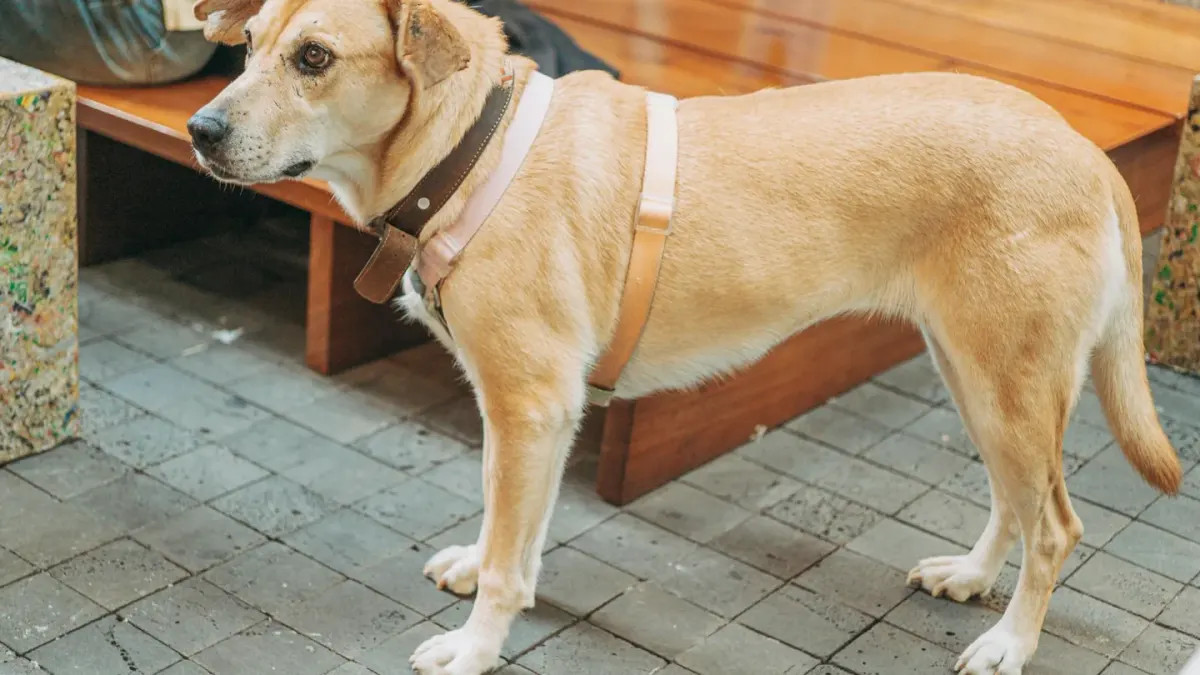
Which fits better, a Y-shaped or H-shaped harness, often comes down to your dog’s chest shape and gait, not the marketing copy on the box. Both designs can be excellent. Both can also chafe, restrict, or slip if you buy on shape alone and skip the actual fitting.
Start here — the fit checklist
Before you compare shapes, run through this on the dog in front of you:
- Chest depth: Deep-chested breeds (Dobermans, Weimaraners, greyhounds) often move more freely in a Y-front, since the strap runs down the sternum instead of across the point of shoulder.
- Chest width: Barrel-chested or short-legged dogs (French Bulldogs, Corgis) frequently fit an H-harness more evenly because the parallel straps don’t bunch at a single sternum point.
- Shoulder clearance: Slide two fingers under every strap at the shoulder, front and back leg, mid-walk. If a strap sits directly over the point of the shoulder, the shape didn’t fix the problem — the sizing did.
- Coat and skin: Short-coated or thin-skinned dogs (whippets, seniors with less fat padding) do better with wide, padded straps regardless of shape.
- Escape risk: H-harnesses with a girth strap and separate neck loop are generally harder for a dog to back out of than a Y-front with a single loose chest loop. If your dog is an escape artist on leash, that matters more than shoulder mechanics — our guide to GPS trackers for escape-prone dogs covers backup options too.
- How it’s clipped: Pair either shape with a front-clip point if pulling is the issue; shape alone won’t fix a lunging dog. We break that down in Front-Clip vs Back-Clip Dog Harness.
Now let’s get into why those criteria matter, and where the two shapes actually diverge.
I remember a nine-month-old Doberman named Otto who came in for a wellness visit, still gangly through the chest the way young deep-chested dogs are. His owner had bought an H-harness because it was the one on sale at the pet store, and when I watched him trot down the hallway, his front legs looked shortened — like he was pulling his elbows in instead of reaching forward. We swapped the fit mentally on the exam table: sternum strap running down the midline instead of across the shoulder points, girth strap moved back an inch off the elbow. Otto’s owner went home with a Y-front sized for his current chest, not his adult one, with a note to recheck the fit in six weeks as he filled out. That recheck matters more than people expect. A harness that fit at four months can be pinning a shoulder blade by month seven.
Puppy months: when the chest shape is still a guess
Puppies are the hardest fitting case, because you’re buying for a body that will change every few weeks. This is where I lean toward adjustable Y-shaped harnesses for growing, narrow-chested breeds — the strap sits on the sternum rather than the point of shoulder, so there’s more room for error as the ribcage widens. For already-broad, low-slung puppies (Bulldogs, Basset-type builds), an adjustable H-harness with a separate neck loop tends to stay put better without needing constant refitting.
Either way, plan on rechecking fit monthly through the growth period. A harness that slides an inch forward under load, or one where you can’t slide two fingers flat under every strap, is either too big or already too small for a puppy still growing into it.
The active adult years: where the gait research gets interesting
This is the part most buying guides skip, and it’s the part I actually pay attention to. A pilot canine gait analysis study published in PLOS ONE tested several harness designs, including a Y-front marketed as non-restrictive, on the same dogs and found that most gait parameters were significantly altered by harnesses in roughly two-thirds of the trials measured — and, notably, the “non-restrictive” Y-front actually reduced shoulder range of motion more than a supposedly restrictive design on some of the larger dogs tested. The study’s own conclusion was blunt: there was no single harness shape that performed best across every dog. Fit and individual gait mattered more than the label on the harness.
A separate biomechanics analysis, reported via Taylor & Francis Online, found that a chest-strap style harness reduced shoulder extension by up to 8 degrees during walking and trotting, while a Y-shaped harness marketed as non-restrictive reduced shoulder extension by up to 10 degrees in the same dogs — the researchers noted the Y-strap may still load the muscles around the cranial border of the scapula even without crossing the shoulder point directly. Neither shape was free of an effect. That’s the honest answer, and it’s one most harness marketing conveniently leaves out.
What this means in the exam room is simple: shape is a starting point, not a guarantee. A well-fitted H-harness on the right dog can move more freely than a poorly-fitted Y-front, and the reverse is just as true. If you run an active dog — agility, long trail days, a dog who trots more than walks — the strap width, the padding, and where the girth sits relative to the elbow matter as much as which letter the harness is named after.
Senior dogs and changing range of motion
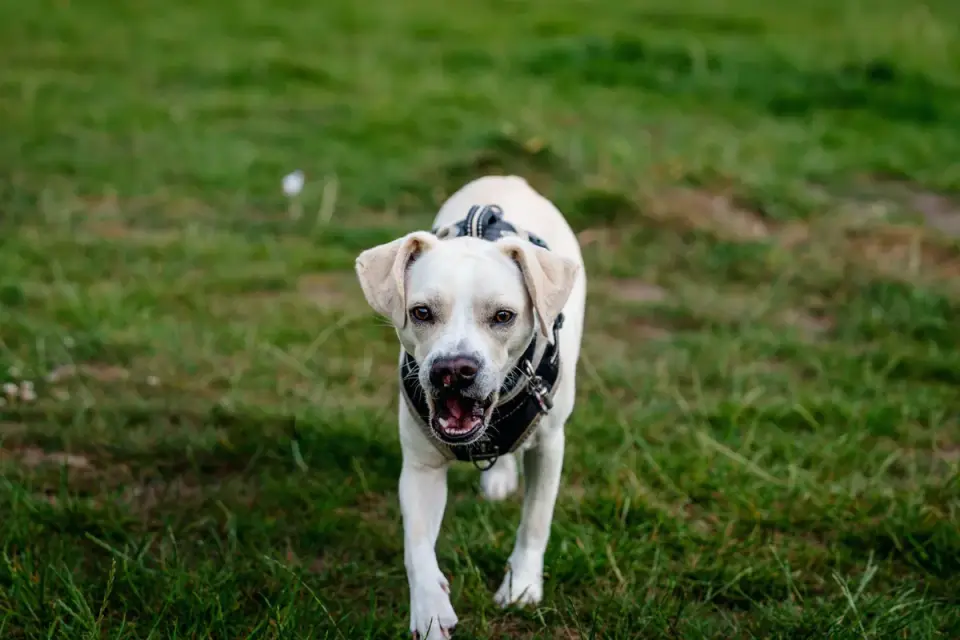
Older dogs lose muscle mass over the shoulders and spine, which changes how any harness sits, and it’s here that I see the most preventable rubbing. In my practice, the seniors who come in with raised, hairless patches at the armpit almost never have the wrong shape of harness — they have the right shape in the wrong size, worn long after their owner last checked the fit. A 10-year-old Labrador losing topline muscle can go from a snug harness to a loose, sliding one over a single season without the owner noticing, because the change happens gradually and the dog doesn’t complain until the skin is already irritated.
For a senior dog with reduced shoulder motion or early arthritis, I generally favor a well-padded H-harness with a supportive handle, since it distributes pressure over more surface area and doesn’t require lifting a leg through a chest loop — a maneuver that gets harder as hips stiffen. If your dog still moves well and simply needs the shoulder freedom, a properly sized Y-front is still a reasonable choice; just recheck the fit every few months, the same way you would with a growing puppy, because aging bodies change shape too.
The verdict — what I’d actually tell you to buy
Neither shape wins outright, and any guide that tells you otherwise is selling you something. Choose a Y-front if your dog is deep-chested, still growing, or needs maximum forelimb reach for sport or trail work, and commit to checking the fit regularly. Choose an H-harness if your dog is barrel-chested, prone to backing out of gear, aging, or simply more comfortable with weight spread across a wider strap network. In either case, the fit review matters more than the shape decision — recheck at the two-finger test every few months, and adjust before your dog tells you it’s necessary.
I’d also say this: don’t treat the harness as separate from the rest of the walking setup. A well-fitted harness paired with a poor clip choice still pulls a dog off balance, and a secure harness paired with a loose-fitting collar underneath still leaves an escape route. If your dog’s ever slipped a collar at the door, it’s worth reading through Should You Take Your Dog’s Collar Off at Night? as a companion piece — the same fit logic applies.
Looking ahead, I expect harness design to keep catching up with what gait research is already showing: that shoulder-friendly claims need to be measured, not assumed. Until manufacturers publish that data as routinely as they publish sizing charts, the two-finger test and a fit recheck every few months remain the most reliable tools you have.
Frequently asked questions
Is a Y-shaped harness always better for shoulder movement?
Not necessarily. Gait research has found that some Y-front designs still restrict shoulder extension, sometimes more than expected, so fit and strap placement matter as much as the shape itself.
Which harness shape is harder for a dog to escape from?
H-shaped harnesses, which typically combine a fixed neck loop with a separate girth strap, tend to be harder to back out of than a Y-front with a single loose chest loop.
How often should I recheck my dog's harness fit?
Monthly during puppy growth, and every few months for adult and senior dogs, especially after any noticeable weight or muscle change.