On this page
Whether to PetMD: take your dog’s collar off at night comes down to how they sleep and what the collar could snag on. There’s no single rule that fits every dog, every crate, and every collar — but there is a pattern to when collars actually cause problems, and it tracks pretty closely with the hours nobody’s watching.
Morning: Why the Collar Goes On First
For most dogs, the collar goes on with breakfast and stays there through the day. That’s the lowest-risk stretch, because someone is usually home, awake, and able to notice if a dog gets stuck on something. A properly fitted flat collar carrying an ID tag is doing real work here — it’s the fastest way for a stranger to get a wandering dog back to you, faster than a microchip scan at a shelter.
Fit matters more than most owners think. You should be able to slide two fingers flat under the collar without forcing it. Looser than that, and a dog can back out of it or catch a paw trying to scratch; tighter, and it rubs.
Daytime: What the Collar Is Actually Doing
During active hours the collar’s job is identification and, if you’re using a leash, control. This is also when martingale collars earn their keep — the limited-cinch design keeps a narrow-headed dog from backing out mid-walk. But a martingale is a walking tool, not an all-day accessory. Once the leash comes off, that same control loop becomes a snag risk with nothing to justify keeping it on.
Dogs left alone in a yard or a crate during the day face a smaller version of the overnight problem: a collar with tags, a loop, or hardware that can hook on a fence post, a deck board, or crate wire. If you crate your dog while you’re at work, the same logic that applies at bedtime applies there too.
Evening Wind-Down: When to Start Thinking About Removal
As the house settles down, it’s worth building a habit around the collar the same way you would around locking the door. Some owners take it off the moment the last walk ends; others wait until the dog is in the crate or on the bed for good. Either works, as long as it happens before everyone stops paying attention.
This is also a reasonable moment to swap gear if you haven’t already. A Whole Dog Journal: breakaway collar — one that releases under steady pressure — gives you a middle option: ID stays on, but the collar won’t hold if it catches on something while the dog is unsupervised.
Bedtime and Crate Time: The Riskiest Hours
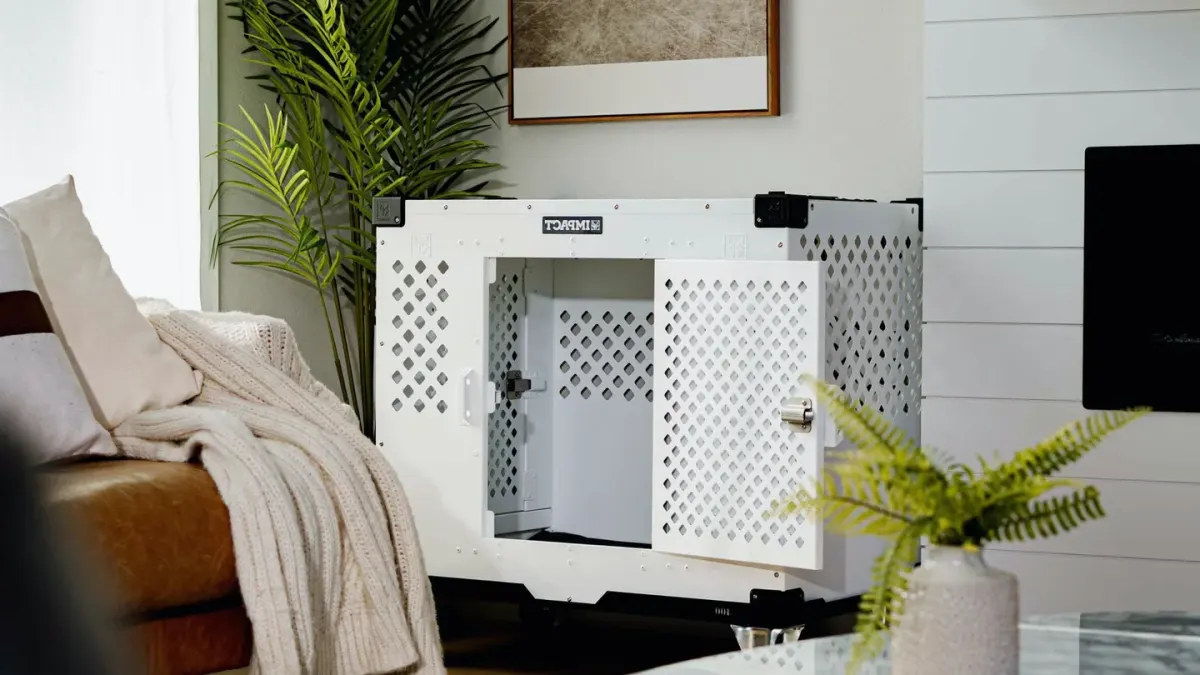
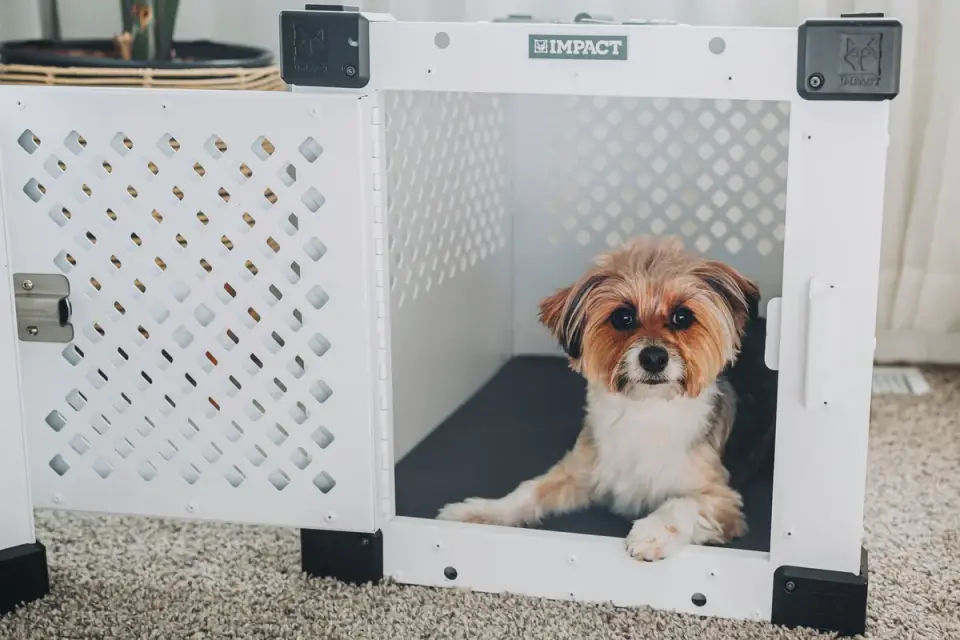
This is where collar injuries actually happen. A dog left alone in a crate overnight can hook a collar on the wire door, a water bottle bracket, or a toy left inside, then panic and pull — which is exactly the motion that tightens a standard buckle collar instead of releasing it. If you’re setting up a crate for a new puppy’s first night, an empty crate with no collar is the safer starting point, and you can build up to overnight wear once the dog is calm and settled.
Dogs who sleep loose in a bedroom carry less entanglement risk but aren’t risk-free — a collar can still catch on a bed frame, a crate left open nearby, or another pet during rough overnight play.
Overnight: What Vets and Trainers Actually Recommend
The general guidance lines up: if a dog is unsupervised — sleeping alone in a crate, a separate room, or a fenced yard overnight — a plain flat collar without extra hardware, or no collar at all, is safer than a martingale or a collar loaded with tags and attachments. If losing ID access overnight worries you, a breakaway collar or a current microchip registration covers that gap without leaving a full-strength collar on an unsupervised dog.
Dogs who roam a securely fenced yard overnight are a reasonable exception, since ID access may matter more there than it does for a dog sleeping in a crate three feet from your bed. Use your dog’s actual sleep setup to decide, not a blanket rule.

Morning Again: Putting It Back On Safely
Close the loop the same way you started it: collar goes back on with the first walk or the first trip outside, and comes back off before the next unsupervised stretch. If your dog tends to slip out of gates or bolt when startled, pairing daytime collar wear with a GPS tracker for an escape-prone dog is worth considering, since it solves the recovery problem without requiring a collar overnight.
Most dogs adjust to this rhythm within a few nights. The habit is simple even when the reasoning behind it takes a minute to explain.
Frequently asked questions
Is it safe for a dog to sleep with a collar on?
It can be, if the collar fits properly, the dog sleeps loose in a room with nothing to snag on, and someone can hear if there's trouble. Crated dogs, dogs who share a bed, and dogs wearing collars with tags or loops carry more risk overnight.
What is a breakaway collar and do I need one?
A breakaway collar has a buckle that pops open under steady pressure, which lets a dog escape if the collar snags on furniture, a fence, or another dog's jaw during play. Whole Dog Journal notes they're built for exactly the unsupervised situations where entanglement happens most, including crates.
Should puppies wear collars overnight?
Many trainers suggest going collar-free in the crate for puppies still learning to settle, since a fitted collar on a fast-growing neck can also turn snug faster than owners expect. Check the fit weekly and ask your vet if you're unsure.
What should I do instead of a collar at night?
A microchip plus a collar hung on the crate or by the door for the morning covers identification without leaving anything on the dog's neck while they're unsupervised.
Sources
- 5 Ways Collars Can Harm Your Dog — PetMD
- The Safest Types of Dog Collars (and the Most Dangerous) — Whole Dog Journal