On this page
The prettiest embroidery means very little if the collar slips over your dog’s ears on a busy sidewalk.
Custom options are tempting because you can pick the color, font, and wording, but in day-to-day practice those choices work best when they come after the unglamorous ones. A collar is first a safety tool that stays on, allows comfortable breathing and movement, and helps your dog get home if you get separated.
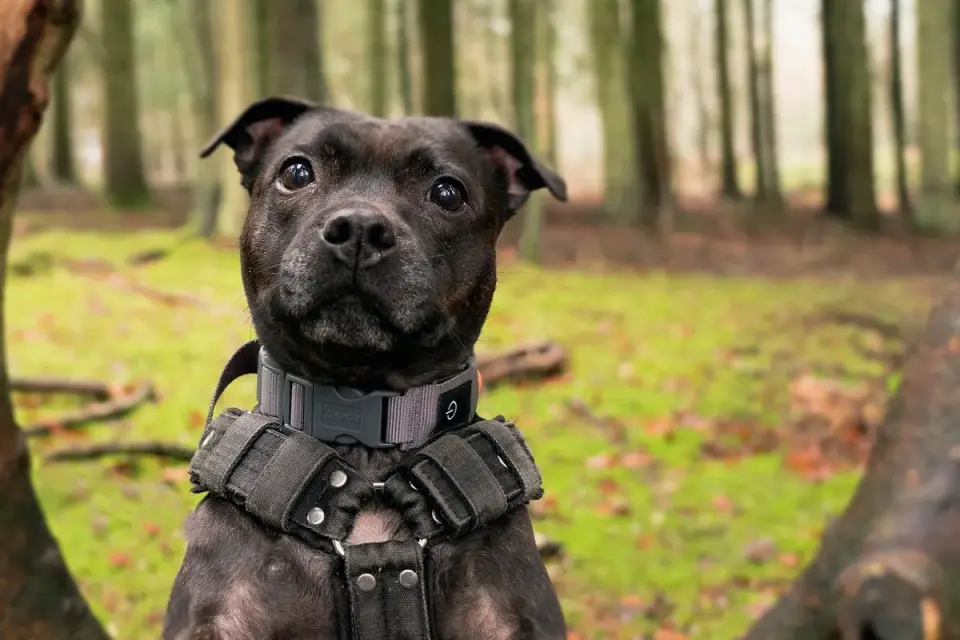
Vets often see the same mismatch: a collar bought for looks that is a half-inch too wide for a small neck, or too loose on a narrow-headed dog. Emmy, a 5-year-old spayed female Bull Terrier who lives with her owner Kristi in Peoria, Illinois, is a good example. She pulled out of a loose, stiff custom collar once at a park entrance, and Kristi caught her within about 20 feet — close enough to rethink fit before anything worse happened.
Start with fit, not fabric
For a flat collar, measure around the middle of the neck with a soft tape, then add room for two flat fingers between collar and neck. That two-finger check is the practical standard the American Veterinary Medical Association describes in its general pet-care guidance for collars and identification.
Width matters too. A very wide, stiff band can rub behind the ears or on the trachea area in small or short-necked dogs, while a very narrow band concentrates pressure on one line. Individual dogs vary widely, so watch for coughing, pawing at the collar, hair loss under the band, or reluctance to walk forward — all reasons to recheck size and to ask your own vet about fit.
Keep it snug enough that it cannot slide over the head when your dog backs up, but loose enough that you can still slip those two fingers underneath all the way around. Recheck growing puppies every two weeks.
What the material is really deciding for you
Nylon webbing is light, washable, and easy to embroider, which is why most custom collars use it. Leather softens with wear and can be stamped or riveted with a nameplate, but it needs occasional cleaning and conditioning and should dry slowly away from heat.
Coated webbing sheds water and mud, a plus if you walk in rain or your dog swims. Metal hardware tends to hold up longer than thin plastic, and a solid buckle plus a separate, sturdy D-ring for the leash and another attachment point for tags reduces the chance that one failure loses everything.
There is thin preventive evidence that any one material prevents skin problems on its own. What I see more often is friction and trapped moisture causing irritation, especially in wrinkled or long-haired breeds. A smooth lining, rounded edges, and a collar you can wash and fully dry may help maintain comfortable skin, but it does not replace checking underneath a few times a week.
Identification is the reason to go custom
Custom text works best as backup identification, not the only plan. A phone number embroidered in large, high-contrast thread or a riveted brass plate is readable from a few feet away, which helps a neighbor call you without having to handle tags.
Keep the wording short: dog’s name is optional, your last name and one or two current phone numbers matter more. Skip the address on the outside for privacy, and avoid small script fonts that fill with dirt.
Tags and microchips still matter. Cornell University College of Veterinary Medicine reminds owners in its canine health resources that permanent identification supports reunification when collars come off, which is exactly when dogs go missing. In practice, I suggest a flat collar with readable custom ID plus a microchip with current registration, with tags added when they do not create too much jingle or snag risk.
When a flat custom collar is the wrong tool
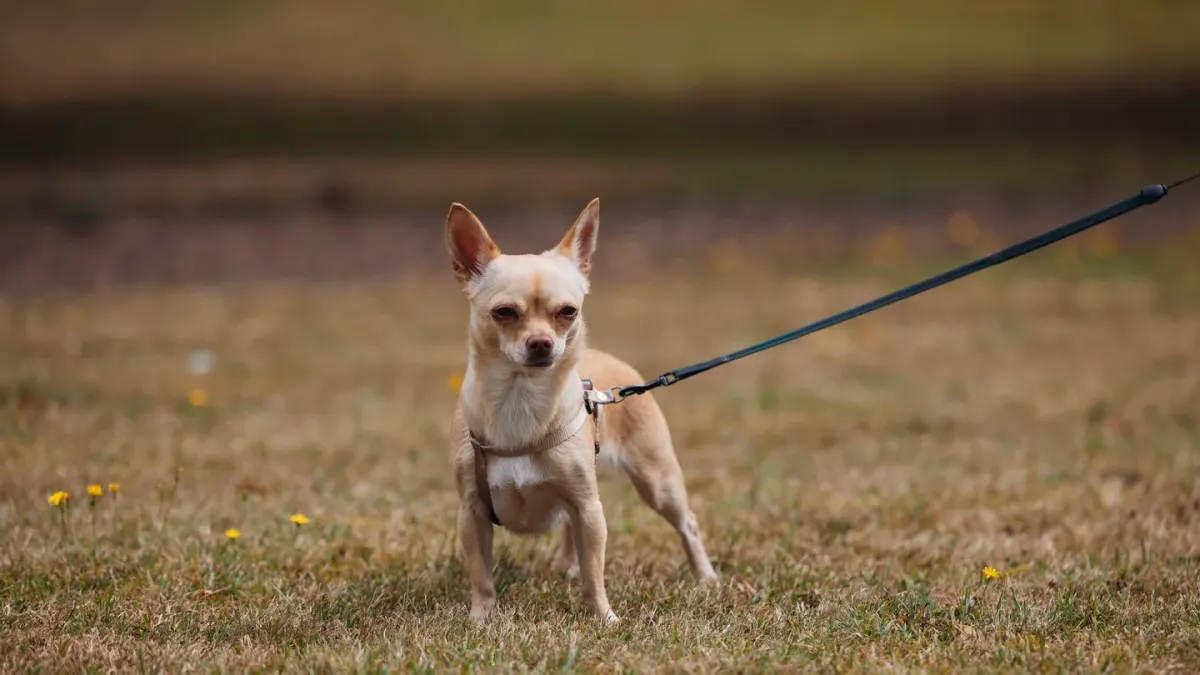
No flat collar, however well fitted, is meant to fix hard pulling or to restrain a dog that lunges. Pressure on the neck is still pressure.
If your dog coughs, gags, or chokes on a flat collar, or has a delicate trachea, eye issues worsened by straining, or a head shape that slips collars, ask your vet about using a harness for leash attachment. Many owners keep the custom collar on for ID and clip the leash to a well-fitted harness, which is the same approach described in Choosing a Harness for a Deep-Chested Breed. For dogs that hit the end of the leash hard, pairing that setup with the right lead approach from Bungee vs Fixed Leash for a Lunging Dog: Which One Actually Helps often helps more than changing collar style again.
Breakaway collars deserve a mention for dogs that wrestle, crate with collars on, or squeeze through brush. They release under load to reduce strangulation risk, but that also means they can release on a walk. Most owners do better removing regular collars for unsupervised crate time and choosing breakaway styles only for the specific entanglement risk they worry about.
Fit is not forever. Weight change of even a few pounds can change the equation.
What I would order after the fitting
Choose the simplest design that meets the safety checklist: correct width for your dog’s size, smooth edges, strong buckle and D-ring, and legible contact information. Reflective thread or a light-colored lining helps for evening walks without adding bulk.
Then stop customizing. Charms, hanging medallions, and oversized buckles add weight and snag points. If you want style, put it in the color or pattern, not in extra hardware.
Wash on a regular schedule, rinse after swimming, and replace webbing that is frayed, sun-stiffened, or holding odor after washing. A collar is inexpensive compared with a lost-dog search.
Frequently asked questions
How tight should a custom dog collar be?
Snug enough that it will not slip over the head, with room for two flat fingers between the collar and the neck all the way around. Recheck fit after weight changes and every two weeks in growing puppies.
Is embroidered ID enough without tags or a microchip?
No. Embroidered contact information helps a finder call quickly, but collars can come off. Keep microchip registration current and use tags when practical as backup.
Sources
- Pet Care Resources — American Veterinary Medical Association