On this page
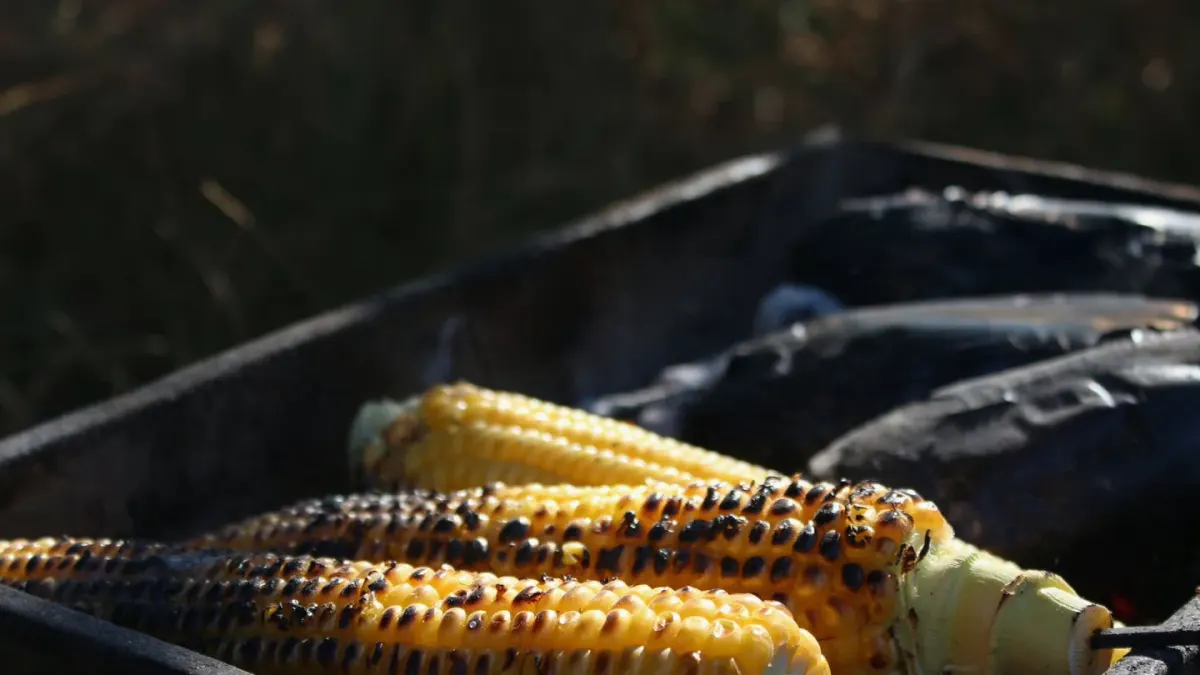
It’s the same scene almost every August: a paper plate left too close to the edge of the picnic table, a half-eaten ear of corn on it, and a dog who’s been very patient for the last twenty minutes. Nobody sees the actual moment of the theft. What people remember is the fifteen minutes after, when the cob is just gone.
I’ve treated this exact sequence more times than I can count. In my practice, the dogs who come in after swallowing a corn cob almost never look sick that first evening — that’s what makes it dangerous. The owner usually calls the next morning, sometimes not until the second day, describing a dog who’s suddenly picky about food, or who vomited once and seemed fine, or who’s standing with their front end down and their rear end up in that stretched, uncomfortable posture vets call the “prayer position.” By the time I’m palpating an abdomen and feeling a firm, sausage-shaped mass where there shouldn’t be one, we’re usually past the point where watching and waiting is a reasonable plan. What starts as a joke about a Labrador’s appetite can turn into a two-hour enterotomy by the weekend.
The kernel and the cob are two different questions
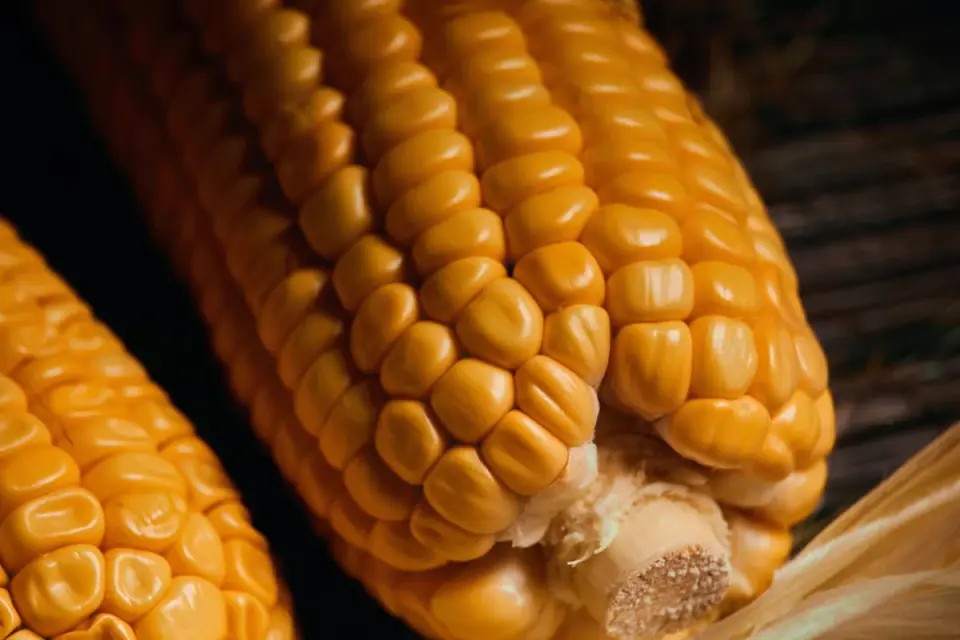
It helps to separate what’s actually being asked here, because “can dogs eat corn” and “can dogs eat corn on the cob” have almost opposite answers. Plain, cooked corn kernels, off the cob and unseasoned, are a reasonably well-tolerated source of carbohydrate and fiber for most dogs — the American Kennel Club notes that corn is a common ingredient in many commercial dog foods and that kernels themselves aren’t toxic. The trouble starts with the woody, fibrous core the kernels grow on. That structure is built to survive weather, insects, and handling in a field — a dog’s digestive tract was never going to be the thing that broke it down.
What actually happens once a cob goes down
A dog’s stomach is a poor match for a corn cob. It’s too large to pass easily through the pylorus into the small intestine, and too dense and fibrous for stomach acid to soften it the way it would a piece of food. When a cob does make it partway through, it tends to lodge — often in the stomach outlet or a narrow loop of small intestine — and that’s when the real physiology of an obstruction takes over. Fluid and gas back up behind the blockage, the intestinal wall stretches, and blood flow to that segment of gut starts to drop. Left long enough, that reduced perfusion can lead to tissue death and, eventually, perforation. PetMD describes corn cobs as one of the more frequent foreign-body culprits vets deal with precisely because of how completely indigestible they are, unlike most bones or rawhide, which at least break down somewhat with chewing and gastric acid.
The clinical picture builds gradually rather than announcing itself. Early on you might see nothing at all, or just a dog who skips a meal. Over the following one to three days, vomiting tends to become more frequent and less productive, appetite drops further, and the dog often becomes lethargic or restless in a way that’s hard to pin down. None of those signs are unique to a corn cob — that’s part of what makes this frustrating for owners — but the timing after a known cookout or barbecue is usually the clue that points a vet toward imaging rather than a bland-diet trial.
Why size and chewing style change the risk
Not every dog who swallows a cob ends up in surgery, and it’s worth being honest about the variables that shift the odds. A small, tightly compacted piece swallowed nearly whole by a large-breed dog with a wide esophagus can sometimes pass on its own, especially if it’s smooth-edged. A jagged half-cob gulped by a smaller or younger dog is a much worse bet — narrower intestines have far less margin, and puppies in particular seem to gulp first and consider consequences never. Dogs who are known “gulpers,” the ones who treat every treat and toy like a race against an invisible sibling, are overrepresented in the corn-cob cases I see. So are dogs who’ve gotten into a cob once before; it’s rarely a one-time event in that same household.

One case has stuck with me for years. A six-year-old Beagle mix, close to 28 pounds, came in on a Sunday evening after a neighborhood block party the day before — he’d apparently worked the length of the fence line collecting dropped plates while everyone was distracted by fireworks. His owner hadn’t seen him eat anything specific, just noticed him “acting off” that morning: turning away from breakfast, restless on the kitchen floor, unwilling to jump onto the couch where he normally spent every evening. On exam his abdomen was tense, and radiographs showed a gas pattern consistent with an obstruction sitting just past his stomach. Surgery confirmed a nearly whole corn cob wedged in his proximal small intestine. He recovered well, but it was a longer, more expensive weekend than anyone at that party had planned for.
Signs that mean this is an emergency tonight, not a wait-and-see
Because the interval between eating a cob and clear symptoms can stretch out over 24 to 72 hours, it’s tempting to assume a dog who seems fine that evening is in the clear. I’d push back on that assumption, especially if you actually witnessed the cob disappear. Repeated vomiting, a persistent refusal to eat, a hunched or “prayer” posture, obvious abdominal discomfort when touched, or any drop into lethargy after a known ingestion all warrant a call to your vet or an emergency clinic rather than a morning-after wait. This is one of those situations where the ASPCA has documented the outcome directly: a one-year-old dog named Frost needed a two-hour surgery after swallowing a corn cob, a case the organization highlighted specifically because of how common that scenario turns out to be. If you know your dog got into a cob and you’re unsure whether to act, treat it as a yes.
Corn isn’t unique in belonging on a “know the difference between the food and the packaging around it” list. Owners navigating what apples actually give a dog run into a similar split between flesh and core; the same logic shows up with avocado, where the pit rather than the fruit is the real danger, and again with bananas, where peel and portion size matter more than the fruit itself. Corn on the cob is a version of the same lesson, just with a much higher stakes ending if it’s missed — unlike onion, which is toxic in any amount, regardless of preparation, corn’s danger is entirely mechanical and entirely preventable with a little kitchen discipline.
Building a cookout that doesn’t gamble on your dog
The fix here isn’t complicated, which is part of why it’s easy to get lax about it. Cobs go straight from plate to a covered trash can, not into a pile on the picnic table or a compost bin a determined dog can reach. If you want to share the corn itself, cut the kernels off first — plain and unseasoned, since butter, salt, and the seasoning blends common at cookouts can cause their own stomach upset even when the mechanical risk is removed. Supervision matters more at gatherings than at home; a dog who’d never touch a cob off your kitchen counter will absolutely take one off a stranger’s paper plate when the yard is full of distracted people and unattended food. None of this requires giving up corn season. It just requires treating the cob the way you’d treat a chicken bone: something that goes in the trash, not on the ground.
Where this leaves your plate
I don’t think dogs need to be kept away from corn as a food — plain kernels, in modest amounts, are a fine occasional addition for most healthy dogs, and there’s no reason to treat the whole vegetable as forbidden. What I do think owners underestimate is how ordinary the setup for a corn-cob emergency looks: a normal cookout, a normal amount of inattention, and a dog who’s just doing what dogs do with anything shaped like a chew toy. The next time you’re grilling corn, the cob deserves the same five seconds of thought you’d give a steak bone — because by the time symptoms show up, the decision has already been made for you.
Frequently asked questions
Can dogs eat corn on the cob at all?
No — the cob itself should never be given to a dog, even under supervision. Plain cooked kernels cut off the cob are a different story and are generally well tolerated in small amounts.
How long can a swallowed corn cob stay in a dog's stomach before it's dangerous?
There's no safe waiting period. Symptoms often don't appear for 24 to 72 hours, but the obstruction risk exists from the moment it's swallowed, which is why a known ingestion warrants a vet call right away rather than a wait-and-see approach.
What are the first signs my dog has a corn cob stuck inside them?
Repeated vomiting, refusing food, lethargy, a hunched "prayer" posture, and abdominal discomfort when touched are the classic signs. These can build gradually, so don't rule out a problem just because your dog seemed fine the first evening.
Sources
- Can Dogs Eat Corn? — American Kennel Club
- Can Dogs Eat Corn? Benefits, Risks, and Feeding Tips — PetMD
- One-Year-Old Pup Swallows Corn Cob, Undergoes Surgery at the ASPCA Animal Hospital — ASPCA