On this page
A client of mine once described the scene the way most of us would recognize it: a pot of bolognese reducing on the stove, a cutting board of diced yellow onion pushed to the counter’s edge, and a dog stationed under the table on the theory that gravity is generous. A few scraps slid off during plating. The dog looked fine that night, fine the next morning, and fine enough that the whole thing was forgotten by the weekend — until a follow-up blood panel, drawn for an unrelated reason, showed a red flag nobody expected. That gap between exposure and evidence is the whole problem with onions, and it’s why I don’t hedge on this one the way I hedge on almost everything else in nutrition.
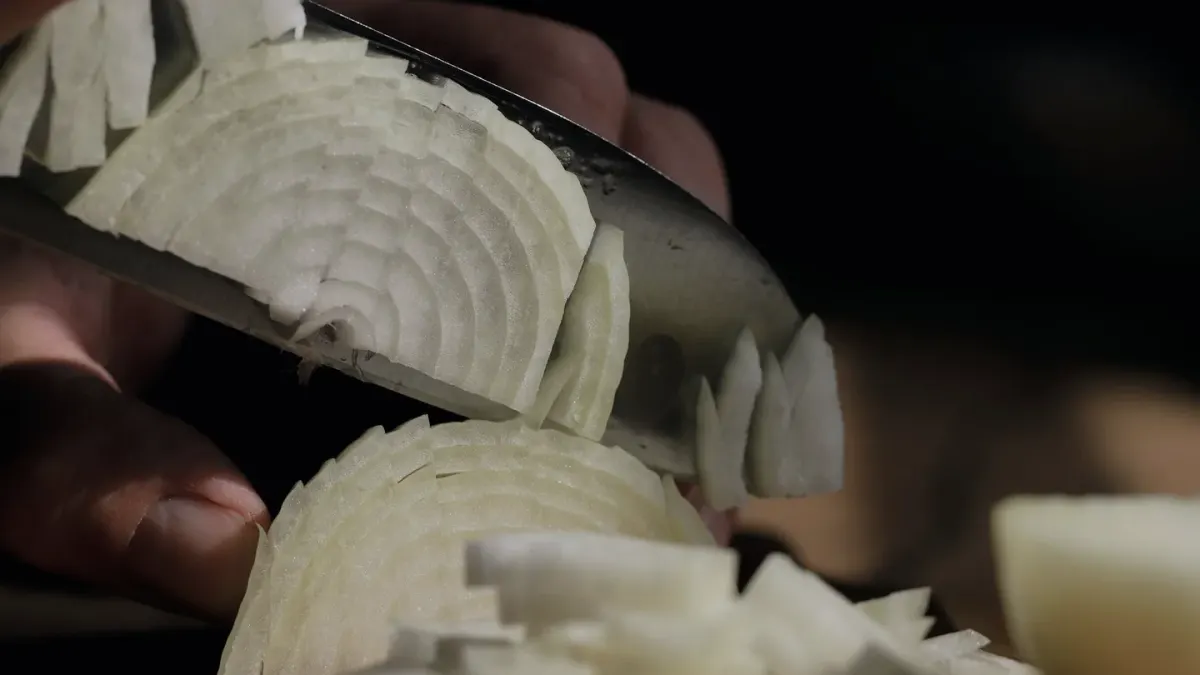
The Diced Onion on the Counter Is the Real Risk
Owners tend to ask this question the way they’d ask about black pepper or celery — is a little bit fine? It isn’t, and the reason has nothing to do with how the onion is served. Raw, sautéed, caramelized, dehydrated into powder, or simmered into a stock, onion carries organosulfur compounds that damage a dog’s red blood cells from the inside. According to the Merck Veterinary Manual, dogs and cats have been affected after ingesting raw, cooked, dehydrated, or granulated onions and garlic, and ingestion of 15-30 g/kg of raw onion has produced clinical signs in dogs. Garlic, a close relative in the Allium family, is considered several times more potent gram for gram — which is worth knowing if your dog is a counter-surfer with broad culinary interests.
What Onion Actually Does Inside a Red Blood Cell
As a neurologist who spends a lot of time reading imaging studies, I appreciate a mechanism I can actually picture, and this one is unusually clear. The sulfur compounds in onion oxidize hemoglobin, and the damaged protein clumps into structures called Heinz bodies inside the red cell. A cell carrying enough Heinz bodies becomes rigid and gets pulled out of circulation early by the spleen, and if enough cells are lost at once, the result is hemolytic anemia. The ASPCA lists onion among its toxic plants for exactly this reason. What makes it sneaky is timing: according to the Pet Poison Helpline, symptoms may take one to seven days to appear, arriving as vomiting, pale gums, weakness, and discolored urine well after the meal that caused them is forgotten.
Why ‘Just a Taste’ Doesn’t Reset the Clock
The strongest pushback I hear is reasonable on its face: a teaspoon of onion powder in a homemade treat, or the residue left in a broth used to moisten kibble, seems too small to matter. I understand the instinct, but I don’t share the conclusion, and here’s why I hold the line. Heinz body formation isn’t an on-off switch triggered only past some dramatic dose — it’s a dose-dependent, cumulative process, and a dog fed onion-seasoned scraps regularly can stack small hits into a meaningful one without ever eating a whole onion in one sitting. A single exposure that looks trivial on a Tuesday can add to whatever residual oxidative load is already there from Wednesday’s broth and Thursday’s table scraps. Because the injury is invisible without bloodwork and the clinical picture can lag by days, there is no dose I’m willing to call a safe habit, even though I’ll happily debate gray areas elsewhere in canine diet.
Which Dogs Carry the Highest Risk
Small dogs face a lower absolute threshold simply because a given amount of onion represents a larger share of their body weight. Cats are generally considered more sensitive than dogs on a per-kilogram basis, and several Japanese breeds — Akitas and Shiba Inus among them — appear to carry a genetic predisposition toward this kind of oxidative red cell injury, so their owners in particular should treat kitchen scraps as off-limits rather than negotiable. Dogs with pre-existing anemia, liver disease, or other conditions that already stress red blood cell turnover are also worth extra caution around, which is a conversation your own veterinarian is best placed to have with you.
What to Do the Moment You Suspect Onion Exposure
If you know or strongly suspect your dog ate onion in any form, call your veterinarian or a poison control line right away rather than waiting to see if symptoms show up — early decontamination and monitoring change the outcome more than anything done after anemia has set in. Don’t induce vomiting on your own without guidance, since timing and technique matter. Your vet may want to run bloodwork over the following days specifically to check for Heinz bodies and early red cell changes, even if your dog looks completely normal at the visit. If you’re also navigating a broader diet transition — say you’re moving an older dog onto a gentler food, as covered in our guide on switching a senior dog to a new food — it’s worth mentioning any onion exposure to your vet at the same appointment, since a stressed gut and a stressed bloodstream can complicate each other.
Building a Kitchen That Doesn’t Ask Your Dog to Gamble
The practical fix is less about vigilance and more about habit. Keep onion, garlic, and other Allium trimmings off counters and out of trash a dog can reach, check ingredient labels on broths and baby food used as toppers, and treat any seasoned family meal as off-limits rather than sharing a taste. If you’re looking for dog-safe kitchen additions instead, plain cooked sweet potato is a far gentler option worth reading up on in our piece on sweet potato prep and portions, and if the goal is understanding which pantry items deserve the same caution as onion, our rundown on which nuts are toxic to dogs covers a related set of everyday hazards. None of this requires paranoia — it requires knowing that, unlike a lot of foods where dose and preparation change the calculus, onion is one place where the answer stays no.
Frequently asked questions
Can dogs eat a small piece of onion?
No amount of onion is considered safe. The toxic sulfur compounds accumulate in red blood cells regardless of the quantity, so a small piece still adds oxidative stress — it simply may take a larger or repeated exposure to produce visible symptoms.
Is cooked onion safer than raw onion for dogs?
No. Cooking, dehydrating, or powdering onion does not neutralize the compounds responsible for red blood cell damage, per the Merck Veterinary Manual. Onion powder in broths, baby food, and seasoned leftovers is a common hidden source.
How much onion is toxic to a dog?
Reported thresholds vary, but ingestion in the range of roughly 15-30 g/kg of raw onion has produced clinical signs in dogs, and some sources put meaningful risk closer to 0.5% of body weight. Because individual sensitivity differs, none of these numbers should be treated as a safe cutoff.
What are the first signs of onion toxicity in dogs?
Early signs can include drooling, nausea, vomiting, and abdominal discomfort, followed — sometimes days later — by pale gums, lethargy, a fast heart rate, and dark or discolored urine as red blood cells break down.
Sources
- Garlic and Onion (Allium spp) Toxicosis in Animals — Merck Veterinary Manual
- Toxic and Non-Toxic Plants: Onion — ASPCA
- Onions Are Toxic To Dogs — Pet Poison Helpline