
On this page
A couple came in with their 3-year-old, 62-pound Lab mix who vibrated every evening from 6 to 8 p.m., pacing between the couch, the kitchen counter, and the front window while dinner cooked and the kids argued over homework. They had tried longer walks and puzzle toys, and the dog was tired but still unable to pause. By day 10 of mat practice, the change they noticed was not perfect stillness but a faster drop of the elbows when the mat appeared, plus sighing and shifting weight to one hip. That hip shift became our baseline for calm we could reward.
Settle is often misunderstood as obedience. I view it as a taught resting behavior that may help support lower arousal in busy moments. Individual dogs vary widely in how quickly they offer it.
What does settle actually look like in your house?
Forget the image of a dog frozen in a perfect down-stay for an hour. For most families, settle means going to a defined spot, lying with weight shifted to one side, breathing slowing, and checking out of the action for a few minutes at a time.
Pick one picture to reward at first
Choose an early baseline you can see: elbows down, head lowered, sigh, hip roll. Reward that same picture for a week before you ask for more. Clear criteria help the dog learn faster than changing the rules each session.
Guidance from the American Veterinary Society of Animal Behavior supports reward-based methods for teaching calm alternative behaviors, and my clinical experience lines up with that position. Fear tends to raise arousal. Choice and reinforcement tend to lower it.
Calm is trained, not waited for.
Why does calm need a place before it can become a cue?
Dogs learn context first and words second. A mat, rug, or bed gives the body something to do while the brain practices pausing. Only after the place predicts quiet rewards should you add a word like settle.
Start with two-minute sessions that end while the dog is still winning. Helpful background on training session length explains why short, frequent practice protects focus. Toss treats between the front paws for lying down, then shift to rewarding slower moments: a head drop, a sigh, a weight shift.
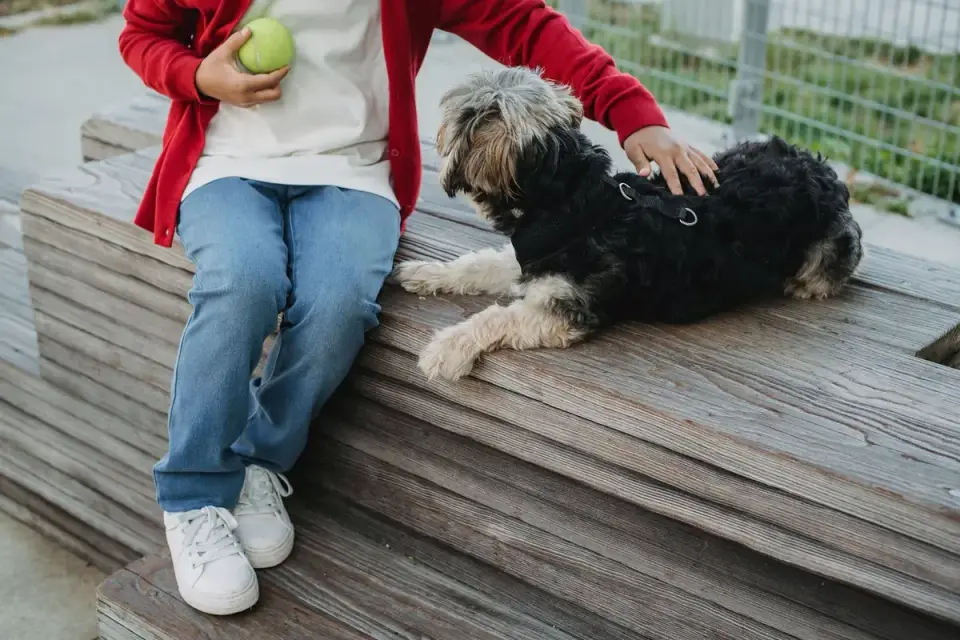
How do I introduce the mat without luring forever?
Lay the mat down and mark any interest with a calm yes or click, then treat on the mat. Shape toward four paws on, then a sit, then elbows down. If you use a marker, consistency matters more than style, which is why I often point owners to this comparison of clicker vs. verbal marker word. Once the dog runs to the mat to start the game, you can name it quietly as the dog moves there.
How do you build duration without building frustration?
Add time in five- to ten-second slices, not minutes. Reward in rhythm at first, then stretch one interval while keeping the next one easy. My preventive rule: for every harder repetition, follow with two easy wins.
A few months later I worked with an owner of a 1-year-old, 28-pound beagle who had been told to use the crate for every overexcited moment, door closed until the barking stopped. Three weeks in, the beagle ran away from the crate on sight, stiffened at the threshold, and whined even for meals inside. The owner felt stuck between allowing jumping on guests and creating a negative association with confinement. We paused the door-closed protocol entirely and rebuilt the mat as an open choice with rapid rewards for any voluntary pause, and the dog started offering chin rests within four sessions. Confinement had suppressed movement without teaching relaxation.
That case captures my central recommendation: teach settle as a rewarded choice on an open mat before you use it for management. The strongest counterargument is that closing a crate or holding a leash gets quiet faster. It can, in the moment. Yet suppression without learning often resurfaces as avoidance, vocalizing, or higher arousal next time. I still land on choice-based mat work because it builds a behavior the dog will offer again.
If you do use a crate during training, keep the timeline humane and separate from settle practice. This review of how long a dog can stay in a crate gives a practical baseline by age and stage.
When should you add distraction?
Add distraction only after the dog settles in a quiet room for one to two minutes with occasional rewards. Move through steps in order: distance from the mat, then mild movement by you, then low noise, then guests at a distance. Drop your criteria back to a few seconds each time the picture changes.
What do you do when settle falls apart?
Expect it to fall apart around doorbells, dinner prep, and visiting dogs. That breakdown is information about difficulty, not disobedience.
Last spring an owner asked about her 9-year-old, 44-pound Australian shepherd who would settle beautifully in the bedroom but panted and circled on the same mat in the kitchen. The difference was the slippery floor, the refrigerator hum, and grandchildren dropping food three feet away. By week five, we stopped chasing longer duration and changed the criteria to head turns away from food and slower breathing for five seconds at a time. Once the dog could offer that calmer breathing pattern near distraction, duration rebuilt quickly. Location had changed the difficulty more than attitude.
For senior dogs or anxious dogs, keep expectations preventive and practical. A non-slip mat, white noise reduction where possible, and shorter sessions may help support comfort and focus. The American Kennel Club has accessible how-to notes on mat work that align with this stepwise approach, and low-stress handling ideas from Fear Free Pets can help owners read early tension before it escalates.
My quick reset for a noisy session
Lower distraction, shorten to 30 seconds, reward two easy downs, then stop. Training that ends calmly protects the next session.
What would I actually expect by week six?
By weeks three to six, most adolescent and adult dogs can go to a mat on cue in a familiar room, lie down within a few seconds, and hold a relaxed posture for several minutes with intermittent rewards. Public places, holidays, and new homes reset the clock. Individual dogs vary, and excitable breeds or under-exercised dogs may need longer foundations plus daily enrichment.
To recap: define one calm picture, anchor it to a mat, build duration in seconds, and proof location by location. Talk with your own veterinarian if panting, pacing, or avoidance persists despite careful training, since pain, nausea, or anxiety can look like disobedience.
Frequently asked questions
How long before my dog settles on cue?
Many dogs show a faster response within 10 to 14 days of daily two-minute sessions, with more reliable duration by three to six weeks. Progress varies by age, temperament, and distraction level.
Should I say settle before or after my dog lies down?
Say it after the behavior is predictable. Name the movement to the mat once the dog goes there eagerly, then cue once and reward the follow-through.
What if my dog keeps popping up from the mat?
Shorten the interval, increase reward rate on the mat, and lower distraction. Repeated popping usually means duration or distraction advanced too fast.
Sources
- Position Statements — American Veterinary Society of Animal Behavior
- Dog Training — American Kennel Club
- Happy Homes — Fear Free Pets