On this page
Tina in Fullerton told me her 8-year-old spayed mixed-breed, Sissy, could handle a bath at home but fell apart after twenty minutes in a busy lobby, panting, lip-licking, and planting her feet at the door, which is the exact question behind a mobile dog groomer: does removing the car ride, the crate wait, and the dryer bank change the nervous-system math enough to matter. For some dogs it does, because arousal is cumulative, and a shorter sequence with fewer novel dogs, fewer handlers, and a quicker return to a familiar yard may help support steadier regulation during handling, while for other dogs the van itself becomes the trigger, with its tight space, generator hum, and one person doing all the lifting and restraint.
1. What the van changes for the dog
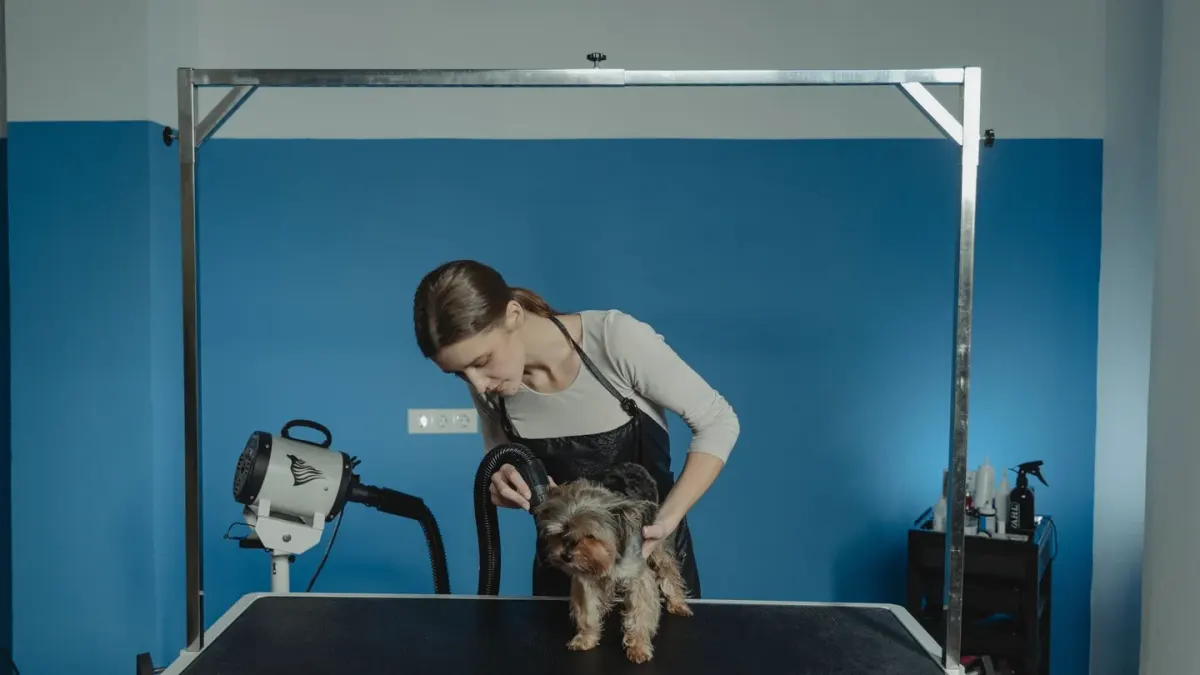
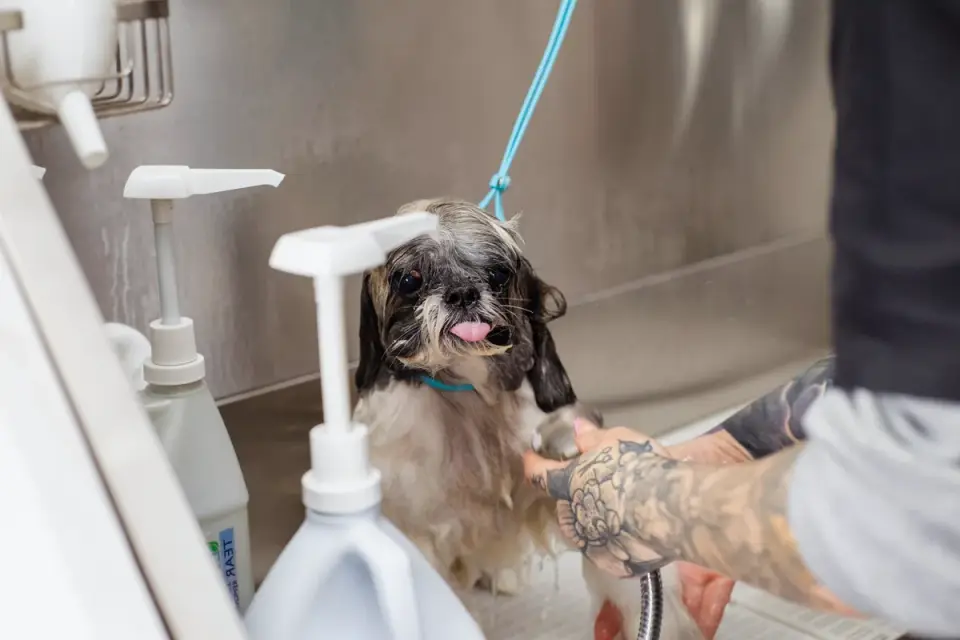
A salon moves a dog through intake, kenneling, bathing, drying, and finishing, often with different people and dogs barking nearby. A mobile setup compresses that chain to one groomer, one tub, one table, and your driveway.
That compression helps dogs whose stress builds with duration and novelty — many seniors with stiff joints, dogs with noise sensitivity, and dogs that guard space around unfamiliar dogs. It does not erase handling stress from nails, ears, or clippers, and a dog that dislikes being lifted, confined, or dried will still need desensitization wherever the table sits.
The ASPCA frames routine grooming as skin, coat, nail, and ear maintenance rather than cosmetic work alone, which is a useful lens here: pick the setting that lets those jobs get done thoroughly with the least restraint needed.
2. When the van is often kinder
Consider mobile first when your dog matches one of these patterns:
Anxious travelers and lobby shut-down dogs. If panting starts in the car and the dog will not take treats at drop-off, staying home removes two large triggers.
Seniors and dogs with limited stamina. Fewer transfers, no all-day kennel wait, and a faster lie-down afterward suit dogs with arthritis, cognitive change, or low exercise tolerance.
Multi-dog homes and tight schedules. Back-to-back grooms without three car trips help, especially when we brush our dog and work out loose undercoat throughout his heavy shedding periods between appointments.
Post-illness or immune-cautious periods. Fewer direct dog contacts can matter after your veterinarian advises limited exposure, though a clean salon is still low risk for most healthy adults.
If you are splitting upkeep between visits, this explainer on At-Home Grooming vs a Professional Groomer: How to Split the Job helps decide what to safely do yourself and what to leave for the table.
3. When a salon serves the dog better
A van is a small workspace with limited water, power, and drying capacity. Choose the salon when:
The coat needs time and teamwork. Dense double coats, severely matted coats, large doodle or spaniel trims, and show-style finishes often need a second handler, a high-velocity dryer station, and room to work safely.
Behavior needs more support, not less space. Dogs that bite for nail trims, panic on the table, or need two-person low-stress handling may be safer in a salon with trained help and established stop criteria.
Medical complexity is in play. Seizure disorders, collapsing episodes, brachycephalic breathing difficulty, or advanced heart disease deserve a plan discussed with your veterinarian first, and some of those dogs do better where help and ventilation options are greater.
The AVMA reminds owners to plan preventive and handling care around the individual animal, and grooming setting is part of that individual fit.
4. How to vet any groomer, mobile or not
Credentials vary by state, so interview for process rather than title. Ask how long a typical appointment runs, whether dogs wait kenneled and for how long, how nails, ears, and mats are handled when a dog says no, what dryer heat and noise precautions are used, and what happens if the dog needs a break.
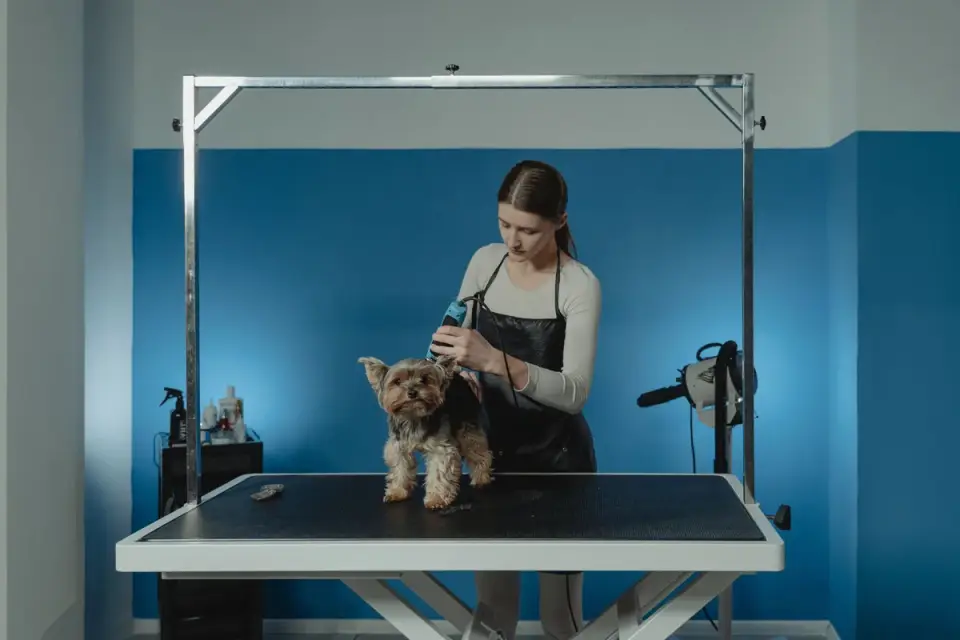
Watch one finish if you can. Calm, narrated handling with food rewards, non-slip footing, supported standing for seniors, and a willingness to stage a difficult job across two visits tells you more than the logo on the van. For nail-specific anxiety, this guide to Best Dog Nail Grinder: What Actually Matters When You’re Choosing One and the comparison in Mobile Dog Grooming vs a Salon: How to Actually Decide lay out useful questions to bring.
A short note on breed coat: a wiry topcoat that turns brittle with frequent bathing, heavy seasonal undercoat, or a non-shedding coat that mats at the skin each point to a different interval and tool set, so ask the groomer to write down the schedule they recommend for your dog rather than accepting a default four-week loop.
5. A simple way to decide for your household
If Sissy were my patient, I would weigh the nervous-system load beside the whole-patient pattern — stiff mornings, hearing that startles easily, skin that dries with over-bathing — and I might fold in gentle Tui-na style stroking at home between grooms without overstating what it fixes, simply to keep touch predictable.
Use that same frame. If travel and waiting are the main problem and the trim is straightforward, try the van for one cycle and score panting, recovery time, and coat condition afterward. If handling itself, matting, or medical risk is the main problem, invest in the right salon team and a home brushing plan instead, since the address matters less than skilled, patient hands and a clear stop signal your dog can trust.
Frequently asked questions
Is a mobile dog groomer less stressful for every dog?
No. It often helps dogs stressed by car rides, lobby noise, or long kennel waits, but dogs fearful of confinement, dryers, or handling may still struggle in a van.
Are senior dogs good candidates for the van?
Often yes, when the trim is routine. Less travel and waiting can suit stiff or easily tired dogs, with support for standing and planned rest breaks.
When should I choose a salon over mobile?
Choose a salon for severe matting, complex breed clips, very large or heavy dogs, bite-risk handling, or medical conditions where extra staff, space, and ventilation help.
Sources
- Dog Grooming Tips — ASPCA
- Pet Care Resources — AVMA