On this page
A twelve-year-old cocker spaniel named Otis used to shake so hard in the salon waiting area that his owner would carry him straight from the car to the tub, skipping the lobby altogether. He wasn’t aggressive. He was just old, a little arthritic, and overwhelmed by the barking, the crate bank, and the smell of a dozen other dogs he didn’t know. In my practice, that’s the case that tips a family toward mobile grooming — not glamour, not marketing, just a dog who does measurably better without the extra stops.
That’s really the whole decision, once you strip away the pitch decks. Mobile grooming and salon grooming both get a dog bathed, brushed out, trimmed, and nail-trimmed. The differences that matter are how much handling and downtime the appointment requires, how much control you have over what happens during it, and how much it costs you.
What a mobile appointment actually looks like
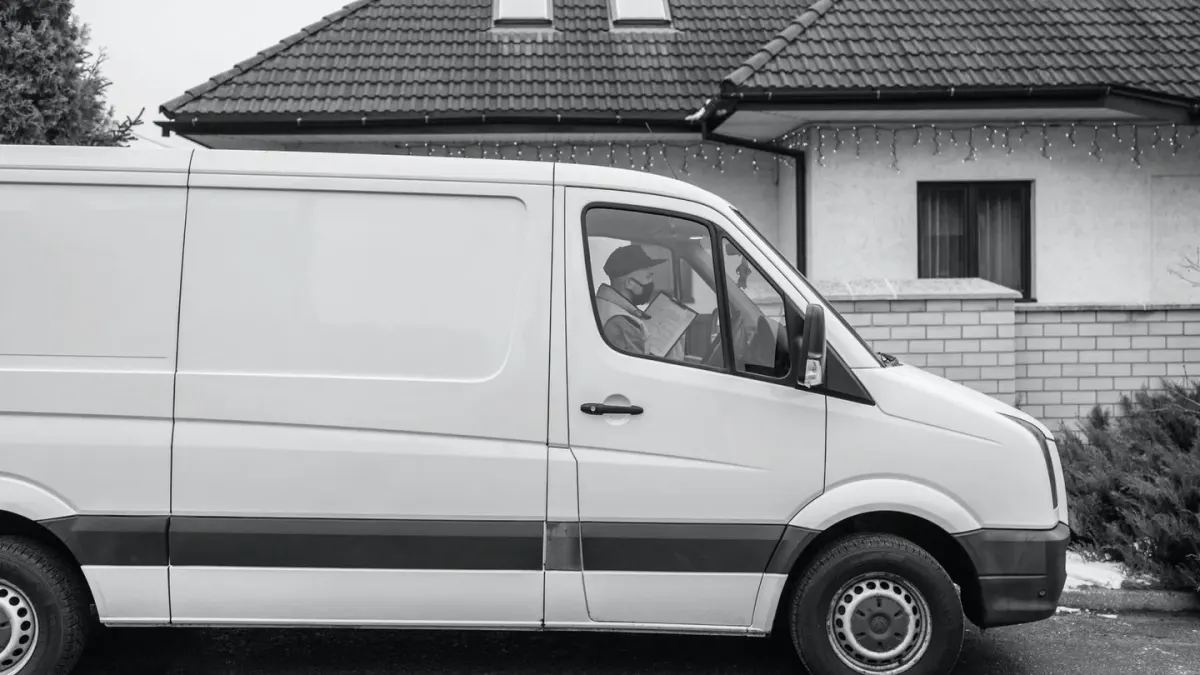
A mobile groomer drives a van or trailer outfitted with a tub, dryer, table, and generator, and parks it in your driveway or on your street. Your dog goes from your door straight into the unit, gets worked on one-on-one, and comes back out — often in under two hours for a small or medium dog. There’s no waiting area, no other dogs in earshot, and no multi-hour boarding period while the groomer works through a full book of appointments. For a dog with separation anxiety, noise sensitivity, or mobility issues, that one-on-one structure often matters more than anything else on the service menu.
The tradeoff is capacity and price. A mobile groomer typically sees far fewer dogs per day than a salon with several stations running in parallel, and that lower throughput, plus the cost of the vehicle itself, usually shows up as a higher price tag — often meaningfully more than a comparable salon appointment in the same area. Scheduling can also be tighter, since a van has a route to run and a single groomer inside it.
What a salon offers that a van can’t
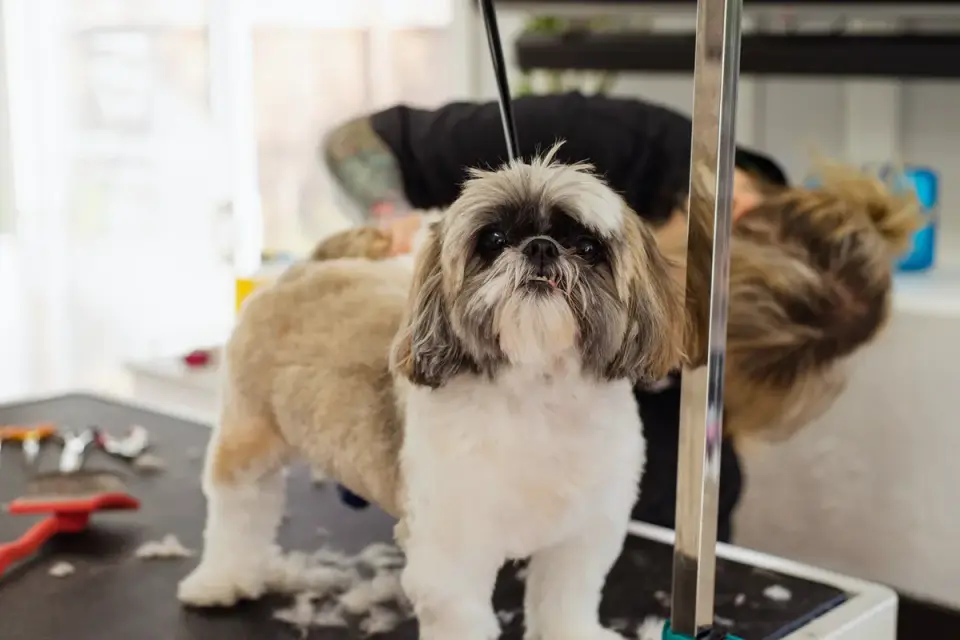
A brick-and-mortar salon has more physical capacity: multiple bathing stations, drying areas, and often a dedicated space to work through a heavier mat or a longer breed-specific cut without holding up someone’s driveway schedule. If your dog needs a full de-shed on a double coat, or a complicated hand-scissored trim, a salon’s setup — better lighting, more tools within reach, sometimes a second groomer to assist — can make for a cleaner, faster result. Salons also tend to have more flexible day-of availability simply because they’re running several chairs at once, and pricing is usually lower per visit since the fixed costs are spread across more clients per day.
The cost of that capacity is exposure. Your dog will likely spend time in a crate or holding area waiting for a bath, a dry, or a trim slot to open up, surrounded by other dogs and unfamiliar smells and noise. For a well-adjusted, social dog, that’s a non-issue — some dogs genuinely enjoy the commotion. For a dog with real handling sensitivity, it’s the thing that turns a routine trim into a stressful ordeal.
The credential that should matter more than the address
Here’s where I’ll push back on the way most people frame this decision: the mobile-versus-salon question gets far more attention than it deserves, and the groomer’s actual training gets far less. Whether the appointment happens in your driveway or in a strip-mall salon, what determines whether your dog has a good experience is largely the individual groomer’s skill with handling, restraint, and reading stress signals — not the four walls around them.
Look for a groomer, mobile or salon-based, who’s completed real training through an organization like Fear Free, which trains groomers to recognize early signs of stress — lip licking, freezing, whale eye — and to adjust handling before a dog escalates to a fear response. That kind of training exists independent of the setting. A nervous dog in a Fear Free–trained mobile groomer’s van is often better off than the same dog crated for an hour in a conventional salon, and the reverse is just as true if the mobile operator is undertrained and working alone with no one to help if a dog struggles.
It’s also worth checking for grooming-specific credentialing beyond a general business license. There’s no state or national licensing requirement to groom dogs in the U.S., which means anyone can hang a sign, but certification through a body like the National Dog Groomers Association of America is a reasonable proxy for someone who’s actually been tested on handling, tools, and breed-specific technique rather than having picked it up entirely on the job. Ask directly: where did you train, and what happens if my dog won’t settle.
Matching the setting to the dog in front of you, not the trend
I’ve watched this play out with a nine-year-old fifty-pound goldendoodle named Penny whose owner switched her to mobile grooming after a bad reaction to the dryer noise in a busy salon — she’d started snapping at the leash the moment they pulled into the parking lot, something that hadn’t happened a year earlier. The owner was weighing cost against her dog’s obvious dread: mobile ran nearly double the salon’s per-visit price, but Penny’s anxiety had visibly worsened over about six months of monthly salon visits, and a shortened stairs routine at home suggested some joint stiffness too. They tried one mobile appointment as a test. Penny walked into the van without pulling back, something she hadn’t done at the salon in months. That was the deciding factor, not the price difference.
Not every dog needs that adjustment, and I don’t want to overstate the case for mobile grooming as some universal upgrade — it isn’t. A confident, social young dog with a straightforward coat often does perfectly well cycling through a salon with other dogs around, and the owner saves real money doing it. The decision should follow the dog’s actual behavior at drop-off and during the appointment, not a general preference for convenience or for avoiding a van parked out front.
A few practical markers that tend to favor mobile: a dog who shows anxiety symptoms specifically tied to travel, crating, or unfamiliar dogs rather than the grooming tools themselves; a senior dog whose mobility makes an in-and-out car trip and a long waiting period genuinely harder on the body; a dog recovering from a recent stressful vet visit or boarding stay who could use one fewer transition in the same week. Markers that tend to favor a salon: a heavier mat or a coat that needs real de-shedding time and space; a dog who does fine around other animals and actually seems to enjoy the activity of a busier space; a family managing cost carefully across multiple pets, where the per-visit gap between mobile and salon pricing adds up fast.
Between grooming appointments, coat and nail maintenance at home also shapes how tolerable either setting is. Regular brushing reduces the mat load a groomer has to work through, and staying on top of nail length between visits — see our guide on how often to trim a dog’s nails and our breakdown of what actually matters in a nail grinder — means less restraint time regardless of venue. Bathing frequency matters too; our guide to bathing by coat and skin type covers how to avoid over-bathing between professional visits, and for breeds going through a heavy shed, our piece on grooming a German Shepherd through coat blow is a useful companion regardless of who’s holding the clippers.
Where I land
If I’m advising a family with a dog who shows real anxiety around travel, crating, or unfamiliar animals, or a senior dog whose joints make extra transitions harder, I lean toward mobile grooming with a properly trained groomer, even at the higher price — the reduction in overall stress is worth it, and a calmer dog is also a safer dog to work on. If the dog is social, tolerant, and has a coat that benefits from a salon’s extra space and tools, I don’t think mobile grooming buys you anything meaningful beyond convenience, and the salon is the better value.
The strongest counterargument I hear is that mobile grooming is simply more convenient, full stop, and convenience is worth paying for regardless of the dog’s temperament. I don’t disagree that it’s convenient. But convenience for the owner and welfare for the dog aren’t always the same axis, and when they diverge, I’d rather the decision follow the dog. Ask any groomer, mobile or salon, about their training, watch how your dog responds to the first visit, and be willing to switch settings if the evidence in front of you says to. Every dog is different, and what worked for your last dog, or your neighbor’s, isn’t a guarantee for this one — talk to your veterinarian if you’re unsure whether your dog’s stress response at grooming visits reflects something worth a closer look.
Frequently asked questions
Is mobile dog grooming more expensive than a salon?
Generally, yes. Mobile groomers see fewer dogs per day and carry the cost of a fully outfitted vehicle, so per-visit pricing usually runs higher than a comparable salon appointment in the same area.
Is mobile grooming safer for anxious dogs?
It can be, mainly because it removes crating and exposure to unfamiliar dogs during the wait. But the groomer's individual training in handling and stress recognition matters as much as, or more than, the setting itself.
How do I check if a groomer is properly trained?
Ask where they trained and whether they hold certification through a recognized body such as Fear Free or the National Dog Groomers Association of America, since there's no government licensing requirement for groomers in the U.S.
Sources
- Groomer Certification Program — Fear Free
- About NDGAA — National Dog Groomers Association of America