On this page
Start Here: What to Expect
One of the most common conversations I have with new puppy owners is the moment they realize that house training is not something that happens overnight—and not something that happens at them, either. Parents walk in expecting their 8-week-old to “just learn,” the way you might teach a child to use a bathroom. The reality is messier. A puppy’s bladder and bowel muscles are not fully mature until somewhere between 12 and 16 weeks old, and even then, it takes months of consistent practice before “house trained” actually means reliable. What I tell owners is this: set your expectation right now that you are looking at 4 to 6 months of active management before your puppy is genuinely trustworthy indoors. That is not failure on your part. That is biology. Once you accept that timeline, everything else falls into place.
What matters most—and in order:
- Timing: Take your puppy out frequently enough that accidents in the house become statistically unlikely.
- Consistency: Same schedule, same door, same outdoor spot, same response every single day.
- Positive reinforcement: Reward outdoor elimination within seconds (not when you walk back inside).
- Readiness recognition: Start formal training around 12 weeks; expect regression if you push before their nervous system is ready.
- Health baseline: If progress stalls after 4 to 5 months, have a vet rule out UTI or other medical issue.
Understanding Bladder Development
The physiology comes first, because everything else hangs on it. Puppies do not have the neurological maturity to hold it until around week 12 to 16. Before that, they are simply eliminating on reflex. You are not teaching them to hold it yet; you are managing their environment so accidents happen where you want them to.
According to How to Potty Train a Puppy, there is a rule of thumb that helps owners plan: puppies can generally hold their bladder for approximately one hour per month of age, plus one. A 2-month-old might hold it for 3 hours. A 4-month-old for 5 hours. This is a guideline, not a law—individual puppies vary, and smaller breeds often have smaller bladders and need more frequent breaks. A Chihuahua is not going to have the same capacity as a Golden Retriever at the same age. But the principle holds: if you are taking your puppy out more often than they can hold it, you prevent accidents, and prevention is how they learn.
According to the Puppy Potty Training Timeline, if training begins early, a 6-month-old puppy is usually able to be depended on most of the time to eliminate outside. Full voluntary control develops gradually, and most puppies have mature bladder and bowel function by around 7 months old. However, maturity and reliability are not the same thing; your puppy will still need consistent reinforcement and structure well beyond that point.
Building Your Routine
In my practice, I have watched the owners who succeed use the same routine day after day. Not perfectly every day, but predictably. Here is what that looks like: Your puppy goes out immediately upon waking. Within 5 to 30 minutes after eating (sooner for the youngest puppies). After playing or a burst of energy. Before bedtime. And, honestly, any time you notice sniffing, spinning, or whining.
I had a German Shepherd puppy named Zeke whose owners were working from home, and they set a phone alarm every 90 minutes for the first 10 weeks. They took him to the same spot on the patio. The moment he went, they would say his cue—they chose “outside time”—and immediately treat him. Not later. Not when they got back inside. Within two seconds. That phrase mattered because eventually, in unfamiliar places, the cue itself became a signal. By 20 weeks, Zeke was reliably asking to go out. The consistency and the timing did that. I also watched owners try to “train” a puppy while the puppy lived in a backyard with no structure, and nothing stuck. Environment and routine are the curriculum here, not the puppy.

Positive Reinforcement and Timing
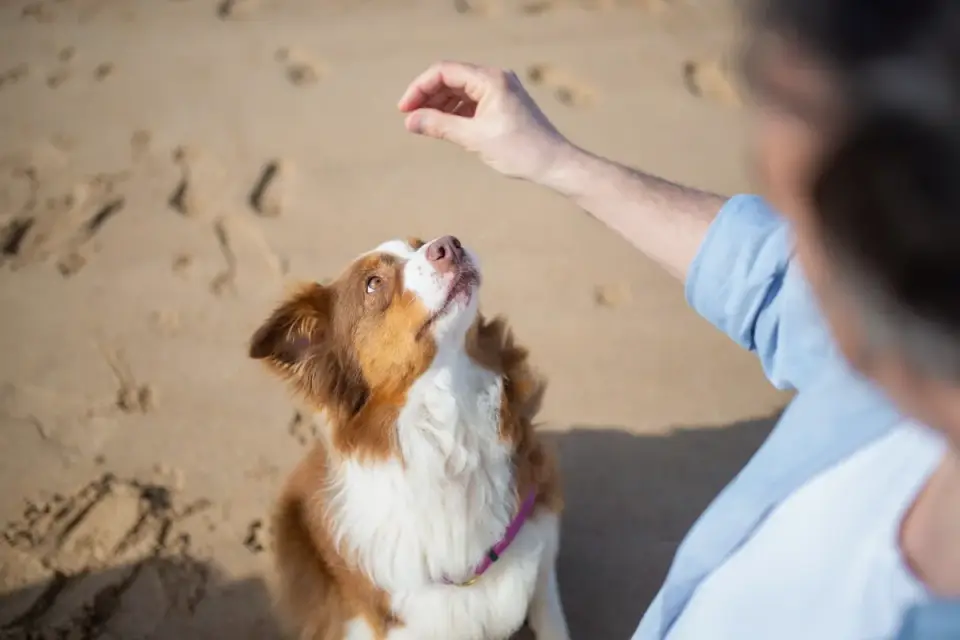
The response you give in the two or three seconds after your puppy eliminates outside is do-or-die. This is not the moment to go inside, give the dog a treat five minutes later, and think you have created an association. The brain does not connect that way, especially in a young puppy. The reward—a treat, enthusiastic praise, play—has to happen right there, in the yard, while your puppy is still in the act or within seconds after. That proximity is what tells their brain, “Yes, this is what we wanted.”
I have worked with owners who swear they have been “rewarding” outdoor elimination, but when we talk through the timeline, they are rewarding the dog for coming back inside. Different behavior. No wonder the dog has not learned. You are teaching the association between coming inside and a treat, not between elimination and success.
Choose a reward your individual puppy cares about. Some love a specific high-value treat—a tiny piece of chicken, cheese, or hot dog. Some puppies are toy-motivated and need a quick play with a squeaker. Some are purely praise-driven. Figure out what your puppy will work for, and save the best version of that reward for outdoors only. Use it during the training phase, then gradually reduce it as your puppy gets older. You are not rewarding every outdoor pee forever; you are building the habit in the critical window.
What to Do About Accidents
Accidents will happen. The goal is not to prevent every single one—that is impossible with an immature puppy. The goal is to make them infrequent enough that your puppy’s brain starts to understand the pattern.
When an accident does happen, the response is boring. You do not scold. You do not get upset (even if it is the third one today). You interrupt gently if you catch it happening—a quick “oops, outside”—take the puppy out, reward if they finish outside, and then clean the spot thoroughly with an enzymatic cleaner. The smell of urine is a signal to puppies: here is where we go. If you use only standard cleaners, you are leaving a scent map that contradicts your training.
And here is the part owners often miss: scolding an accident that is already happened teaches your puppy to hide to eliminate, not to stop eliminating indoors. A puppy does not connect a scolding 10 minutes later with the pee they made 10 minutes ago. They learn that when you discover it, you are upset. So the next accident happens behind the couch.
Regression and Health Checks
Even puppies who seem to “have it” will regress. A move to a new house, a new family member, a stressful event—these can set house training back weeks. It is not failure. It is normal. The routine stays the same; you just go back to the basics for a while.
What is not normal is if a puppy who was progressing suddenly starts having frequent accidents after 4 or 5 months. At that point, a veterinary checkup is overdue. Urinary tract infections, particularly in puppies, can make holding urine painful or impossible. Parasites, digestive upset, or other health issues can all interfere. It is not a sign of poor training; it is often a sign your puppy needs medical support.
Individual Variation and Breed Differences
Not every puppy learns at the same pace. Smaller breeds often need more frequent breaks due to smaller bladders. Some puppies are naturally very clean and seem to prefer not to soil their sleeping area, which makes training easier. Others are less bothered by it and need more consistent structure. Some puppies are anxious and will regress under stress. Some are stubborn and will push back against routine.
The rule of thumb—one hour per month of age plus one—is just a starting point. If your puppy seems to need more frequent breaks, honor that. If your breed or individual dog learns more slowly, add another month to your timeline estimate. What matters is not how fast your puppy trains; it is that you are consistent, patient, and clear about what you are asking for.
Moving Forward
The next step depends on where your puppy is right now. If you are bringing a new puppy home this week, expect the first few weeks to be about frequent outdoor trips—8 to 10 per day for the youngest puppies. Choose your method: crate training (which many puppies naturally prefer, as they are clean by instinct), puppy pads in a designated zone, or a restricted indoor area. Most successful owners combine these—a crate at night, pads or a confined space during the day, and frequent outdoor trips from day one.
If you are already a few months in and still seeing accidents, look at your schedule first: Are you going out often enough? Are you rewarding correctly and immediately? Is the routine consistent seven days a week, not just weekdays? The answer to “why is not this working” is usually hiding in one of those three questions, not in your puppy’s capability.
And if you have been at this 4 to 5 months and progress truly has stalled, or if your puppy seems to be struggling with pain or urgency, that is the moment to call your vet. You have done the behavioral foundation. Now make sure there is no medical reason your puppy cannot succeed.
For more on building structure for new puppies, consider How to Set Up a Crate for a New Puppy’s First Night, which pairs well with house training planning. If you are wondering about outdoor activity as your puppy grows, the How Far Can a Dog Walk or Hike in a Day? article offers guidance on appropriate exercise levels for different ages.
Sources
- How to Potty Train a Puppy — American Kennel Club
- Puppy Potty Training Timeline — American Kennel Club