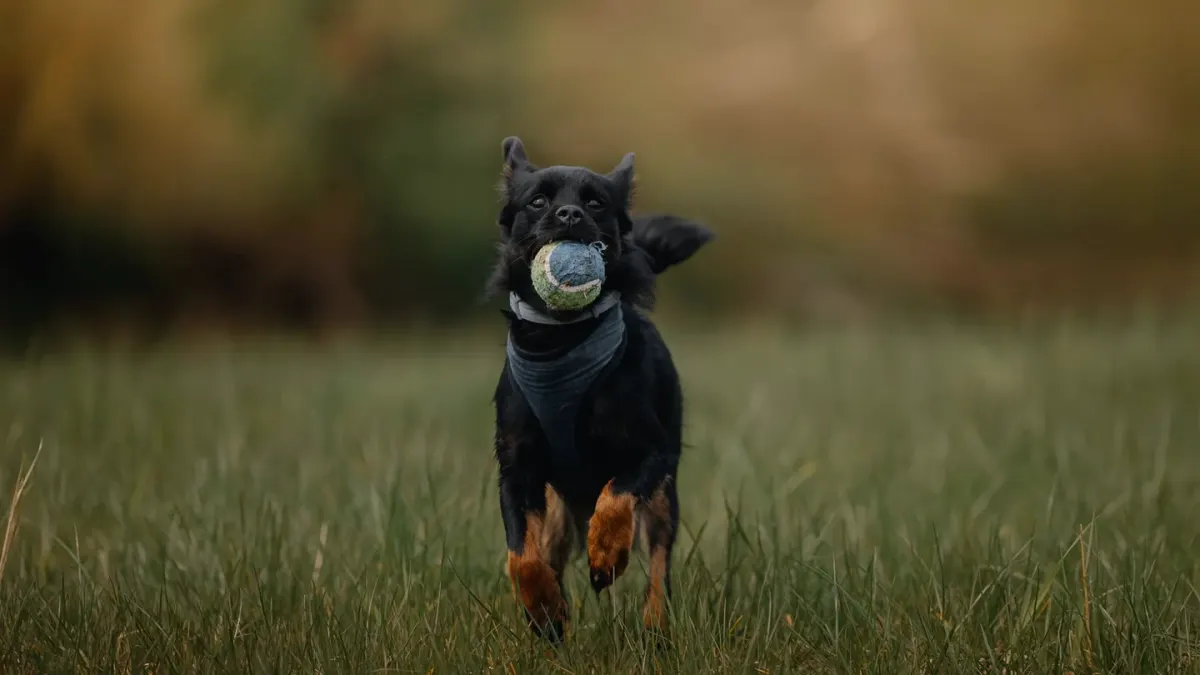
A late-afternoon block tells the truth about fitness. Vets often hear about the stocky bulldog mix who has settled at 29 pounds after a winter of short potty trips, and whose owner now wants real walks again without sore joints the next morning. The dog still pulls toward the park with enthusiasm, then pants hard, lags, and flops on the cool kitchen tile for an hour. The decision is not motivation but dose: how much walking is enough to trigger adaptation, and how little is needed to avoid overload while meals, weight, and sleep stay steady.
That dose question starts inside muscle and circulation, not on the sidewalk. A deconditioned dog has lower plasma volume, fewer active capillaries around muscle fibers, and mitochondria that fatigue early, so lactate and heat accumulate at a pace a fit dog would find easy. Tendons and paw pads are also untrained, and cartilage relies on cyclic, low-impact loading to circulate synovial fluid and nourish joint surfaces. Push too far and inflammation outruns repair; load a little and recover, and the cardiovascular system adds capacity first, with tendon and bone following weeks later.
Why legs tire before attitude does
Early fatigue, heavy panting with a curled tongue, and a slowing tail are circulatory signals. Muscle can only use the oxygen delivered to it, and in an unconditioned dog delivery plateaus early. Heat adds a second ceiling because dogs shed most heat by panting, which itself costs muscular work. This is why shade, water breaks, and a steady sniff-and-go pace build fitness faster than a forced march, a point echoed in general exercise guidance from the American Veterinary Medical Association to match activity to age, breed, and health status.
Start from what the dog can do today and repeat it. For many couch-potato adults that baseline is 8 to 12 minutes of flat walking, once or twice daily, with a five-minute sniff break in the middle. Hold that baseline for four to five days. If the dog recovers within 20 minutes, sleeps normally, and is eager the next morning, add about 10% total time the following week — roughly one to two minutes per walk — rather than adding a long weekend outing.
Surface and pattern matter as much as minutes. Level grass or dirt loads joints more gently than cambered concrete, and two shorter walks condition better than one long one because they deliver two pulses of blood flow without prolonged heat buildup. Keep the leash loose enough for nose-down pauses; sniffing lowers pace naturally and keeps respiratory rate in check.
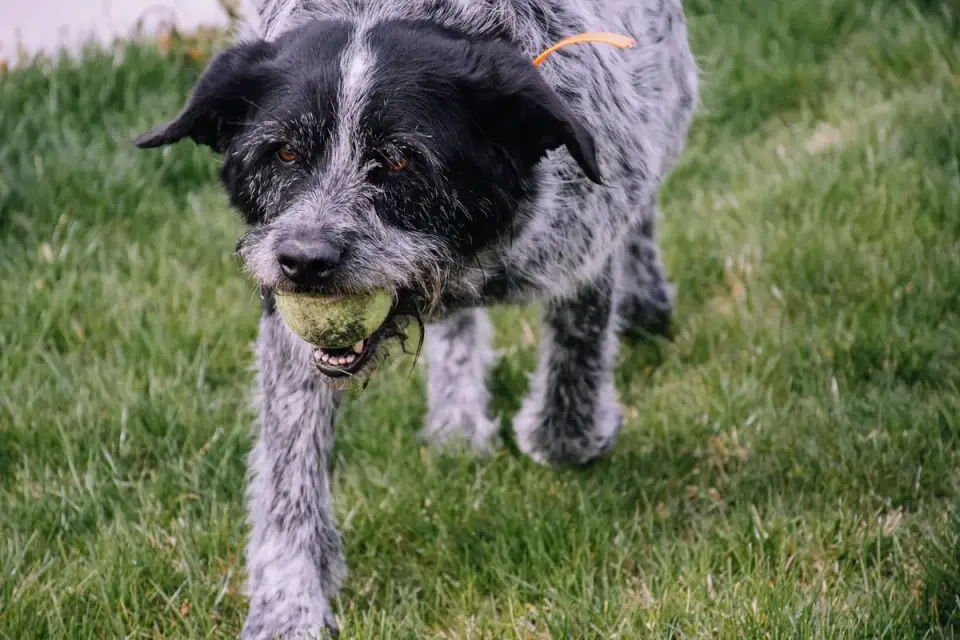
Consider the weekend shortcut that backfires. An owner with a lanky rescue cattle-dog cross, adopted for apartment life and accustomed to brief evening loops, has a free Saturday and tries to bank fitness with a single 1.4-mile riverside walk instead of the usual 10-minute route. The dog keeps up on adrenaline, drinks heavily at the car, then stiffens that evening, skips the Sunday stroll, and limps slightly on stairs for two days. The owner now faces the tradeoff clearly: one big effort erased a week of consistent gains, and the path back means returning to short, flat loops until morning eagerness returns.
Read the morning after, not just the walk
Adaptation shows up the next day. A well-dosed walk leaves mild tiredness that evening and normal appetite, stool, and enthusiasm by morning. Signs to hold steady or step back include lagging earlier than the day before, prolonged panting beyond 30 minutes at rest, stiffness rising from a bed, licking a carpus or stifle, worn pads, or needing extra naps through the next day. For dogs with known arthritis, combining brief walks with non-pounding activity can help, as discussed in Swimming vs Walking for an Arthritic Dog: How to Choose (and When to Combine Them).
Keep a simple log for three weeks: minutes per walk, pace notes, temperature, and a 1-to-3 score for next-morning eagerness. Most deconditioned adults can progress from 10-minute to 25- to 30-minute walks over four to six weeks if weight is stable and no lameness appears. Brachycephalic breeds, giant breeds, and dogs carrying extra body condition often need smaller jumps and longer holds. Night visibility becomes practical as walks lengthen into dusk, which is where choices like those in Reflective Harness for Night Walks: What Actually Makes a Dog Visible in the Dark matter.
A short pause here helps.
Nutrition sets the ceiling for that progression. Food therapy in this context is unglamorous: measured meals for gradual fat loss, adequate high-quality protein to rebuild muscle, and water before and after walks. Joint-support ingredients may help support normal joint structure and mobility as part of that whole plan, but they cannot replace conditioning or weight management. Quality oversight matters more than marketing language, which is why third-party programs such as the National Animal Supplement Council exist to audit manufacturing practices for animal supplements.
What diet and joint ingredients can plausibly add
Glucosamine and chondroitin are among the most studied joint support ingredients for dogs, and green-lipped mussel contains omega-3 fatty acids and glycosaminoglycans studied for joint support. The honest boundary is this: these nutrients may help support healthy cartilage metabolism and mobility, including a turmeric-extract finding described as “supports healthy synovial fluid homeostasis” — “Protective effects of turmerosaccharides rich extract of Curcuma longa L. in osteoarthritic dogs” (2026), reported in Frontiers in Veterinary Science — but none has been shown to extend comfortable walking time by itself in deconditioned dogs.
My recommendation stays evidence-bounded: prioritize progressive time-based walking, level surfaces, and lean body condition as the drivers, and treat a well-made joint supplement as optional background support for dogs with stiffness, not the lever that builds endurance. What would change that view is a large, randomized trial in pet dogs showing a supplement alone increases pain-free walking duration independent of training and weight loss, with pre-registered outcomes and independent gait measures. That evidence does not exist now; current data are largely mechanistic, small, or extrapolated across species, so conditioning remains the intervention with the clearest dose-response.
Sometimes the standard ramp has to bend. Take the gray-muzzled Labrador in a hot second-floor apartment, now in her twelfth year and cleared by her veterinarian for gentle exercise despite early hind-end weakness. The usual advice to add minutes each week fails on humid afternoons when she pants after five minutes on pavement. Her owner shifts instead to six weeks of dawn-only loops on grass, five to eight minutes at a time with long sniff breaks, plus two brief indoor strength snacks of weight-shifts and curb step-ups on cool days. Progress is measured not by a single long hike but by steadier stairs and quicker settle after walks, with off-leash bursts kept brief and deliberate as outlined in Off-Leash Play vs. On-Leash Walks: How to Balance Both for Real Fitness.
That individualized arc is the goal. Build minutes, protect recovery, feed for leanness, and let the dog’s morning-after behavior approve each increase. Individual dogs vary widely, so check with your own veterinarian before starting, especially for seniors, brachycephalic breeds, or any dog with cough, collapse, lameness, or cardiac disease.
Frequently asked questions
How fast should I add walking time for a couch-potato dog?
Hold a comfortable baseline for 4 to 5 days, then add about 10% total weekly time if next-morning energy, appetite, and gait are normal. Drop back if panting lasts beyond 30 minutes at rest or stiffness appears.
Is one long weekend walk enough to get a dog fit?
No. Two short daily walks build circulation and tissue tolerance more safely than one long effort, which often causes soreness and missed days. Consistency beats distance for the first month.
Do joint supplements replace conditioning?
No. They may help support normal joint structure alongside weight control and gradual exercise, but comfortable walking time improves mainly through progressive training, lean body condition, and recovery.
Sources
- Protective effects of turmerosaccharides rich extract of Curcuma longa L. in osteoarthritic dogs — Frontiers in Veterinary Science
- American Veterinary Medical Association — American Veterinary Medical Association
- National Animal Supplement Council — National Animal Supplement Council