
On this page
Expectation first: flying with a large dog almost never means a seat at your feet. Most dogs over 20 pounds cannot fit under the seat in an approved carrier, so they fly as checked baggage in the hold or through the airline cargo program, with different staff, different handling, and different limits.
That distinction shapes everything else. The cabin is pressurized and temperature-controlled because you are in it. The hold area used for animals is also pressurized, but airflow, temperature stability, noise, and handling vary by aircraft, season, and airline procedure. Stress raises heart rate and respiratory rate, and panting is less efficient when a dog is anxious, confined, and warm. For large, deep-chested, older, or flat-faced dogs, that added load matters, which is why I counsel owners to plan for low-stress handling and realistic timelines rather than a quick trip.
A 5-year-old 78-pound Labrador mix came in for a pre-flight exam before a cross-country move. His owner had already booked a nonstop morning flight and assumed the website crate dimensions were approval. In the room he panted, paced, and would not settle in the borrowed crate. Three weeks in of practice still left him pawing at the door by minute 20. That behavior changed the plan. We shifted the flight date, switched to a larger IATA-style crate with more ventilation, and built a daily baseline of short, calm crate sessions with meals inside. The owner also called the live-animal desk to confirm the aircraft could take his crate size.
My position is simple: call the airline live-animal or cargo team before you pay, and treat the website as a starting point. The strongest counterargument is that online booking is faster and the chat agent said it was fine. I still land on the phone call because aircraft swaps, seasonal embargoes, and station-specific limits can void a reservation that looked fine online.
Where a large dog actually rides
Ask whether your dog would travel in-cabin, as accompanied checked baggage, or as manifest cargo. Many U.S. carriers no longer accept large dogs as checked baggage and route them through cargo partners. Cargo may have separate drop-off, pickup, health-certificate windows, and fees.
Ask which aircraft types on your exact route accept live animals, and what happens if the aircraft changes. A switch from a wide-body to a narrow-body jet can eliminate the hold space for a giant crate.
For general travel preparation, the American Veterinary Medical Association reminds owners to consider age, health, temperament, and crate conditioning before any flight, and individual dogs vary widely in how they handle confinement and noise.
The crate questions that prevent airport refusals
Airlines follow IATA-style container principles even when wording differs, so ask for the airline’s current crate checklist in writing. Confirm rigid plastic or wood construction, metal hardware, ventilation on three or four sides, a secure locking door, and absorbent bedding without wheels or collapsible sides.
Measure the dog, then ask for the maximum crate dimensions for your flight number. Height matters most for large dogs. My rule is stand, turn, and lie down without touching the top or sides. Our broader guide to How to Measure Your Dog for an Airline-Approved Carrier walks through that baseline, and Traveling With a Small Dog vs a Large Dog: What Actually Changes explains why size changes handling.
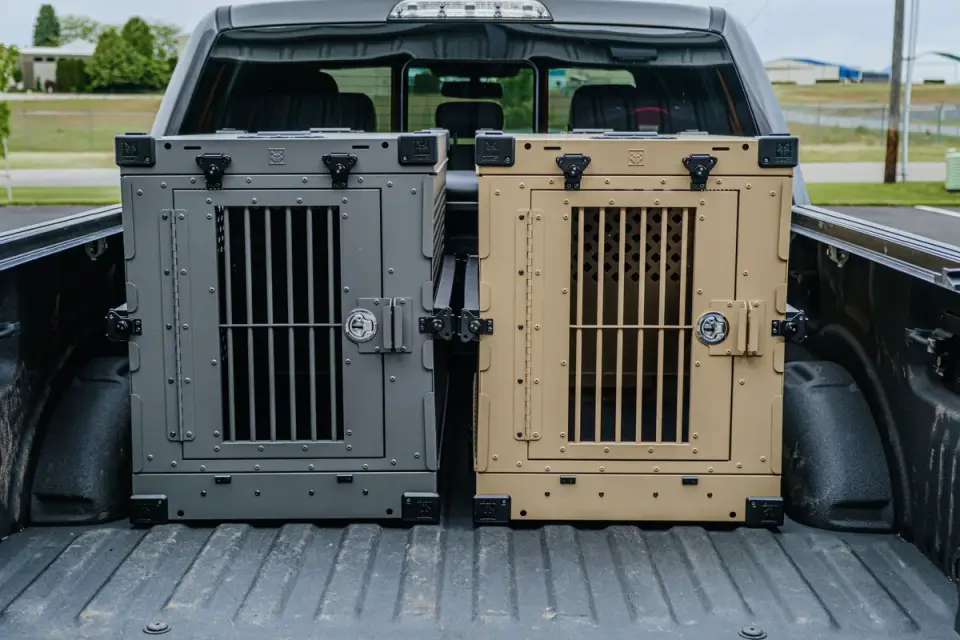
A 3-year-old 65-pound pit bull type learned this the hard way on a summer connection. Her owner bought a crate labeled airline-approved, but the door latch was plastic and the airline required metal nuts and bolts. By day 10 of their trip, after rebooking to a nonstop and replacing hardware at an airport pet store, she flew without incident. The failed approach was trusting the product label instead of the airline station checklist. Labels do not board dogs. Station agents do.
Ask about food and water containers attached inside the door, labeling with live-animal stickers, and whether you must provide zip ties for the door. Ask where and when to drop off a cargo dog, often 2-4 hours earlier than passengers.
Heat, breed limits, and timing
Large dogs overheat faster than many owners expect, especially with excitement and poor airflow. Ask about temperature embargoes, usually tied to forecast highs and lows at origin, connection, and destination, and ask who makes the go or no-go call on the day of travel.
Ask specifically about brachycephalic restrictions if you have a Bulldog, Mastiff, or similar build, plus age and health cutoffs. Many programs limit snub-nosed breeds, puppies under 8-10 weeks, and dogs with cardiac or respiratory disease.
The Federal Aviation Administration notes that owners should confirm airline policies on crates, check-in, and temperature limits well before travel, because rules differ by carrier and route.
Timing helps support calmer behavior. Morning or evening nonstops may help support a cooler, lower-stress trip than midday connections. Ask if your dog stays in the same hold on a direct flight versus being transferred during a connection.
Paperwork, fees, and what happens when plans change
Ask what health certificate the airline requires and how recent it must be, often within 10 days. Federal interstate and international rules are separate from airline policy. The U.S. Department of Agriculture outlines endorsement and veterinary documentation for travel, and requirements shift by destination.
Ask for the total fee, weight cutoff, crate weight inclusion, and refund policy if heat or aircraft change cancels animal transport. Ask whether tracking is available in cargo and who to contact during a delay.
A 9-year-old 92-pound senior Shepherd mix showed why this matters. His owner planned a winter flight with a tight 55-minute connection to save money. By week two of planning, bloodwork showed early kidney changes and stiffness after rest, and the owner worried about a long hold without a bathroom break. We discussed the full picture in How to Fly With a Dog: The Complete Guide and compared it with driving or Boarding Kennel vs Pet Sitter: Which Is Right for Your Dog?. She chose a nonstop two days later with senior bedding and a pre-flight vet check. He rested at home that night instead of kenneling during a missed connection.
For international trips, start earlier. The Centers for Disease Control and Prevention maintains current dog entry requirements for the United States, including microchip, age, and documentation rules that can affect return travel.
Ask these exact questions on the call.
Keep it preventive. Confirm the program name, aircraft acceptance, crate maximums, embargo thresholds, certificate window, drop-off location, fees, and disruption plan, then get the summary by email.
Frequently asked questions
Can a large dog fly in the cabin?
Rarely. Most airlines require the carrier to fit fully under the seat, which excludes most dogs over about 20 pounds. Ask for the exact under-seat dimensions for your flight number before assuming.
How early should I start crate training before flying?
Give at least 2-4 weeks of short, positive sessions so standing, turning, and settling become baseline behavior. Dogs that only see the crate at the airport show more panting and vocalizing.
Sources
- Pet Travel Guidance — U.S. Department of Agriculture
- Traveling With Pets — American Veterinary Medical Association
- Bringing a Dog into the United States — Centers for Disease Control and Prevention