On this page
A stiff morning tells you more than an X-ray does about how to exercise a senior dog with limited mobility. Watch the first ten steps out the door, then build the day around what moves freely.
I think of a recent case pattern I see often: a 12-year-old, 68-pound Labrador who lagged on stairs, rose slowly after naps, and still brightened at the leash. His owner wanted to protect his hips by resting him, so walks had shrunk to one long weekend outing. Within a month he had lost thigh muscle, slipped twice on tile, and tired faster. The decision was not rest or exercise. It was how to replace that single long effort with short, frequent movement that preserved strength without provoking soreness.
Short sessions protect joints better than heroic ones.
Check the baseline before you add minutes
Start with a vet exam if lameness, knuckling, new panting, or collapse has appeared. At home, score three things for three days: time to rise, willingness on the usual route, and recovery by evening. Keep food steady, keep weight lean, and keep nails short. Traction matters as much as distance for an older dog, so add runners, yoga-mat paths, and a ramp where stairs force a jump.
For context on balancing effort across the week, compare off-leash play versus on-leash walks and what actually builds joint resilience.
Walk short, walk often, walk level
Do this order. Warm up indoors for two to three minutes with slow marching and weight shifts. Walk on level, forgiving ground for five to ten minutes at a sniffing pace. Cool down with another two minutes of easy walking, then rest on a firm bed.
Repeat twice daily rather than pushing one long walk. Add about ten percent per week only if the dog rises well the next morning. Hills, sand, and long fetch sessions come later, if at all. For distance judgment, this guide to how far a dog can walk in a day helps set a ceiling.
The failed version looks familiar. An owner of a 9-year-old, 54-pound pit mix tried to rebuild fitness with a single 45-minute neighborhood loop, three weeks in with no rest days. The first ten minutes looked great. By day 10 the dog was slow to rise, reluctant at the curb, and sore that night after every outing. The tradeoff was clear: cardiovascular effort had improved while joint tolerance had fallen behind. We cut the loop into two 12-minute leash walks with a rest day between longer efforts, added indoor footing, and recovery normalized within a week.
Add water and strength without pounding
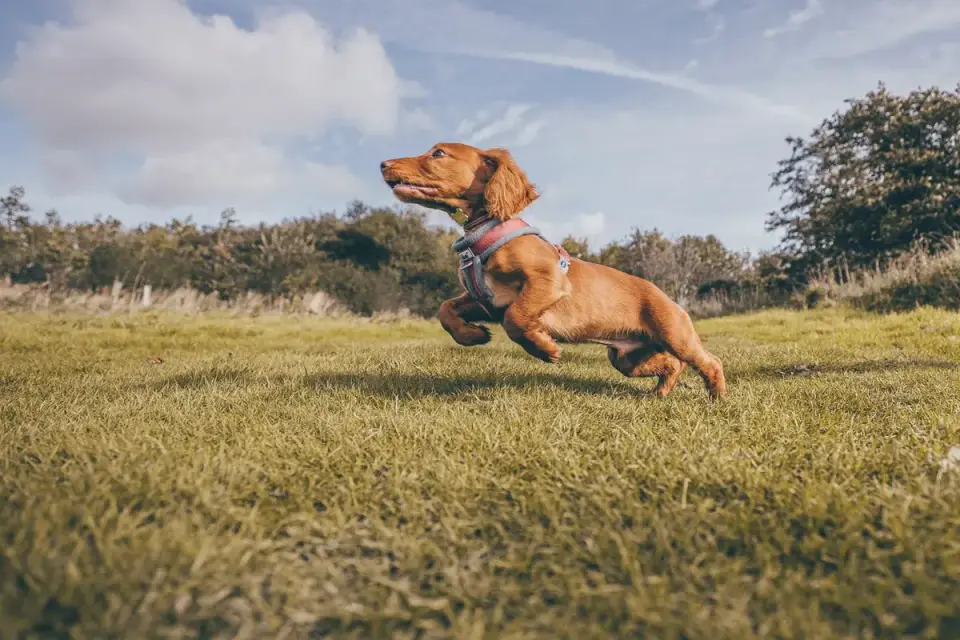
Swimming and underwater treadmill work unload body weight while letting muscles fire. Keep sessions brief, use a well-fitted life vest, rinse afterward, and watch for fatigue in the hind end. On land, favor controlled strength: three to five sit-to-stands, short cavaletti poles, and slow curb step-ups on a non-slip surface.
This is where the swimming versus walking choice matters most. Many stiff seniors do best with both in the same week.
Support surfaces help too. Orthopedic bedding, raised bowls for tall dogs, and a harness with a handle reduce strain getting up and into the car.
Weigh what joint nutrition can realistically add
Food therapy comes first: complete senior diet, lean body condition, and adequate protein to defend muscle. Supplement science sits on top of that foundation, and it may help support whole-patient comfort rather than rebuild a worn joint.
Glucosamine and chondroitin remain among the most studied joint-support ingredients, and recent work frames chondroitin around how it supports healthy synovial fluid homeostasis, as reported in Frontiers in Veterinary Science. Laboratory work has also shown glucosamine can prevent experimentally induced cartilage degradation in vitro, described in The Journal of Veterinary Medical Science. Green-lipped mussel research is earlier and largely preclinical, with one Nutrients report noting reduced swelling markers and cytokines in a rodent model.
The strongest counterargument is fair: these ingredients do not replace weight control, pain management, or physical rehabilitation. I still include them for many seniors because the nutritional risk is low, the biological rationale is coherent, and diet alone often leaves a gap in glycosaminoglycans and marine omega-3s. Individual dogs vary, so review products and doses with your own vet.
An edge case changes the math. A 14-year-old, 22-pound terrier mix with good energy but poor hind-end awareness did fine on leash yet fell twice on hardwood at night, by day 14 of a new routine. The issue was not stamina. It was lighting, slick floors, and toenail traction after dark. Nightlights, toe grips, a runner to the water bowl, and moving the final potty walk earlier solved more than extra minutes ever would.
Stop the session for sharp yelping, non-weight-bearing lameness, dragging toes, heavy panting that does not settle, or soreness lasting past morning. Those signs merit a vet recheck, not tougher conditioning.
Frequently asked questions
How long should a walk be for a senior dog with limited mobility?
Start with 5 to 10 minutes twice daily on level ground, then add about 10 percent per week only if morning rising and evening recovery stay good.
Is swimming better than walking for a stiff older dog?
Often they work best together. Swimming unloads joints while walking preserves bone loading and routine; keep both short and watch next-day soreness.
Should I rest my senior dog completely on stiff days?
Favor active rest — brief potty walks, gentle indoor movement, and traction support — unless your vet advises crate rest for an acute injury.
Sources
- Synovial Fluid Homeostasis Study — Frontiers in Veterinary Science
- Glucosamine Cartilage Study — The Journal of Veterinary Medical Science
- Marine Oil Joint Inflammation Study — Nutrients