On this page
A twelve-pound terrier mix named Biscuit came into my exam room after a fender-bender at maybe 15 miles an hour. He’d been riding loose in the back seat. He was fine — sore neck, a little head-shy for a week — but his owner kept saying the same thing: “He just flew.” That’s the phrase I hear most often after a car incident, and it’s the reason this question keeps coming up in appointments: seat belt, crate, or barrier?
Owners usually ask me this question expecting a simple answer, and I understand why. There are three products on the shelf, three price points, three levels of hassle. But the honest answer is that they are not interchangeable, and the evidence isn’t split evenly between them.
Why restraint choice isn’t just a comfort question
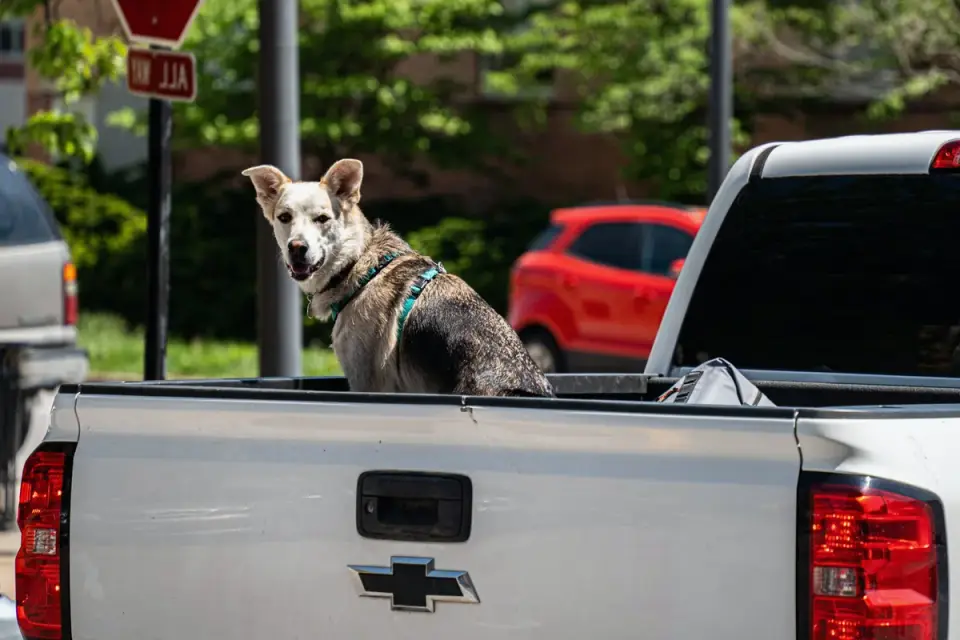
Physics doesn’t care about a dog’s temperament. An unrestrained 30-pound dog in a vehicle traveling 60 miles per hour becomes, in a sudden stop, a projectile requiring roughly 1,800 pounds of force to hold back — far beyond what a person’s arms or lap can manage, according to a AAA driver-distraction survey. That same survey found that while 83% of dog owners agreed loose dogs in a moving car are dangerous, only 16% regularly use any restraint at all. I bring this up with clients constantly, because the gap between what people believe and what they actually do in the car is the real safety problem, not a lack of awareness.
The American Veterinary Medical Association is unambiguous on the baseline: pets should not ride loose in a vehicle, and the back seat, properly restrained in a crate, carrier, or harness, is the safest position. What the AVMA doesn’t do is rank those three options against each other in a crash — that’s where independent crash-test data becomes useful.
What the crash tests actually show
Center for Pet Safety has run the most rigorous independent crash testing on pet restraints available to consumers, using sled tests modeled loosely on federal child-restraint protocols. Their 2013 harness study found that many popular seat belt harnesses failed catastrophically — buckles breaking, straps releasing, or the dog being ejected from the harness entirely during simulated impact. Their follow-up 2015 crate and carrier study tested six crates and eight carriers and found similarly wide variation: a handful of crates, led by a hard-sided model secured with heavy-duty tie-down straps, kept the test dog contained and largely stationary, while several others deformed or came apart under load.
Two details from that testing matter more than the brand names. First, performance depended heavily on how the restraint was anchored — a crate secured to true cargo anchor points with rated straps behaved very differently than one wedged in place or tied with bungee cords. Second, “crash-tested” claims on packaging are not standardized; there is no federal crash-test requirement for pet products the way there is for child car seats, so two harnesses can both say “crash-tested” while performing very differently on Center for Pet Safety’s sled.
Barriers occupy a different category entirely. A cargo or seat-back barrier keeps a dog confined to one section of the vehicle, which prevents it from becoming a distraction or climbing into the front seat, but it does not restrain the dog’s body in a collision. A dog behind a barrier can still be thrown against the barrier itself, the seats, or other cargo. Barriers solve a containment problem, not a restraint problem, and I think that distinction gets lost in a lot of shopping guides.
A scene from the exam room that changed how I counsel this
I had a client a few years back with a 55-pound standard Poodle named Otis, about six years old, who rode in the cargo area behind a mesh barrier on every trip to the lake house. The owner was proud of the setup — it kept Otis from crawling into the front seat, which had been a real problem before. But when I asked what happened during a hard highway stop the month prior, she described Otis sliding forward into the barrier hard enough to knock it partially loose, then landing awkwardly against the wheel well. He wasn’t hurt that time. I remember walking her through, step by step, why a barrier alone doesn’t do what a restraint does: it manages where the dog can go, not how far the dog travels when the car stops suddenly. We talked about combining the barrier with a crash-tested crate secured inside the cargo space, so Otis kept the containment she wanted and gained an actual restraint. That’s usually where I land with clients who already like their barrier setup — keep it, but don’t let it stand in for a crate or harness.
Matching the restraint to the dog and the trip
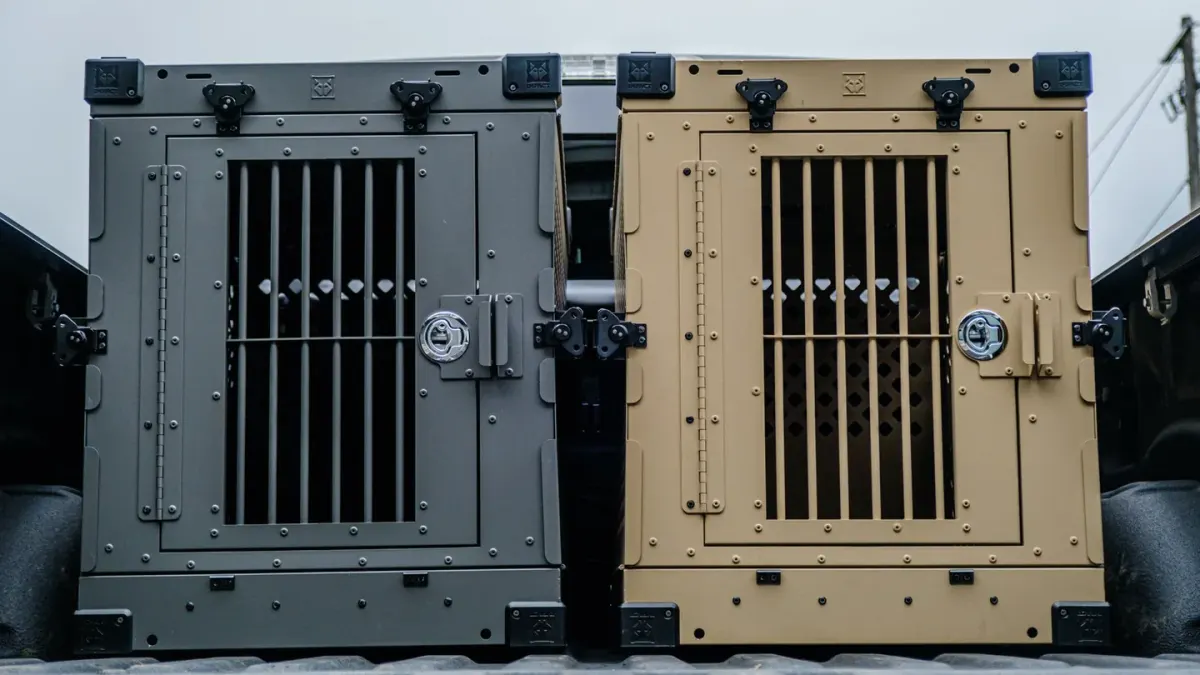
For most dogs, a well-secured crate is the strongest option, and it’s the one I recommend first in appointments, especially for dogs under about 50 pounds who tolerate confinement reasonably well. A hard-sided crate, sized so the dog can stand, turn, and lie down without excess room to slide, anchored with load-rated tie-down straps rather than bungee cords, gives the dog the most containment and the least freedom to become a projectile.
A crash-tested harness is a reasonable second choice, particularly for larger dogs where a crate isn’t practical in the vehicle, or for dogs who become anxious in enclosed crates. The key word is crash-tested, and even then, buyers should look for actual sled-test results rather than a package claim. A harness that only clips a leash to a seat belt — without a rated tether and structured chest panel — offers very little protection.
A barrier is worth keeping as a secondary layer, especially in an SUV or wagon where it also stops loose cargo from sliding forward, but I don’t consider it a substitute for a crate or harness on its own. If you already use one, pair it with a secured crate or a crash-tested harness rather than relying on it alone.
Before you settle on gear, it helps to think about how the dog travels overall — if you’re prepping for longer trips, our guide on how to fly with a dog covers a lot of the same sizing and containment principles that carry over to car travel, and our carrier measuring guide is a fast way to get accurate dimensions before you shop. If you’re setting up crate habits from the start, our piece on crate setup for a puppy’s first night is a good companion read.
The verdict
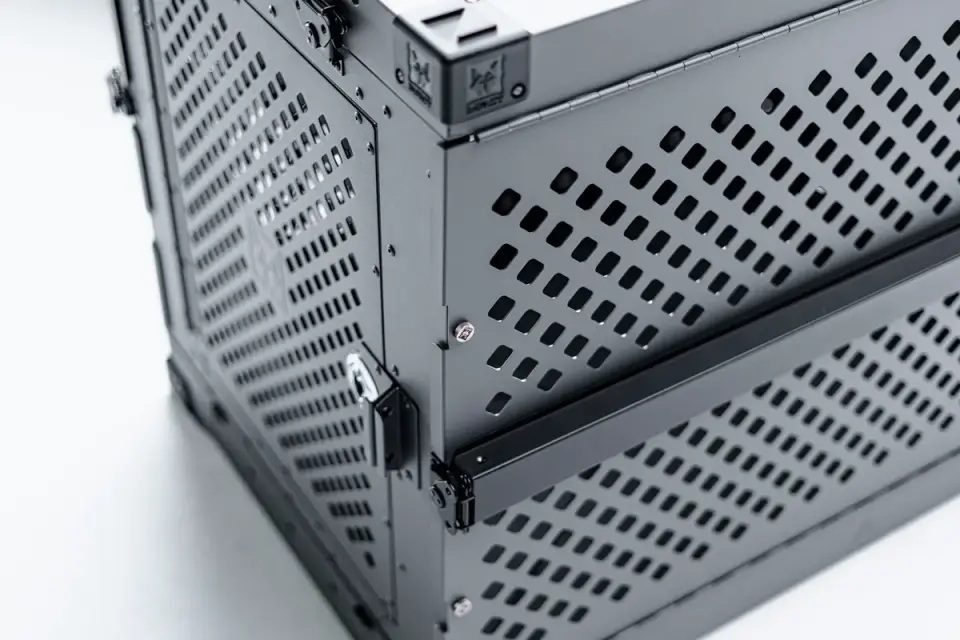
A common question I get is whether any restraint is truly “crash-proof.” None is. But the evidence bounds a clear recommendation: for most dogs, a properly sized, well-anchored crate outperforms a seat belt harness or a barrier used alone, based on independent sled testing rather than marketing claims. I’ll acknowledge the strongest counterargument — a crate takes up more cargo space and isn’t always practical for a large dog in a sedan, and in those cases a genuinely crash-tested harness is a defensible second choice. What I won’t recommend is a barrier as your only line of defense, or a harness chosen because the box says “crash-tested” without checking whether that claim is backed by real data. Every dog and every vehicle is a little different, so if you’re unsure what fits your setup, it’s worth a conversation with your own veterinarian or a hands-on fitting at a pet supply store before a long trip.
Frequently asked questions
Is a crash-tested harness as safe as a crate?
It can come close for larger dogs where a crate isn't practical, but independent sled testing has shown wide variation between harness models, so a genuine crash-test result matters more than the label alone.
Can I rely on a cargo barrier by itself?
A barrier keeps a dog contained to one area of the vehicle but does not restrain the body during a collision, so it works best paired with a secured crate or harness rather than used on its own.
How should a crate be anchored in the car?
Use load-rated cargo tie-down straps to the vehicle's actual anchor points, not elastic or bungee cords, and size the crate so the dog can stand, turn, and lie down without much extra room to slide.
Sources
- What You Need to Know About Dog Car Restraints — AAA
- Safe non-commercial transport of pets in motor vehicles — American Veterinary Medical Association
- Pet Carrier & Crate Crash Test Research — Center for Pet Safety