On this page
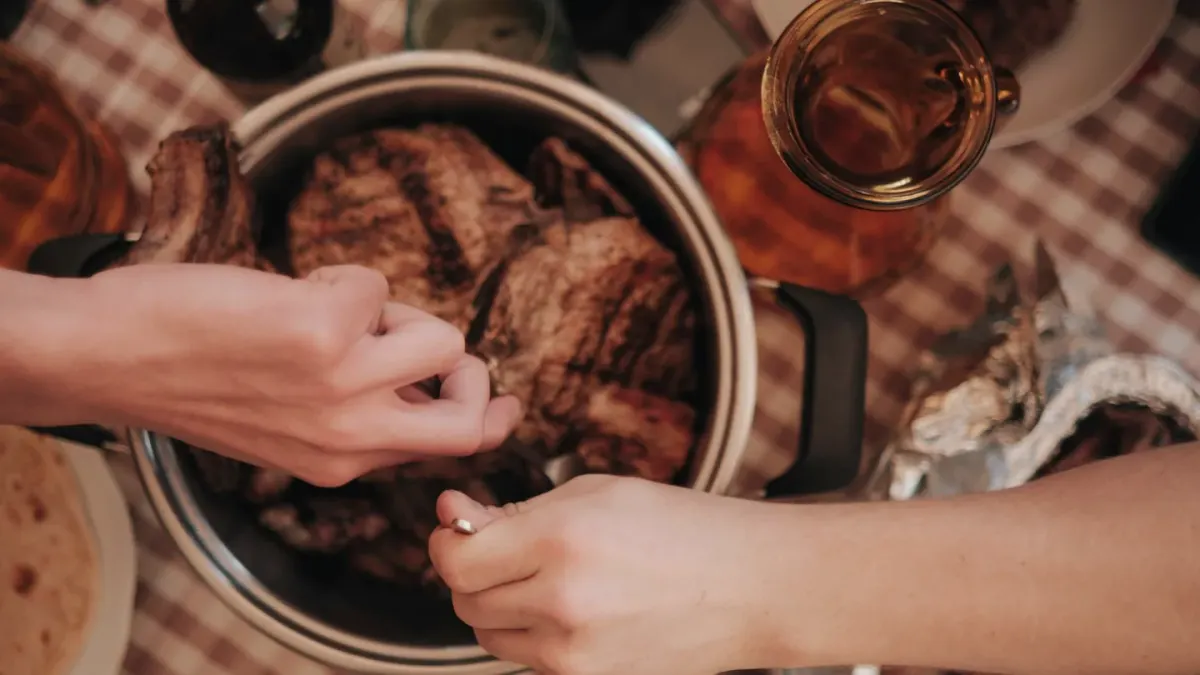
The first time I watched a dog stage a full sit-stay routine under the holiday table, it wasn’t for a treat — it was for turkey. The owner had a plate of dark meat drippings, a spoonful of stuffing, and a strip of crackling skin already halfway off her fork, and her retriever had positioned himself exactly where gravity would work in his favor. She looked at me across the table with the specific guilt of someone who already knows the answer and wants permission anyway. I gave her the honest version: the turkey itself was fine. Everything sitting next to it on that plate was the problem.
That’s the split that matters here, and it’s worth having in front of you before the bird even comes out of the oven.
The quick checklist before you slip him a bite
- Plain turkey meat, cooked through: generally fine in small amounts for a healthy dog.
- Skin: skip it — high fat content is a known pancreatitis trigger.
- Bones, cooked or raw: never. They splinter and can perforate or block the gut.
- Seasoning, stuffing, gravy: check for onion and garlic first; both are toxic to dogs.
- Deli turkey and turkey bacon: occasional bite is not an emergency, but sodium and preservatives make them a worse everyday choice than roasted breast.
- Portion: a few bite-sized pieces mixed into a normal meal, not a plate of its own.
What turkey actually brings to a bowl
Turkey breast is lean, low in the kind of saturated fat that stresses a dog’s pancreas, and it delivers a complete amino acid profile — which is exactly why it shows up as a named protein on so many commercial dog food labels. For a dog who already eats a complete diet, a few plain pieces mixed in is closer to a high-value treat than a nutritional necessity. It isn’t going to fix a deficiency or round out a meal that’s already balanced; it’s a lean, digestible add-in, nothing more dramatic than that.
Where turkey turns risky — bones, skin, and the spice rack
This is the part I’m decisive about, because the failure mode isn’t subtle. Cooked turkey bones are brittle in a way raw ones aren’t, and according to Hepper, both cooked and raw turkey bones can splinter and cause choking, punctures, or intestinal blockages — cooking just makes the splintering worse. I don’t soften that advice for a well-behaved dog or a small piece; a carcass left on the counter overnight is a genuine emergency-room setup, not a minor lapse.
Skin and drippings are the second failure point. Turkey skin carries most of the bird’s fat, and a sudden fat load is a recognized trigger for pancreatitis — a painful, sometimes serious inflammation of the pancreas. AKC advises removing skin before offering turkey to a dog for exactly this reason.
Then there’s the seasoning rack, which is where most holiday-table mishaps actually start. Onion and garlic — powdered, cooked, or fresh — are common in stuffing, gravy, and pan seasoning, and both belong to the allium family that’s toxic to dogs. VCA Animal Hospitals notes that onion, garlic, chive, and leek exposure can damage red blood cells and lead to anemia, with signs sometimes delayed by several days. If you’re weighing whether a bite of stuffing crosses a line, our guide on garlic safety in small amounts walks through the toxicology in more detail — it’s a useful companion read for anyone cooking a big holiday meal with a dog underfoot.
Turkey as the bland, limited-ingredient option
A few weeks after that Thanksgiving table, the same owner called about a different problem: her retriever had loose stools after a food bag ran out early and she’d improvised with whatever protein was in the fridge. Plain turkey was actually the right instinct there — it’s mild, low-fat, and easy to digest, which is why vets often reach for it as a bland-diet component during a GI flare. But a new protein is still a diet change, and I want to weigh what that shift can realistically do rather than treat it as automatically gentle.
Dogs recovering from pancreatic or digestive upset sometimes need more structured support than a protein swap alone. In exocrine pancreatic insufficiency, for example, management runs through enzyme replacement and diet, not just a leaner meat; as one review in JAVMA puts it, “EPI is treated by pancreatic enzyme replacement therapy, nutritional management (low-residue diets with moderate fat content), and supplementation of cobalamin.” The same review notes that persistent gut imbalance can linger even after enzyme therapy starts, which is a reminder that a single food change rarely resolves a chronic digestive issue on its own. Research on probiotic response in dogs has found something similar in a different context — a study in Frontiers in Veterinary Science reported that “diversity metrics did not distinguish non-responders from responders,” meaning a healthier-looking gut microbiome on paper doesn’t guarantee a dog will respond to a given intervention. Plain turkey can be part of a gentler bowl. It isn’t a substitute for a real diagnosis when the stool changes stick around.
If you’re managing a senior dog through any kind of diet change, including a protein swap like this one, our step-by-step guide to switching an older dog’s food covers the pacing that tends to go wrong.
How much, how often, and for which dogs
A few bite-sized pieces of plain turkey mixed into a regular meal, once in a while, is a reasonable amount for most healthy adult dogs. Dogs with a history of pancreatitis, dogs on a prescription diet, and dogs with known poultry allergies are the exceptions — for them, even lean turkey warrants a call to your vet first, since individual dogs vary widely in what they tolerate. If your household is also juggling other holiday-table temptations, our guide on safe sweet potato prep and portions pairs well with this one, since the two often end up on the same plate.
The verdict
Turkey itself was never the villain at that holiday table. Plain, cooked, boneless, skinless turkey in small amounts is a safe, lean protein for most dogs, and I’ll defend that plainly rather than hedge it into uselessness. What deserves the caution is everything cooking alongside it — the bones that splinter, the skin loaded with fat, and the seasoning that can carry onion or garlic into a bowl where it doesn’t belong. Serve the meat plain, skip the rest, and watch your own dog’s response rather than assuming every dog handles it the same way.
Frequently asked questions
Can dogs eat turkey bones?
No. Cooked turkey bones are brittle and prone to splintering, and those fragments can injure the mouth, throat, or gut lining or cause a blockage, according to a review from Hepper. Keep carcasses and bones sealed away from the table and the trash.
Can dogs eat turkey skin?
It's best avoided. Skin carries most of the fat on the bird, and a sudden fat load is a known trigger for pancreatitis in dogs, so trim it off before offering any turkey meat.
Is deli turkey or turkey bacon okay for dogs?
Both tend to be high in sodium and preservatives compared with roasted turkey breast, so they're a poorer everyday choice even though a small bite isn't an emergency.
What if my dog steals a piece of seasoned turkey off the counter?
Check the seasoning. Onion and garlic powder are common in stuffing and gravy, and both are toxic to dogs even in cooked form. Watch for vomiting, weakness, or pale gums over the next few days and call your vet if you're unsure how much was in the mix.
Sources
- Can Dogs Eat Turkey? Holiday Safety Tips for Pet Owners — AKC
- Onion, Garlic, Chive, and Leek Toxicity in Dogs — VCA Animal Hospitals
- Can Dogs Eat Turkey Bones? Vet-Approved Risks & Safety Tips — Hepper
- Exocrine pancreatic insufficiency in dogs and cats: management review — JAVMA
- Probiotic response and gut dysbiosis in dogs — Frontiers in Veterinary Science