On this page
The first time a client brought it up, she wasn’t asking about a seizure or a slipped disc. She was standing in my exam room holding her Corgi’s leash, half-embarrassed, asking whether the broccoli stalks she’d been tossing him from the cutting board every night were doing any harm. He’d been fine for months. Then, over one weekend, he had two days of soft stool and refused his breakfast. Nothing dramatic, no blood work red flags, but enough to make her stop and ask a vet instead of the internet. That’s usually how the broccoli question arrives: not as a crisis, but as a nagging “is this actually fine?” after weeks of feeding something that seemed harmless.
The honest answer is that broccoli sits in a gray zone, and gray zones are where careful medicine matters most. It isn’t a toxin the way onions or grapes are. It’s a vegetable that’s genuinely useful in small amounts and genuinely capable of causing a bad day in larger ones, and the difference often comes down to how much, how it’s cut, and which dog is eating it.
What broccoli actually offers a dog’s body
Broccoli is low in calories, reasonably high in fiber, and carries vitamin C along with a handful of other micronutrients. For a dog already eating a complete, balanced diet, a few small florets aren’t nutritionally necessary, but they aren’t nutritionally empty either. Fiber from vegetables like this can support normal stool quality and satiety when a dog is watching its weight, which is one reason owners reach for it as a low-calorie training treat or dinner-plate add-on.

The isothiocyanate math: florets, stalks, and the 10 percent rule
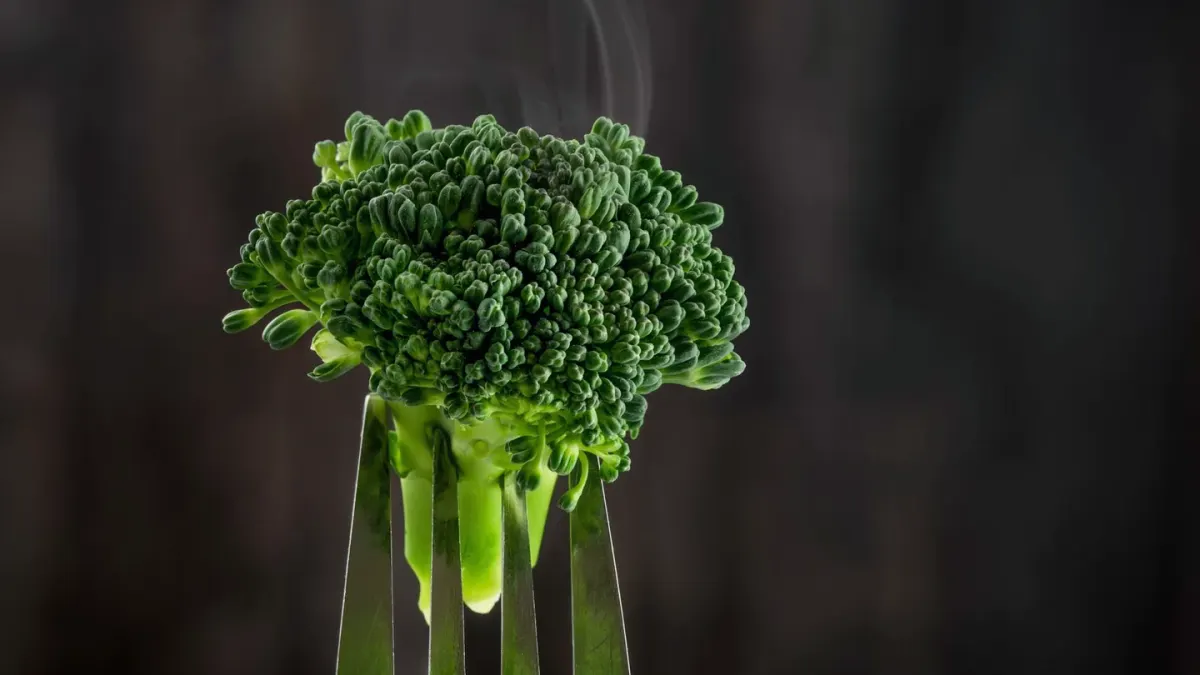
Here is where I get specific instead of vague, because vague is where owners get hurt. According to American Kennel Club guidance, broccoli florets contain isothiocyanates, compounds that can cause mild to more significant gastric irritation in some dogs, and the commonly cited threshold is keeping broccoli under roughly 10% of a dog’s daily intake, with amounts above about a quarter of the diet considered risky. The florets carry the highest concentration of that compound; the stalk carries less of it but is denser and more fibrous, which shifts the risk from gut irritation toward choking or blockage, particularly in small dogs given thick raw chunks.
That’s a mechanism-based distinction, not a scare tactic. A single stalk fragment in a 70-pound retriever’s mouth is a different situation than the same fragment in a ten-pound terrier. Cut small, lightly steamed, unseasoned, broccoli is a reasonably low-risk extra for most adult dogs. Fed by the handful, raw, in big pieces, to a small or sensitive dog, it’s a different bet entirely.
I think about this the same way I think about a disc case in the clinic: reach for both the imaging study and the acupuncture needle, meaning use the concrete data in front of you and the gentler, structure-based tools together instead of defaulting to one out of habit. With broccoli, the “imaging study” is the portion math and the ingredient itself; the “needle” is watching the individual dog’s actual response over the following day. Neither one alone tells the whole story.
A short truth worth sitting with: no vegetable is safe just because it’s a vegetable.
When gas and loose stool are just noise, and when they’re a signal
Most broccoli-related complaints I hear about are mild: a little extra gas, one soft stool, a dog turning up its nose at breakfast the next morning. That’s usually the gut adjusting to a fiber and compound load it isn’t used to, and it tends to resolve on its own once the vegetable stops. It’s a similar pattern to how a dog’s microbiome responds to any dietary change; in a recent probiotic study published in Frontiers in Veterinary Science, researchers found that “diversity metrics did not distinguish non-responders from responders,” a reminder that individual gut response to a new input is genuinely hard to predict from the outside, even with modern tools.
What isn’t noise: repeated vomiting, a painful or tender abdomen, lethargy, or a dog that won’t drink water. Those warrant a call to your own veterinarian rather than a wait-and-see approach, especially if a dog has gotten into a larger amount than intended.
Worth remembering too: dogs recovering from more serious digestive conditions are managed very differently than a healthy dog getting the occasional floret. In dogs with exocrine pancreatic insufficiency (reviewed in JAVMA), care involves pancreatic enzyme replacement and carefully managed nutrition rather than casual dietary additions, underscoring that a single rule of thumb about vegetables breaks down fast once a dog has an underlying condition. If you’re navigating a bigger diet change already, our guide on switching a senior dog to a new food walks through that more gradual process.
Dogs who should skip broccoli altogether, or start very small
Puppies are the clearest case. Their digestive tracts are still maturing, and the same amount of isothiocyanate-containing floret that a grown dog shrugs off can be enough to trigger a rough day in a young one. Dogs with a history of sensitive stomachs, pancreatitis, or any diagnosed GI disease are better served skipping broccoli unless a vet specifically clears it. And any dog trying a new vegetable for the first time, broccoli included, should get a small test portion rather than a generous serving, the same logic that applies when owners ask about sweet potato or other produce that reads as “safe” on the internet but still deserves a cautious first try.
It’s also worth separating broccoli from the genuinely dangerous produce list. Unlike garlic in small amounts or several nuts that are outright toxic to dogs, broccoli’s risk profile is dose-dependent and largely digestive rather than systemic. That distinction matters when you’re triaging what’s actually an emergency versus what’s a routine call-and-monitor situation.
Where the evidence lands
Broccoli earns a cautious yes, not an enthusiastic one. Small, plain, well-cut portions are a reasonable extra for most healthy adult dogs. The florets deserve respect for their isothiocyanate content, the stalk deserves respect for its texture, and every dog deserves an owner who treats a new vegetable as a small experiment rather than a foregone conclusion. If your dog handles it fine, there’s no need to overthink an occasional floret. If your dog doesn’t, that’s useful information too, and it’s worth mentioning at your next checkup rather than quietly working around it.
A balanced gut microbiome supports overall immune function, and vegetables like broccoli are one small input among many that shape it, not a shortcut to better digestion on their own. The bigger lever is still the complete diet your dog eats every day.
Frequently asked questions
Can puppies eat broccoli?
Most vets recommend waiting. A puppy's digestive tract is still developing, and even the small amounts of isothiocyanates in broccoli florets are more likely to upset a young dog's stomach than an adult's.
Is broccoli stalk worse than the florets?
It's a different kind of risk. The stalk carries less of the compound that irritates the gut but is fibrous and can cause a choking or obstruction risk if it's fed in thick, raw chunks, especially to small dogs.
How much broccoli is too much for a dog?
A commonly cited guideline is keeping broccoli under about 10% of a dog's daily food intake, with amounts above roughly a quarter of the diet considered risky. Any new vegetable is better introduced in small test amounts first.
Can broccoli replace my dog's regular vegetables?
No. It should sit alongside a complete diet as an occasional extra, not substitute for the fiber sources already built into a balanced food.
Sources
- Can Dogs Eat Broccoli? — American Kennel Club
- Exocrine pancreatic insufficiency in dogs review — JAVMA
- Probiotic response variability in dogs — Frontiers in Veterinary Science