On this page
What does a dog actually need to camp safely? I get asked this every spring, usually by an owner standing in an outdoor store aisle holding two harnesses and a headlamp, unsure which of it matters. The honest answer is that most camping gear for dogs isn’t about comfort add-ons. It’s about managing a short list of real risks — heat, water contamination, parasites, and losing control of the dog on unfamiliar terrain — and everything else is optional.
I’ve watched this play out in exam rooms every fall: an owner comes in worried their dog picked up “something” on a camping trip, and the story is almost always the same gear gaps. One Labrador mix, about age four and sixty-two pounds, came in after a weekend at a lake campground. The owner noticed him drinking straight from the shoreline on day two, then getting soft stool by day three, and by the time they got home he was lethargic and off his food. Nothing dramatic, no vomiting, just a dog who normally begged at the door acting flat for two days. We never confirmed exactly what he picked up, but the pattern — untreated surface water, warm weather, a dog who’d normally have carried his own bowl — is one I see nearly every camping season. It’s a completely preventable gap, and it’s cheap to close.
Why heat and water are the two risks that actually hurt dogs outdoors
Start with the physiology, because it explains why certain gear matters more than others. Dogs regulate heat almost entirely through panting and limited paw-pad sweating, which is a far less efficient system than human sweating. On a warm hike with sustained exertion, a dog’s core temperature can climb faster than an owner expects, and by the time panting looks labored or a dog is drooling and unsteady, the process is already well underway. That’s the physiological reason cooling gear, shade breaks, and a genuine water plan aren’t optional extras — they’re the primary safety system, not an accessory to it.
Water itself carries a second, separate risk. Stagnant ponds, slow-moving streams, and lake shallows can carry parasites like Giardia and, in warm months, blue-green algae blooms that are toxic if ingested. The fix isn’t complicated: carry the dog’s own water and a collapsible bowl, and don’t let a thirsty dog default to whatever puddle is closest. That single habit does more for a camping trip’s safety than almost any piece of hardware you can buy.
The control gear: harness, leash, and why a collar alone isn’t enough
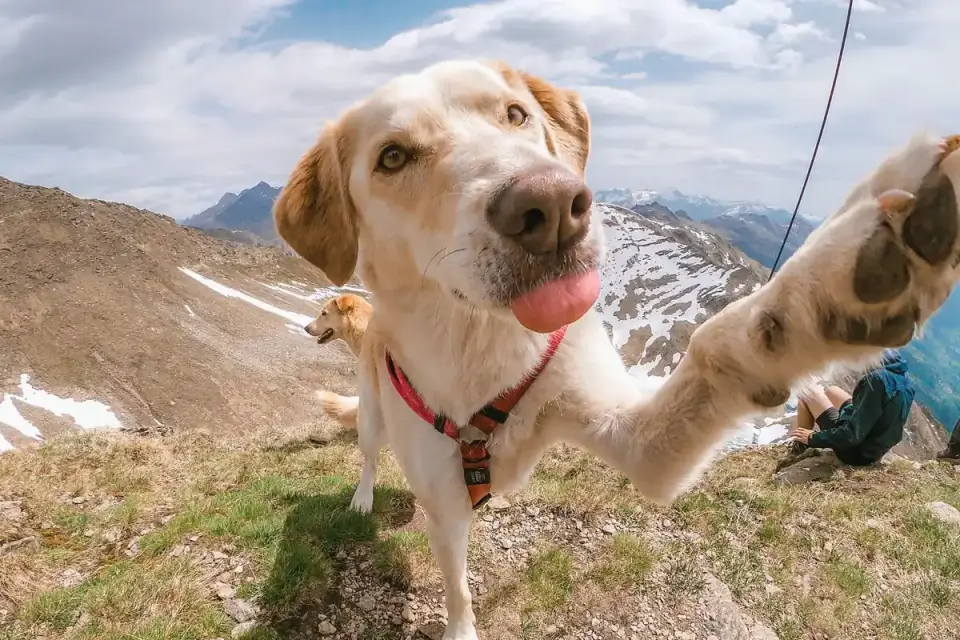
A well-fitting harness is the single most functional piece of camping gear, and it’s worth choosing deliberately rather than grabbing whatever’s on the shelf. Uneven terrain, sudden wildlife scent trails, and loose footing all put more torque on a dog’s body than a neighborhood walk does, and a collar concentrates that force on the neck in a way a harness distributes across the chest and shoulders. If you camp with a deep-chested breed, fit matters even more, and it’s worth reading our guide on choosing a harness for a deep-chested breed before you buy.
Bring more than one leash. A shorter leash for trail walking gives you real control near wildlife or other campers, while a long line lets a dog range and sniff around a campsite without slipping loose. If your dog tends to hit the end of the leash hard when something catches its attention, it’s worth understanding the mechanics of bungee versus fixed leashes for a lunging dog before you’re testing that gear for the first time on a trail. Material matters too — a wet campsite, mud, and repeated soaking are hard on nylon over a season, and our comparison of biothane, nylon, and leather long lines covers which holds up best outdoors.
A short paragraph on the obvious stuff: pack a properly fitted, tagged collar with ID even if the dog also wears a harness, because collars are what strangers check first if a dog goes missing at a campground.
Parasite and heat protection: the gear that follows the evidence
Tick exposure is one of the clearest, best-documented risks of camping with a dog, and it’s not seasonal in the way people assume — ticks are active in grassy, brushy, and wooded terrain across a longer window than most owners plan for. The CDC recommends treating clothing and gear with permethrin-based products for tick protection, and the same logic extends to checking your dog thoroughly after hikes, not just relying on a preventive alone, according to the Centers for Disease Control and Prevention: CDC. On the veterinary side, staying current on core vaccines and using a vet-recommended parasite preventive before a camping trip is the baseline the American Veterinary Medical Association points owners toward, alongside checking dogs for ticks after time outdoors and consulting a vet on the right preventive product for the region you’re visiting.
For heat, a cooling vest or cooling mat can genuinely extend how long a dog can comfortably stay active in warm conditions, but the two work differently and aren’t interchangeable — one is built for movement, the other for rest. We’ve broken down cooling vest versus cooling mat use cases in more detail, and it’s worth reading before you assume either one solves the whole problem. No cooling product replaces shade, rest breaks, and access to water; it extends the safety margin, it doesn’t remove the underlying risk.
What I actually tell owners packing for a trip
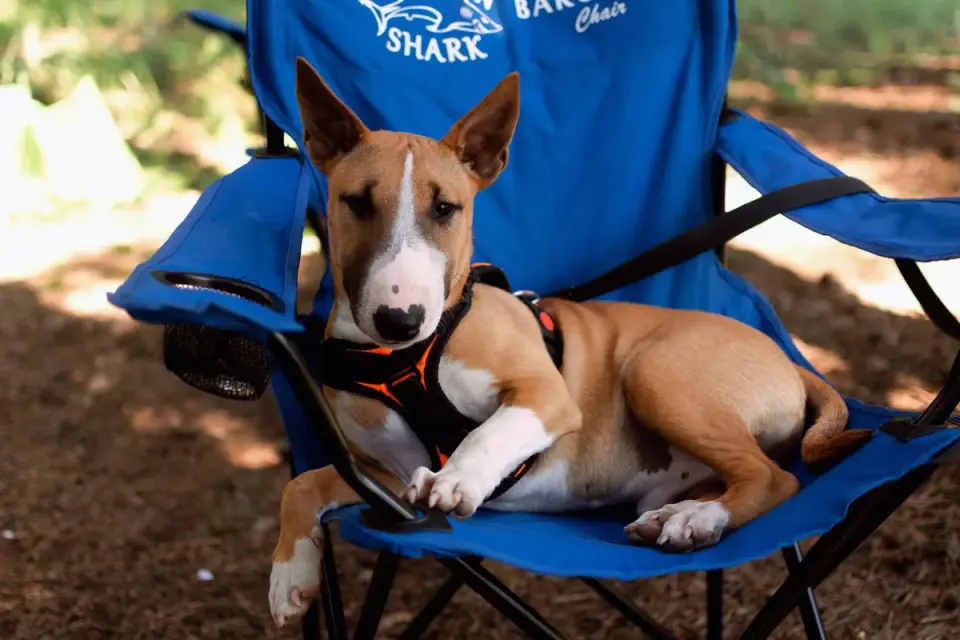
In my practice, I try to keep this list short on purpose, because owners who overpack gear tend to underpack attention — they trust the equipment to do work that still requires watching the dog. The non-negotiables: the dog’s own water and a bowl, a well-fitting harness matched to the dog’s build, a tagged collar as backup ID, a short list of first-aid basics including tweezers for tick removal, and whatever heat-management gear fits the season and the trail. Everything past that — the packable bed, the trail booties, the reflective gear for night visibility — is genuinely useful but secondary to those first few items.
Weigh what any piece of gear can realistically do before you buy it. A cooling vest manages heat load during activity; it doesn’t prevent heatstroke if a dog is pushed too hard on a ninety-degree afternoon. A harness controls movement; it doesn’t replace recall training near wildlife. Matching gear to what it actually does, rather than what the packaging implies, is most of what separates a safe trip from a scramble to the nearest emergency vet.
Bottom line: prioritize water, heat management, parasite prevention, and a properly fitted harness and leash system — that combination addresses the risks that actually send camping dogs to the vet, and everything else is a comfort upgrade, not a safety requirement.
Frequently asked questions
What's the single most important item to pack when camping with a dog?
Water for the dog and a collapsible bowl. Untreated lake or stream water can carry parasites and, in warm months, toxic algae, so a dog shouldn't be relying on surface water to stay hydrated.
Do dogs need tick prevention if they already take a monthly preventive?
A preventive lowers risk but doesn't eliminate it. The CDC and AVMA both recommend checking dogs for ticks after time outdoors in addition to using a vet-recommended preventive product.
Is a cooling vest necessary for camping in mild weather?
Not necessarily. Cooling gear matters most when a dog is active in warm conditions; in mild weather, shade and normal water access are usually enough.
Sources
- Preventing Tick Bites | Ticks | CDC — Centers for Disease Control and Prevention
- Disease precautions for outdoor enthusiasts and their companion animals — American Veterinary Medical Association