On this page
- A wet morning, a curious nose, and a fork in the trail
- The mushrooms in your produce drawer are a different story
- Why wild mushrooms deserve real caution
- The quiet, dangerous mushrooms: amatoxins and the 24-hour lie
- What actually to do if your dog eats a mushroom outside
- Weighing it all: what’s realistic to expect from a mushroom in a dog’s diet
A wet morning, a curious nose, and a fork in the trail
It’s the kind of scene that plays out in yards and greenbelts all over the country after a night of rain: a dog working a patch of leaf litter with real focus, nose down, and then the telltale pause when something new has been found. You jog over and there they are, pale caps pushed up through the mulch, a few already flattened where a paw or a snout got there first. You don’t know what they are. Your dog, at this exact moment, does not care what they are. That fork-in-the-trail moment is the one I want owners thinking about clearly, because it’s genuinely two different conversations depending on what’s actually in front of you. A mushroom from your produce drawer and a mushroom from your backyard are not the same question, even though they get asked as if they are.
The mushrooms in your produce drawer are a different story
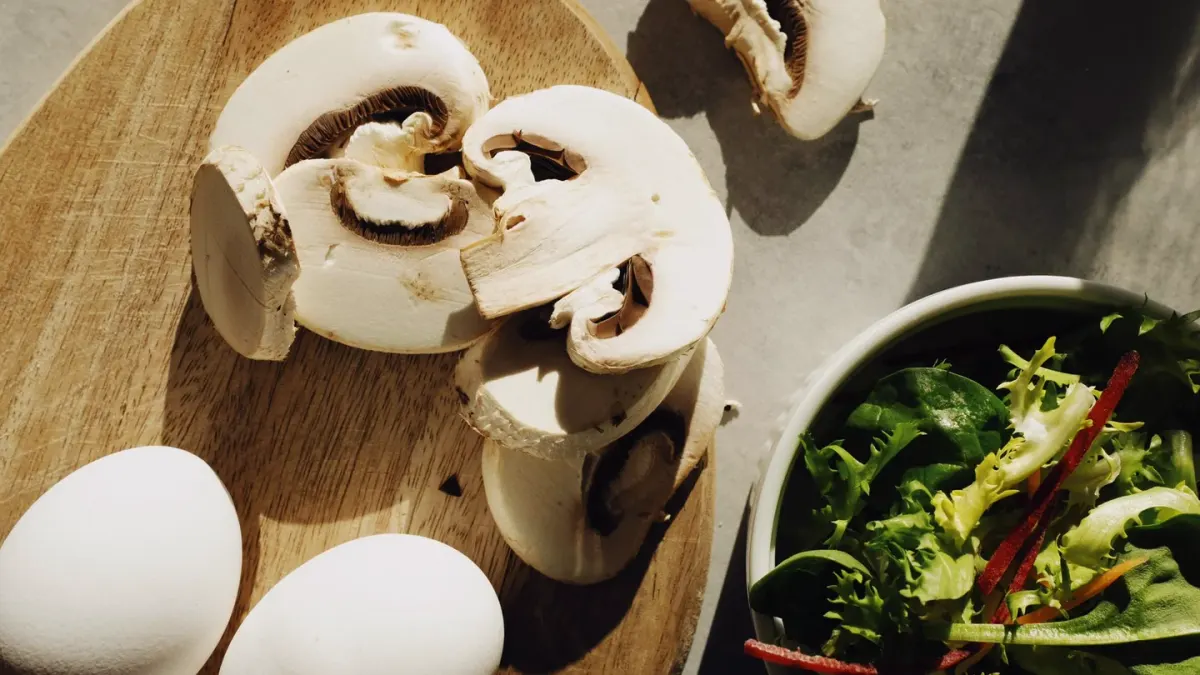
Plain, cooked, store-bought mushrooms, white button, cremini, portobello, shiitake, are the ones I’m comfortable calling low-risk for most healthy dogs, in small amounts, without the seasonings that make them a problem. Garlic, onion, heavy butter, and salt are the actual liabilities in a sautéed mushroom side dish, not the mushroom itself, and dogs are notably more sensitive to allium vegetables than people are; our guide on whether garlic is safe for dogs in small amounts goes into why that ingredient deserves its own caution separate from the fungus sitting next to it on the cutting board. A dog with a sensitive stomach may still do better skipping mushrooms altogether, since fungal cell walls can be harder to break down than most vegetables, and a food that sits oddly with one dog can sit just fine with another. That’s the variability I try to hold onto with almost any new food: what’s realistic for a healthy adult Lab isn’t automatically realistic for a small dog recovering from a GI flare.

Why wild mushrooms deserve real caution
Here’s where I part ways with the more relaxed corners of the internet on this topic. There are thousands of wild mushroom species in North America, only a fraction have been meaningfully studied for toxicity in dogs, and the ones that are dangerous are not reliably distinguishable from harmless look-alikes by a non-expert standing in a yard at 7 a.m. I’d rather an owner over-react to an unidentified mushroom than under-react, because the mushrooms that matter most don’t announce themselves with obvious symptoms right away. According to ASPCApro, effects of mushroom ingestion in dogs vary enormously by species, and some of the most serious toxins take real time to reveal how much damage has already been done.
Last fall, a friend’s dog got into a cluster of mushrooms behind a rental cabin before anyone noticed, and there was a genuine argument in that kitchen about whether to drive forty-five minutes to the nearest emergency clinic on a Sunday night for something that might turn out to be nothing. They went. It was, in fact, nothing, an ordinary saprophytic species with no toxic history. But the decision to go was the right one regardless of that outcome, because there was no way to know that standing in the yard, and the mushrooms that do matter don’t give you a do-over once the symptoms show up.
The quiet, dangerous mushrooms: amatoxins and the 24-hour lie
Amatoxin-containing mushrooms, death cap and destroying angel among them, are the ones that keep toxicologists up at night, because the early course of poisoning can look deceptively mild. Vomiting and diarrhea may show up and then ease off, and a dog can look genuinely improved for a day or more. Underneath that apparent recovery, the liver is still absorbing damage. As Pet Poison Helpline notes, severe liver failure from this class of toxin can follow days after the dog first seemed to be getting better, which is exactly why “he seems fine now” is not a safe stopping point after a wild mushroom exposure.
Other wild species bring their own distinct problems, from tremors and seizures with certain neurotoxic mushrooms to kidney injury with others. Per the UC Davis School of Veterinary Medicine, clinical signs of mushroom toxicity can include gastrointestinal upset, changes in urination, liver failure, kidney injury, drooling, and neurologic signs such as tremors, and the timeline for those signs to appear ranges from under an hour to a full day depending on the toxin involved.
What actually to do if your dog eats a mushroom outside
If your dog gets into an unidentified mushroom on a walk, the move is straightforward even if it’s inconvenient: don’t wait for symptoms. Photograph the mushroom, bag a sample if you can do it safely, and call your veterinarian, an emergency clinic, or a dedicated poison control line the same day. Treatment decisions often hinge on identifying the species or at least ruling out the highest-risk families, and that’s easier with a physical sample in hand than with a verbal description after the fact. This part isn’t optional in my mind.
If your dog instead snagged a piece of plain sautéed mushroom off the counter, that’s a much lower-stakes event, and mild, temporary stomach upset is the most likely outcome worth watching for.
Weighing it all: what’s realistic to expect from a mushroom in a dog’s diet
A plain grocery-store mushroom isn’t doing much heavy lifting nutritionally for a dog on a complete, balanced diet, and I don’t think it needs to be framed as more than an occasional, low-stakes taste. The honest, evidence-bounded position is that cooked culinary mushrooms in modest amounts are a reasonable treat for most healthy dogs, while anything picked up outdoors and unidentified deserves the same seriousness you’d give any unknown plant a dog puts in its mouth. If you’re already thinking carefully about what belongs in your dog’s bowl, it’s worth reading up on other foods with the same kind of split reputation, like which nuts are toxic to dogs or how to handle ingredient swaps generally when you’re changing food for a senior dog. So the next time your dog’s nose leads them to something growing in the grass, is it worth the ten seconds it takes to pull them back and look closer?
Frequently asked questions
Can dogs eat raw mushrooms from the grocery store?
Cooked and plain is the safer bet. Raw mushrooms are tougher to digest and often carry more surface debris, so a quick sauté with nothing added is a more sensible way to offer a small taste.
Which wild mushrooms are most dangerous to dogs?
Amatoxin-containing species such as death cap and destroying angel mushrooms are the ones veterinarians worry about most, because they cause delayed, severe liver damage that isn't obvious in the first day.
My dog ate a mushroom on a walk and seems fine. Can I just watch and wait?
Call your vet or a poison control line right away instead. Some of the worst mushroom toxins cause a deceptive lull where a dog looks normal for a day or two before liver failure sets in.
Are portobello or shiitake mushrooms okay for dogs?
Both are among the culinary varieties considered safe in small, plain amounts, without butter, garlic, onion, or salt added during cooking.
Sources
- Mushroom Poisoning in Dogs — ASPCApro
- My Dog Ate a Poisonous Mushroom — Pet Poison Helpline
- Mushroom Toxicity in Dogs — UC Davis School of Veterinary Medicine