
Check air temperature, check the ground with your hand, then decide if you walk now or wait for cool hours.
Last August I watched an owner hesitate at the curb with a three-year-old, 28-pound Beagle mix pulling toward the park at 2 p.m. The phone said 88°F, the asphalt looked ordinary, and she was weighing a quick loop before work. She pressed her palm down, lifted it after four seconds, and changed plans. By July 28 last summer she had shifted that same loop to 7 a.m. for two weeks straight, and the dog stopped lagging in the shade and licking his front pads at night. That hand test plus the chart below made the call for her.
How hot does pavement get when air feels warm?
Asphalt absorbs sun and runs far hotter than the air. Concrete runs cooler than asphalt but still burns. Shade, wind, and color shift readings by 10 degrees or more, so treat any chart as a starting estimate.
Use this quick reference for sunny asphalt in direct sun:
- 75°F air / ~100°F pavement — Caution, test ground first
- 80°F air / ~110°F pavement — Risky for thin pads, puppies, seniors
- 85°F air / ~120°F pavement — Risk of burns in under a minute
- 90°F air / ~135°F pavement — Unsafe, walk on grass or wait
- 95°F air / ~140°F+ pavement — Unsafe, skip the walk
Do the 7-second test every time. Press the back of your hand flat on the pavement. If you cannot hold it for seven full seconds, do not walk there. Test the exact surface you will use, then retest around corners where sun hits differently.
Veterinary guidance on summer heat from the American Veterinary Medical Association reminds owners that hot surfaces plus rising body heat can injure dogs quickly, and the National Weather Service shows how humidity pushes heat risk higher even when air temperature looks moderate.
When should you walk, wait, or change the route?
Walk early or late. Aim for before 9 a.m. and after 7 p.m. during heat spells. Choose grass, dirt trail, or shaded sidewalk. Walk shorter loops with water breaks. Watch for slowing, heavy panting, drooling, bright red gums, or repeated paw lifting.
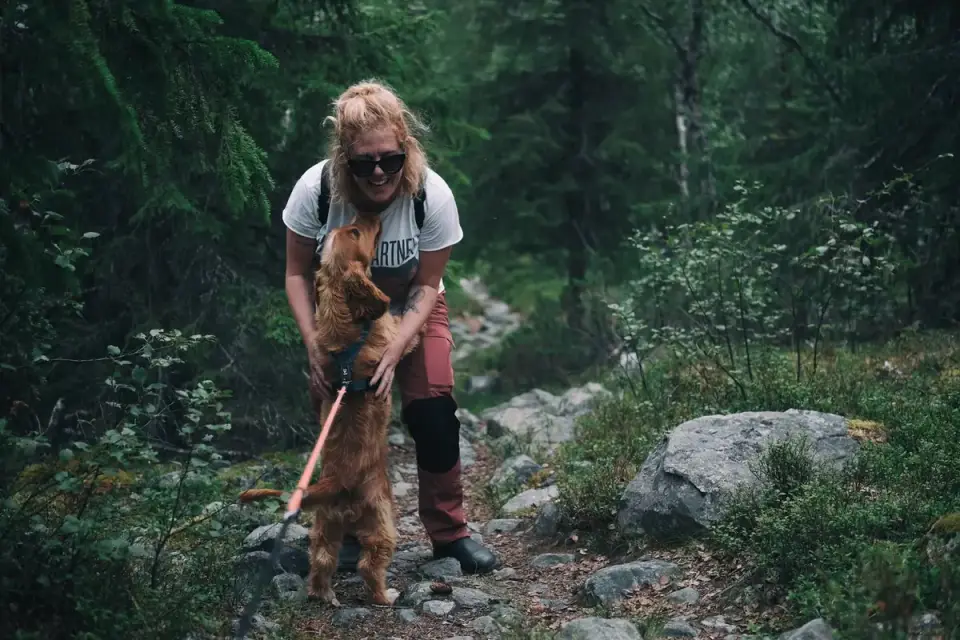
He tried to solve it with gear alone. A fit two-year-old Australian Cattle Dog needed three walks a day, so her owner bought thick booties and kept the noon route on blacktop. The dog chewed one boot off by day three, rubbed a dewclaw raw on day five, and still panted hard after 12 minutes on sun-baked asphalt. After six scuffed walks in four days, they kept the boots for trail gravel but moved the midday outing to a 10-minute grass potty break plus indoor training. The paws healed, the pulling eased, and total exercise stayed the same without the hot mile.
Carry water and a collapsible bowl. Wet paw pads do not protect against heat. Keep nails trimmed so toes sit squarely. Rinse paws after walks on treated or dusty roads. Individual dogs vary widely in heat tolerance, pad thickness, age, and fitness, so let your own dog set the pace.
What do you do when skipping the walk is not simple?
Some dogs need movement for joint stiffness, weight, or anxiety. Trade miles for cool alternatives. Try a dawn sniff walk on grass, a shaded evening loop, or indoor reps. For ideas on low-impact swaps, see Swimming vs Walking for an Arthritic Dog: How to Choose (and When to Combine Them) and Off-Leash Play vs. On-Leash Walks: How to Balance Both for Real Fitness. For dark-hour safety, read Reflective Harness for Night Walks: What Actually Makes a Dog Visible in the Dark.
Food and joint nutrition cannot make paws heat-proof. A balanced diet with adequate protein and omega-3s may help support normal recovery and mobility over time, but it does not change burn risk on a 130°F sidewalk. Weigh that honestly, spend the effort on timing, surface, and shade first.
She had a 12-year-old Labrador with stiff hips who paced and whined if he missed his afternoon round. The usual advice said wait until sunset, but he slept all evening if he waited that long. His owner split the difference with a 0.4-mile grass-only loop at 6 p.m. under trees, plus five minutes of gentle indoor weight-shifts. She carried water, checked pads after, and kept the asphalt crossing to 15 feet. He settled through the night without the panting and paw licking that followed the old hot-pavement mile.
Move the walk, not the goal. Short, cool, and on soft ground beats long and hot every time.
Frequently asked questions
What air temperature is too hot to walk a dog on pavement?
Above about 85°F air in sun, asphalt can reach 120°F and burn paws quickly. Always do the 7-second hand test and choose grass or wait for cooler hours.
How can I tell if pavement burned my dog's paws?
Look for limping, licking pads, redness, blisters, or darkened pad edges after a walk. Rinse with cool water and call your vet if limping lasts or skin looks damaged.
Are booties or socks enough for hot pavement?
They can help on warm ground but do not make 130°F asphalt safe, and many dogs chew or slip in them. Use them only with short, shaded, tested routes.
Sources
- Warm Weather Pet Safety — American Veterinary Medical Association
- Heat Index — National Weather Service