On this page
Start here: watch the dog before you correct the dog. Herding behavior has a signature — a low crouch, a fixed stare, a wide circling path, and quick nips aimed at ankles rather than sustained bites. If that’s what you’re seeing when your kids run through the yard, you’re not managing an aggression problem. You’re managing an instinct problem, and the two require completely different plans.
I ask clients to picture a Border Collie I evaluated at 14 months old, 38 pounds, living with two kids under eight. The family’s complaint was consistent: every time the children sprinted across the backyard, the dog dropped into a stalking posture and cut them off at the fence line. By day 10 of structured management — a leash indoors during high-energy play, a “go to mat” cue, and a flirt pole session before school pickup — the circling dropped from nearly every outdoor session to twice a week. Nothing about the dog’s wiring changed. What changed was how much outlet that wiring got before the triggering moment ever arrived.
Why herding shows up around children at all
The Border Collie was developed as a working sheepdog, and the American Kennel Club: AKC breed standard describes a dog built for “effortless movement and endless endurance” in service of controlling livestock. That job never fully switches off just because the “flock” is now two kids playing tag. Running, screaming, and sudden direction changes are exactly the stimuli that trigger a herding response — fast, unpredictable movement reads to the dog as something that needs to be gathered and contained.
This is why the behavior tends to spike during backyard games, at pickup and drop-off when kids scatter toward the car, and during sibling chases indoors. It’s rarely random. If you track when it happens, you’ll usually find a pattern tied to speed and noise, not to a particular child or a particular mood in the dog.
What actually separates herding from something more concerning
Herding nips are controlled and targeted — ankles and heels, delivered quickly, without the growling, stiffening, or sustained grip you’d see in a genuine bite. The dog’s body language during herding tends to be low, focused, and almost mechanical rather than defensive. If you’re instead seeing raised hackles, a stiff tail held high, snarling, or bites that don’t release, that’s outside normal herding behavior and worth a same-week conversation with your veterinarian or a certified behaviorist rather than a training tweak.
Individual dogs vary here. Some Border Collies herd constantly and never break skin; a smaller number nip hard enough to leave marks even when the intent is purely instinctual. Bruising or broken skin on a child changes the urgency of the conversation regardless of the dog’s intent.

What to actually do about it
- Give the drive a legal job first. A daily flirt pole session, structured fetch, or an agility-style obstacle course burns off the same drive that would otherwise get pointed at your kids. Dogs whose herding needs are met through appropriate outlets generally show less pressure toward people, according to guidance compiled by the Australian Cattle Dog Rescue Association.
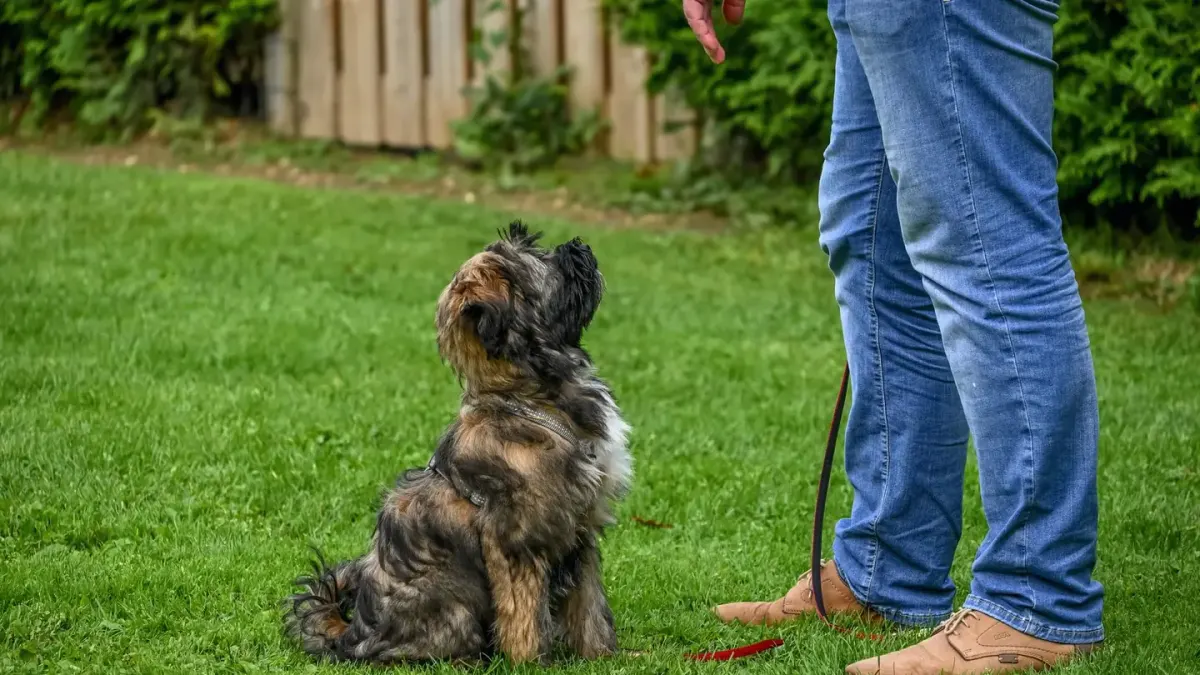
- Interrupt early, not after contact. A well-practiced “leave it” or recall cue, rewarded generously, works better than a correction delivered after the nip. By the time the dog has made contact, the behavior chain is already finished.
- Manage the environment during high-risk windows. Leash the dog indoors during rowdy play, or use a baby gate during the loudest 15 minutes of after-school chaos, until the redirect training is solid.
- Teach the kids the trigger, too. Explain that sudden sprinting and shrieking is what sets the dog off. Calmer movement patterns reduce the number of herding events without any training at all.
A short scene illustrates where this gets more complicated. A family I consulted with had done everything right for six weeks — daily fetch, a solid “leave it,” a mat routine at the door — and the herding around their nine-year-old had all but stopped. Then a new puppy joined the household, and the older Border Collie, now four years old and 42 pounds, started herding the child again within days. The trigger wasn’t the child at all; it was a second fast-moving “flock” member in the house recalibrating the dog’s sense of what needed managing. The fix wasn’t more correction toward the older dog — it was giving the puppy its own structured outlet so the household’s total chaos level came back down.
When to loop in a professional
If nipping is frequent enough to leave marks, if a child has become afraid of the dog, or if the behavior escalates alongside guarding of food or toys, a certified dog behavior consultant or your veterinarian is the right next call rather than more home troubleshooting. Herding instinct on its own is not a behavior problem to fix — it’s a trait to manage. But a dog that’s stressed, under-exercised, or mismatched to a chaotic household can express that instinct in ways that need outside help to untangle.
If you’re weighing whether a Border Collie’s herding drive fits your household at all, it’s worth comparing it against a close relative with a similar work ethic — see Border Collie vs Australian Shepherd: The Differences That Actually Change Your Day for how the two breeds diverge in daily management. Families still deciding on space and lifestyle fit more broadly may also find Best Dog Breeds for Apartment Living useful, since herding breeds rarely do well in tight quarters without serious daily outlets.
In short: herding toward children is a wiring issue, not a discipline issue. Meet the drive with structured outlets, interrupt early, and reserve professional help for anything that looks like real aggression rather than instinct.
Frequently asked questions
Is it normal for a Border Collie to herd my kids?
Yes — it's a common expression of the breed's working instinct, especially in response to running and shouting, though individual dogs vary in intensity.
Will my Border Collie grow out of herding children?
Not usually on its own. The instinct tends to persist through adulthood, but it can be redirected effectively with consistent outlets and training.
Sources
- Border Collie Dog Breed Information — American Kennel Club
- Managing the ACD Heeling Instinct: Why Cattle Dogs Nip and How to Redirect It — Australian Cattle Dog Rescue Association