
Judy first noticed it while toweling off Lino, her 7-year-old neutered Whippet mix, after a morning walk in Cape Coral, Florida — both eyes had a faint blue-gray haze that had not been there two weeks earlier.
In practice, vets often see that same worried double-take. An owner catches cloudiness in bright daylight or a photo flash, the dog still chases a ball, and the question becomes whether to wait or call that day. For most dogs, the answer depends on age, whether one or both eyes changed, and whether vision, redness, or squinting changed too.
The bluish haze that shows up with age
The most common reason both eyes look cloudy in a middle-aged or older dog is nuclear sclerosis, also called lenticular sclerosis. The lens gradually hardens and scatters light, giving a smooth, pearl-blue cast rather than a dense white spot.
It usually starts around age 6 to 8, affects both eyes symmetrically, and does not typically cause major vision loss. Dogs may have slightly more glare in bright sun, but they still navigate familiar rooms and trails. That distinction matters, because owners often mistake it for cataracts.
According to Cornell University College of Veterinary Medicine, true cataracts block light through a cloudy, opaque lens, while nuclear sclerosis is a normal aging change that still lets light through.
Gentle face grooming helps you track which one you are seeing. Wipe discharge from the inner corners with a damp, soft cloth, keep fringe trimmed away from the eyes, and note in your phone whether the haze looks the same in both eyes in the same light. For routine coat care around the face, see Essential Dog Grooming Tools for Beginners: /articles/essential-dog-grooming-tools-for-beginners/ — actually use the site path Essential Dog Grooming Tools for Beginners.
When cloudiness means something inside the eye changed
A sudden white, gray, or milky spot deserves a closer look.
Cataracts look whiter, denser, and more distinct than nuclear sclerosis. They can be inherited, linked to diabetes, or follow eye inflammation, and they can progress to blindness in that eye. VCA Hospitals notes that diabetic dogs can develop cataracts rapidly, sometimes within days, which is why sudden cloudiness plus extra thirst or urination should prompt a same-day call.
Other causes cloud the clear front window, the cornea, rather than the lens:
- Corneal ulcer or scratch: often painful, with squinting, tearing, pawing, and a bluish-white patch or divot
- Corneal edema after glaucoma, uveitis, or endothelial disease: a foggy blue sheet across the eye, often with redness
- Dry eye or chronic irritation: dull, sticky surface with mucus discharge and frequent blinking
- Infection or inflammation inside the eye: cloudy fluid, redness, light sensitivity, and vision change
Pain changes the urgency.
If only one eye is cloudy, red, swollen, squinting, or discharging yellow-green mucus, that dog should be seen promptly, not monitored for a month. The same is true for any sudden bump into furniture, reluctance on stairs, or pupils that look very different in size.
Why breed background sharpens the guess
Breed does not diagnose cloudiness, but it helps owners decide how quickly to book.
Poodles, Cocker Spaniels, Boston Terriers, Siberian Huskies, and Labrador Retrievers have higher reported rates of inherited cataracts. Boston Terriers, Pugs, and Shih Tzus, with prominent eyes, also injure corneas more easily. Older large breeds often show nuclear sclerosis right on schedule around age 7.
Sakura, a 6-year-old spayed Pomeranian from Roseville, California, owned by Shirley, is a good example of that middle zone. Small companion breeds like hers are frequently groomed close around the eyes, so Shirley spotted a faint haze at about 3 feet across the kitchen table and could report that both eyes looked identical and pain-free — exactly the detail that helps a vet triage by phone.
That breed lens is useful, but individual dogs vary widely. A mixed-breed dog like Lino can develop either aging change, and a predisposed breed may never develop eye disease.
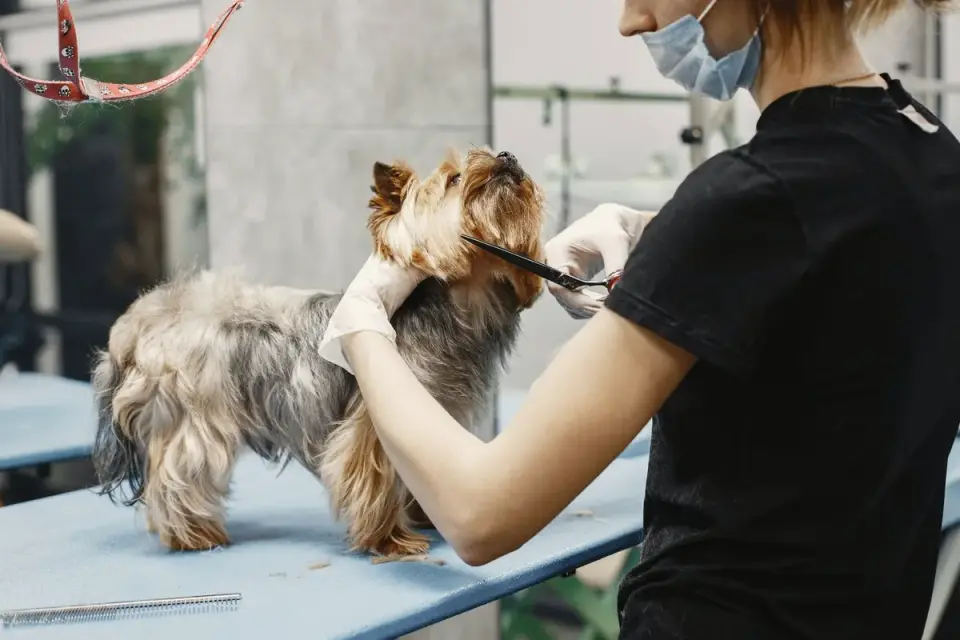
For dogs that need frequent face trims to keep hair out of their eyes, splitting face touch-ups at home and full trims with a groomer can reduce irritation. See At-Home Grooming vs a Professional Groomer: How to Split the Job.
What helps before and during the vet visit
Day-to-day practice favors simple, low-stress observation over home treatment.
Do not use leftover human eye drops, redness-relief drops, or a previous dog’s ointment. Many contain steroids that can worsen an ulcer, and numbing drops mask pain without healing the cause. The Merck Veterinary Manual describes cataracts as loss of lens transparency that often requires ophthalmologic evaluation, which is why a hands-on exam with eye pressure, stain, and dilated lens check matters more than a photo.
Bring three notes to the appointment: when you first saw cloudiness, whether it is one eye or both, and any change in vision, tearing, squinting, appetite, thirst, or energy. Skip eye makeup wipes, scented shampoos near the face, and vigorous rubbing. If discharge collects, a warm damp cloth once or twice daily supports comfort and may help maintain clean eyelids while you wait for the visit.
If your dog tolerates handling, you can practice Fear Free-style prep at home: short sessions, treats for chin rests, and no restraint around the eyes. Honest limit here — the preventive evidence is thin that supplements reverse cataracts or nuclear sclerosis, so the author does not recommend starting high-dose antioxidants without veterinary guidance.
For sensitive skin around the eyes and muzzle, fragrance-free rinsing and careful product choice reduce rubbing that makes tearing worse. See Best Dog Shampoo for Sensitive Skin: What Actually Matters on the Label.
What would push Lino’s case sooner? If Judy saw redness, squinting, one-sided change, sudden whiteness, or bumping into the lanai door, same-day care would be right. With symmetric, pain-free blue haze and normal navigation, a routine exam within a week or two to confirm nuclear sclerosis and rule out early cataracts is a reasonable, evidence-bounded plan — and that exam, not guesswork at home, is what protects vision.
Frequently asked questions
Do cloudy eyes always mean cataracts?
No. Smooth, bluish haze in both eyes in an older dog is often nuclear sclerosis, a normal aging change. Denser white spots, one-sided cloudiness, pain, or sudden vision change point more toward cataracts, ulcers, or pressure problems and need a vet exam.
How urgent is one cloudy eye?
More urgent than both eyes changing slowly together. Call promptly if one eye is cloudy with redness, squinting, swelling, discharge, or vision loss, as ulcers and glaucoma can worsen quickly.
Can I use human eye drops for my dog's cloudy eye?
No. Avoid human drops and leftover pet ointments unless your vet prescribed them for this episode, since steroids and other ingredients can harm an ulcerated cornea.
Sources
- Cataracts in Dogs — VCA Hospitals